
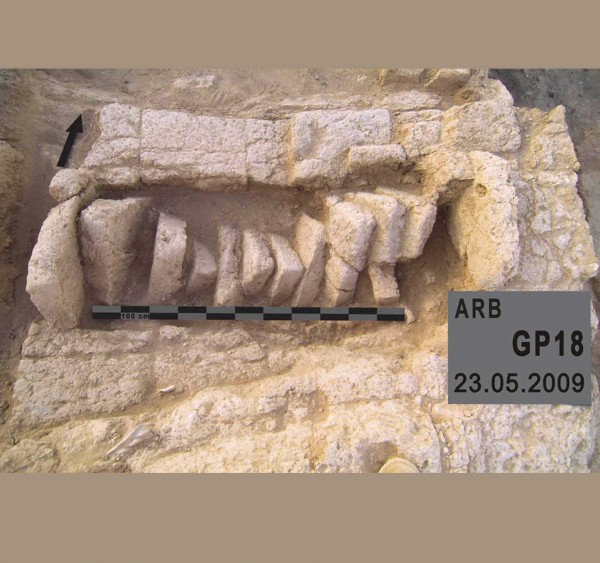
GP18
| GENERAL DESCRIPTION |
Type of burial and vault. Chamber grave, “diamond” vault.
State of preservation. The grave was well preserved and intact and has been fully excavated.
Burial descriptions. The grave was oriented on the NEE-SWW axis. Its inner dimensions were 1.35 x 0.52 m; outer dimensions were 1.7 x 1.1 m. The grave consisted of two long walls, northern and southern, which were made of 8-9 rows of bricks set horizontally. The short eastern wall was also made of bricks set horizontally. The western wall was just the wall of the pit and was not made of bricks. The grave was closed by one row of bricks set in a diamond pattern. Most of them had fallen in. During the exploration, the grave turned out to be quite well preserved, and only the upper rows of bricks were cracked and damaged.
Human remains. The grave belonged to an old woman whose bones were found in the eastern part of the grave. They did not lie in anatomical order and seemed to be placed like this on purpose. The long bones were grouped together, and the skull lay to the east. The burial was most probably secondary because there was no shaft which would have provided access to the chamber from one of the shorter walls. Moreover, in all the other chamber graves, mixed bones occurred only in cases of multiple burials when bones of the previously buried dead were pushed aside to one of the shorter walls. In my opinion, the grave was covered after the bones of the deceased had been placed inside. We can speculate that the remains of the dead woman could have been moved from her previous grave, but we do not know its location.
Animal remains. Absent.
Evidence of burial rituals. Absent.
Burial goods. Absent.
Description Joanna Mardas/archaeologist/Inventory Xenia Kolińska/archaeologist
| BIOARCHAEOLOGICAL ANALYSIS |
Human remains
An incomplete and heavily fragmented skeleton of an adult individual, likely female. The cortical bone in the shafts of the long bones was very thin, indicating osteoporosis. Several joints were affected by advanced degenerative joint disease. A healed fracture in the distal part of the midshaft is attested on one small fragment. The cranial vault was relatively thick, up to 9 mm, with broad diploë. All anterior mandibular teeth were lost ante-mortem. More details about this individual can be found in Pitre et al.2017.
Dr. Arkadiusz Sołtysiak/IA UW/anthropologist

Plan of GP18 before exploration

Plan of GP18 before exploration (with levels)

Plan of GP18 after exploration
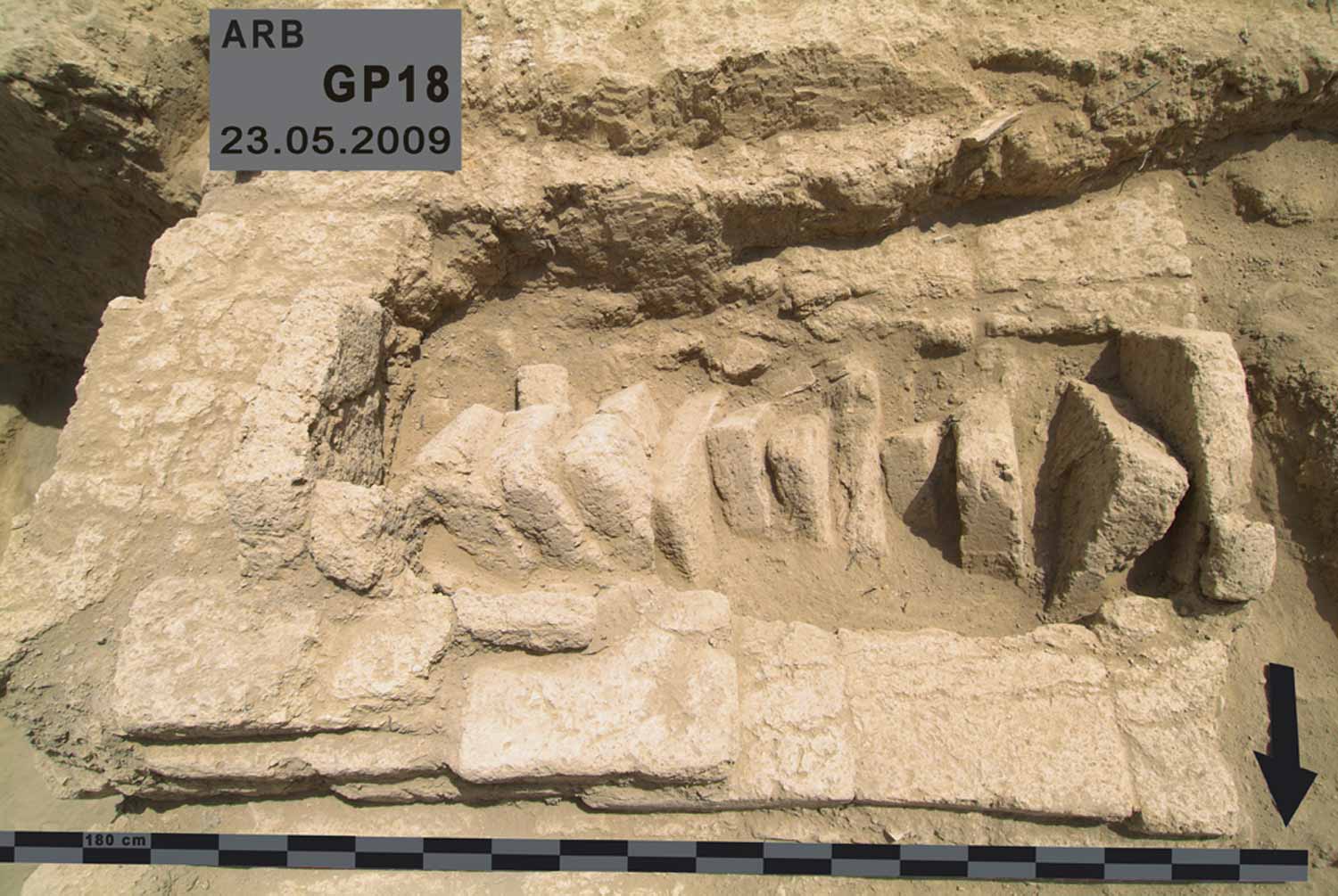
GP18 before exploration, seen from North
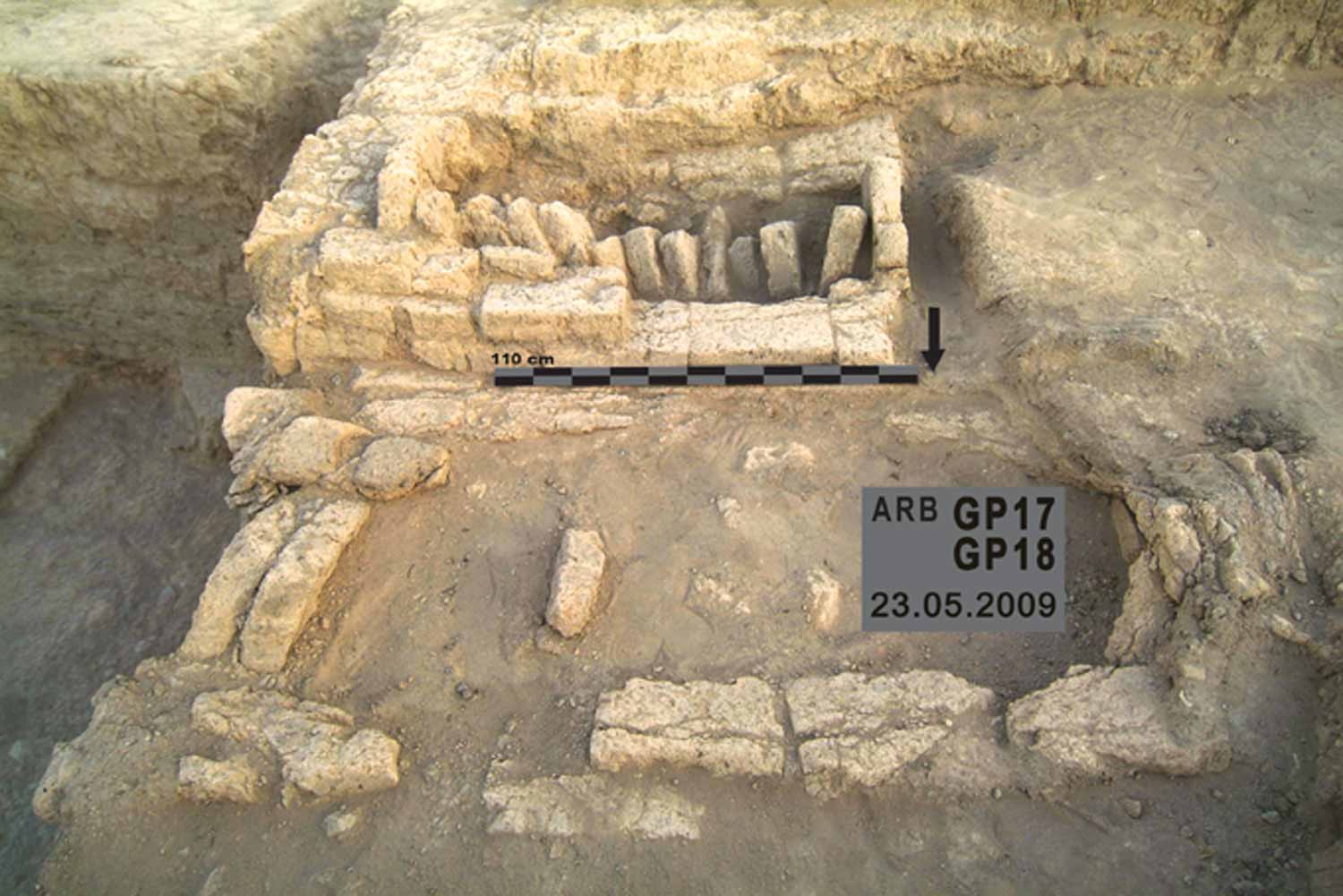
GP18 and GP19 before exploration, seen from North
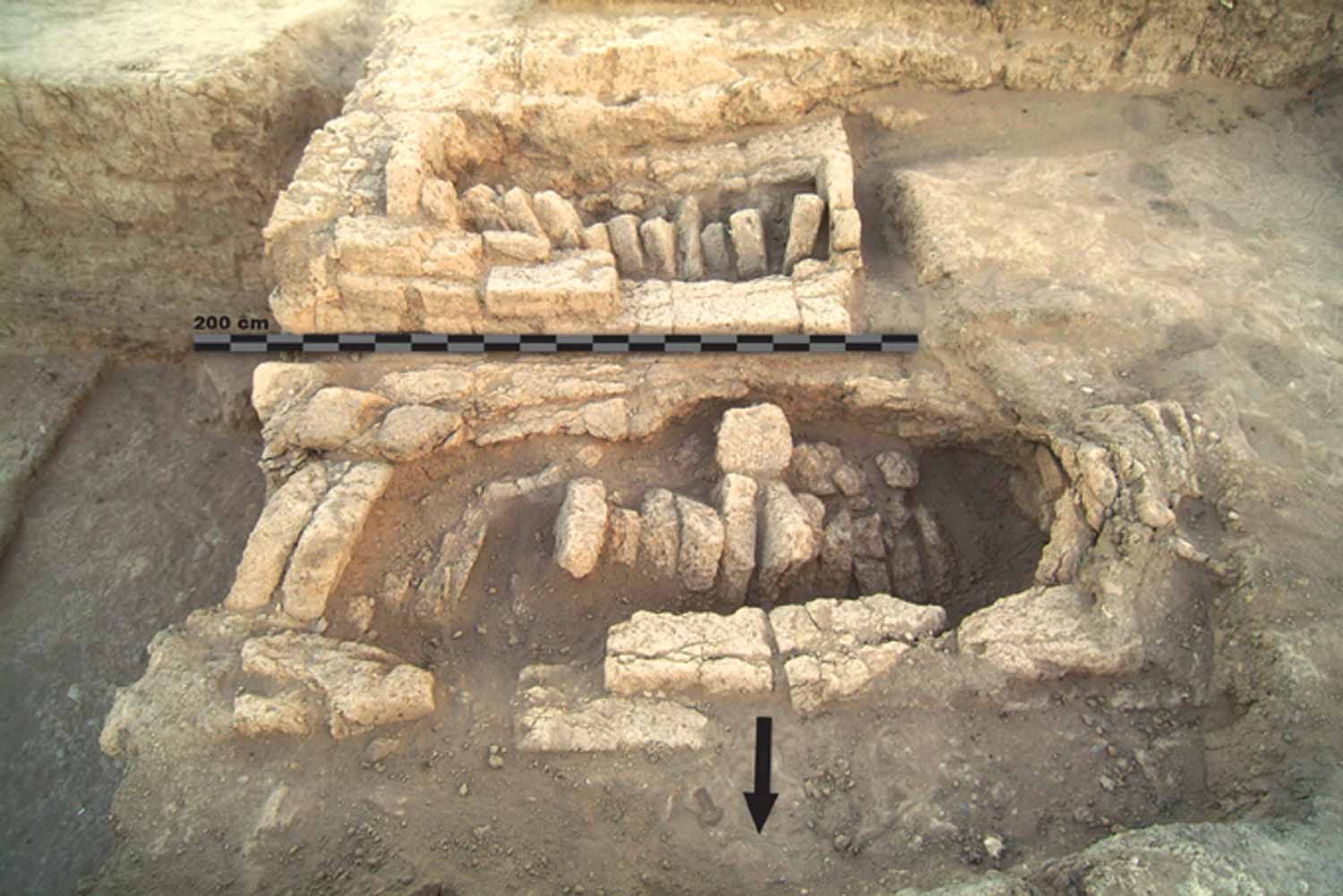
GP18 and GP19 before exploration, seen from North
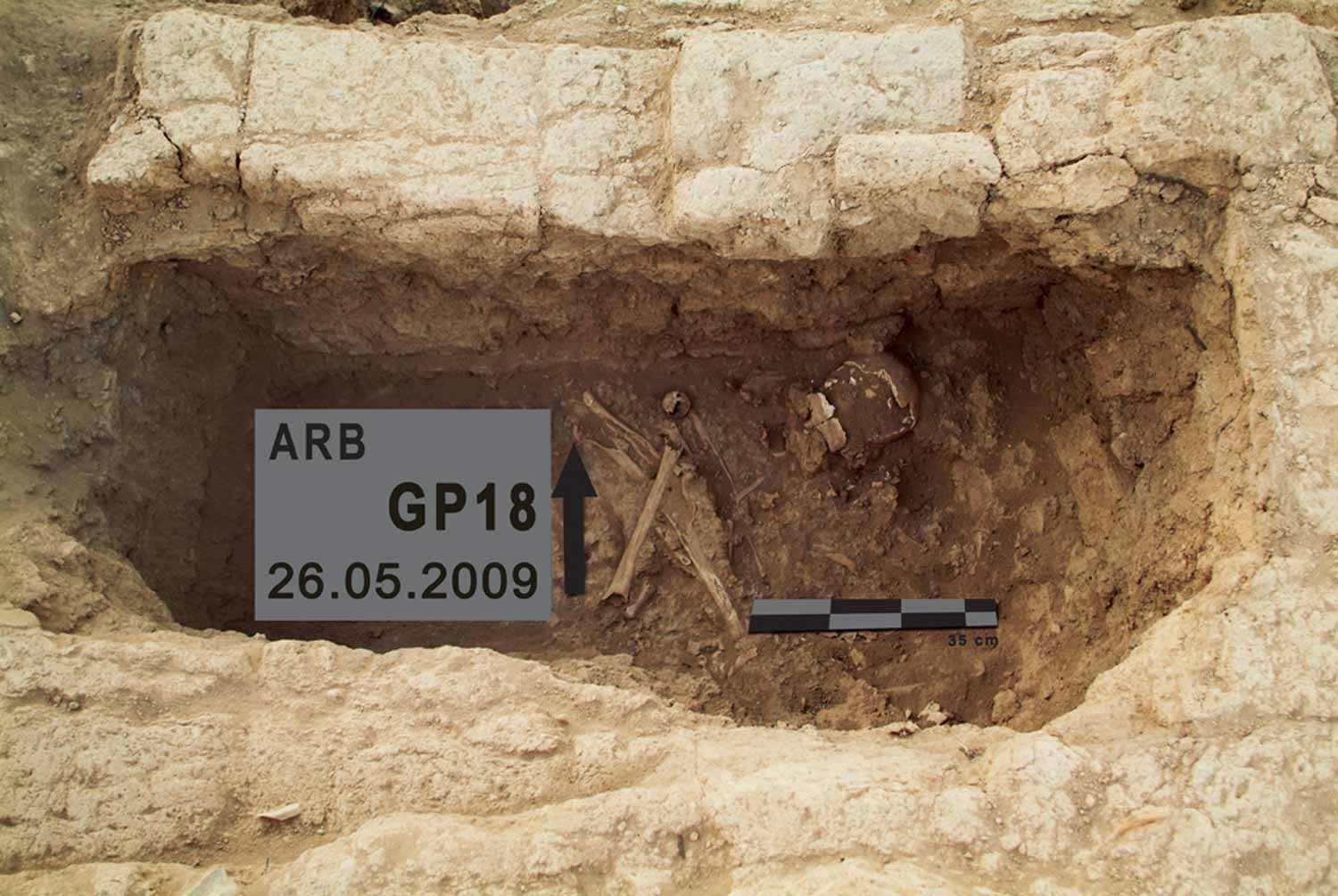
GP18 after exploration, seen from South
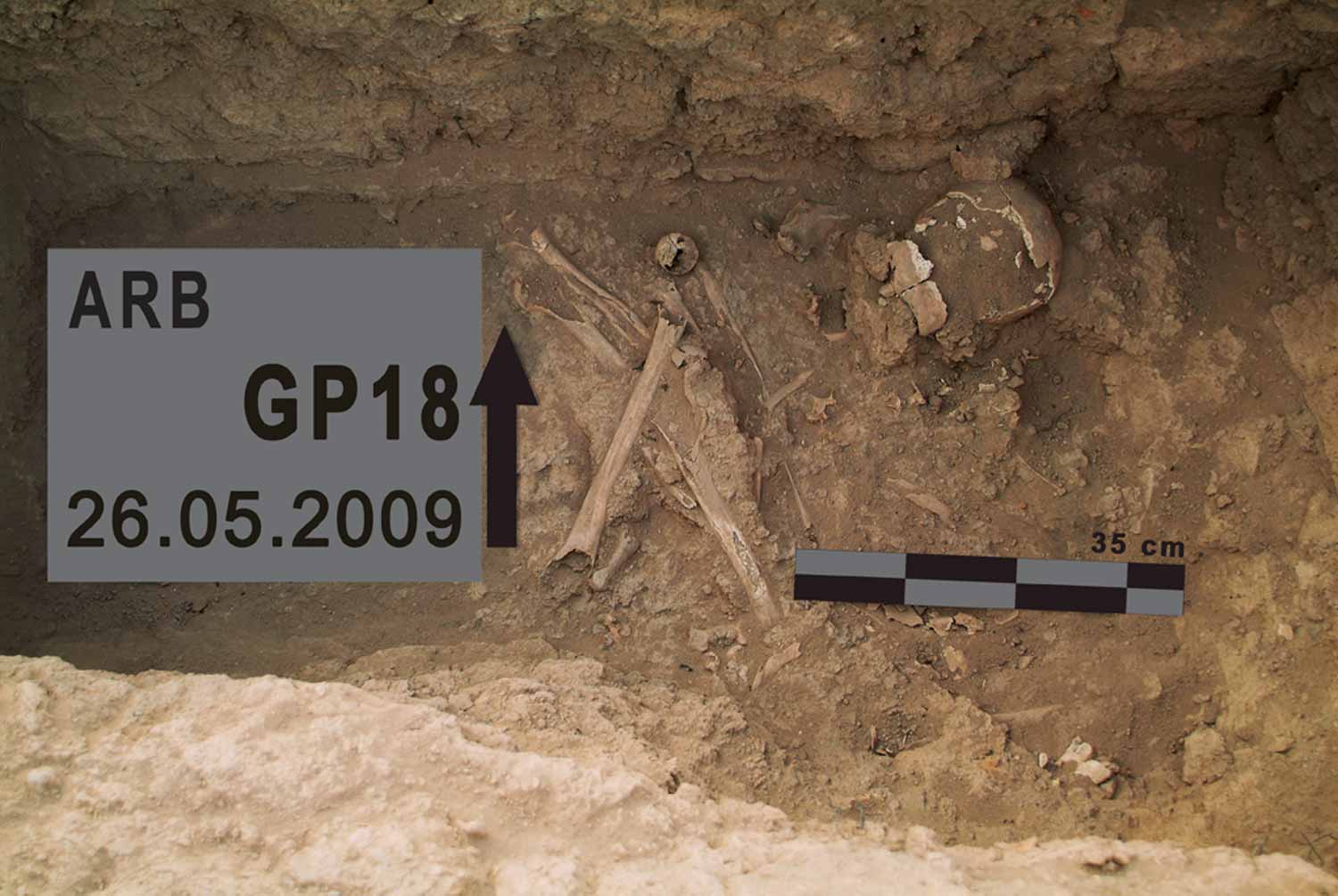
GP18 after exploration, seen from South