
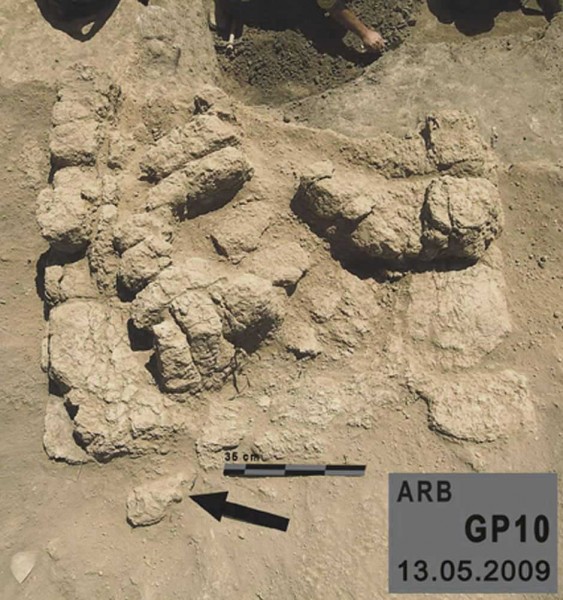
GP10
| GENERAL DESCRIPTIONS |
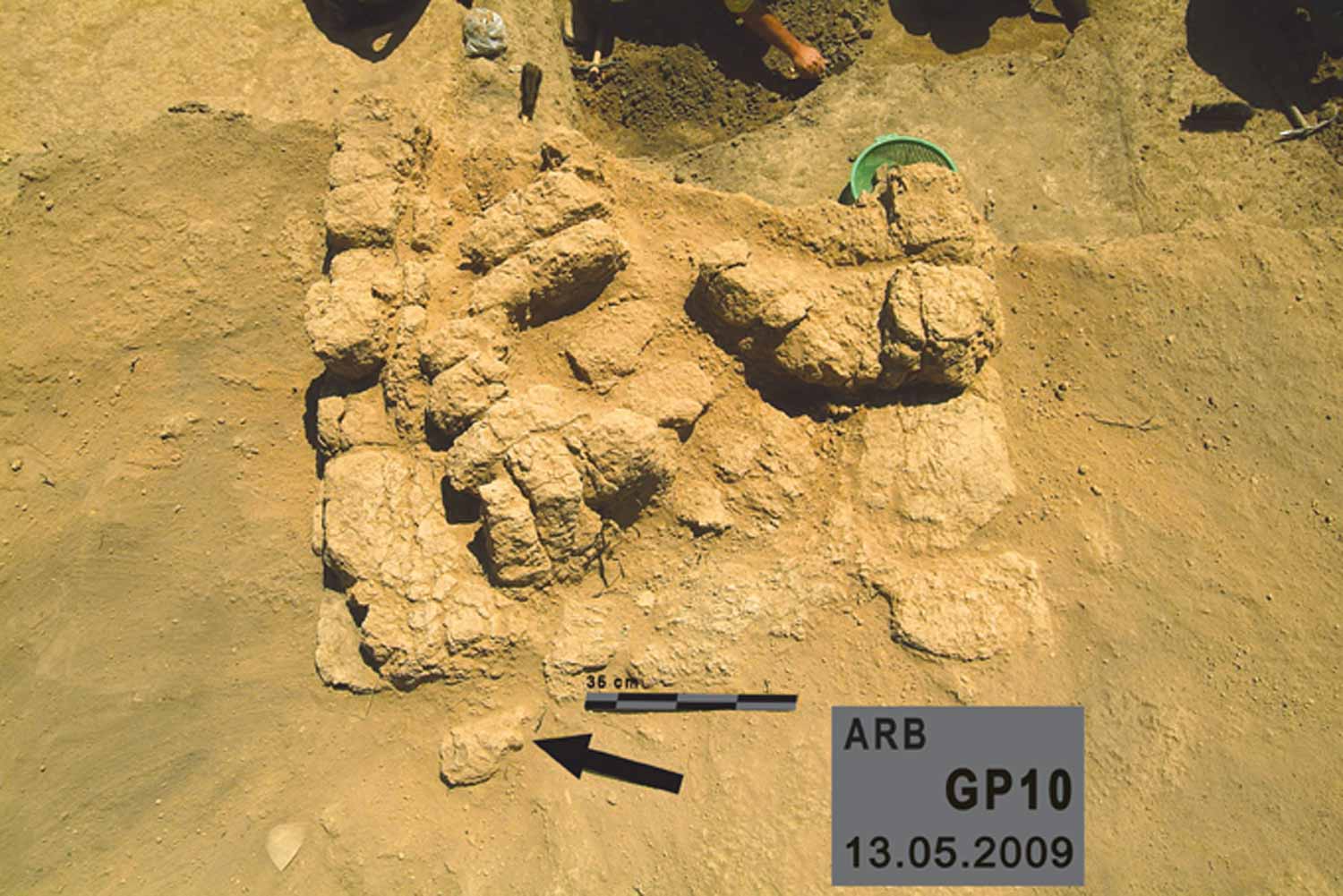
Type of burial and vault. Chamber grave, “diamond” vault constructed of three rows of bricks.
State of preservation. The grave was intact and has been fully excavated.
Burial descriptions. The grave was oriented on the NEE-SWW axis. The outer dimensions of the grave chamber were 1.25 x 1.65 m, and the inner were 1.65 x 0.55 m. It was entered through a shaft cut in the western wall which measured 1.20 x 0.5 m. The grave was closed by one row of bricks setin a diamond pattern. They were severely damaged, broken and fragile, and had fallen inside the chamber. During the excavation, the grave construction turned out to have been already damaged, especially the upper parts of the chamber which were eroded and crushed. It was composed of two longer walls: southern and northern, which were built of about 6-7 rows of horizontally set bricks. The two uppermost rows were very much damaged and fragile. The short western wall was closed by bricks, while the eastern was not.
Human remains. The grave belonged to two people: one adult (sex unknown) and one 12-21-year-old juvenis. The bones of the adult were mixed and pushed back to the eastern wall. The other deceased lay on his left side, on the NEE-SWW axis with the head to the east. Both sets of bones were badly preserved, very fragile and crushed.
Animal remains. The animal bones found in the grave belonged to pig (tooth, talus bone), sheep (talus bone) and sheep/goat (fragments of vertebrae and ribs).
Evidence of burial rituals. Meat offerings had been deposited in the grave chamber.
Burial goods. Two vessels have been found on the pile of bones under the eastern wall. One of those vessels is a pot decorated with painted horizontal stripes; the other is an undecorated jar. Another vessel, a jar decorated with painted horizontal stripes andhatched triangles, stood close to the knees of the deceased who was lying in anatomical order. The last vessel, an undecorated jar, stood upside down in the shaft. Eleven beads have been found among the mixed bones in the eastern half of the grave (made of cornelian, agate and shell). Three more beads (one made of grey stone, two made of shell) have been found near the palm of the deceased who was lying in anatomical order. In the eastern part of the grave, among the mixed bones, a bronze pin with a nailed head, fragments of a lead pin, a bronze disc with a small hole and a shell roundel have been found.
Description Joanna Mardas/archaeologist/Inventory Xenia Kolińska/archaeologist
| BIOARCHAEOLOGICAL ANALYSIS |
Human remains
At least two poorly preserved disarticulated skeletons (one adult and one subadult individual). The adult skeleton was roughly complete, and the subadult one was represented by a few bone fragments from both upper and lower extremity as well as most of the teeth.
Dr. Arkadiusz Sołtysiak/IA UW/anthropologist
Animal remains
The vaulted chamber grave in “diamond” arrangement GP10 contained a total of 18 osseous fragments belonging to a sheep or a goat and a pig. They were dispersed in the burial chamber, in which three dead people of not determined sex and at various ages: 12-15, 14-21 years old and in a mature, but unspecified, were deposited. The bones of a small ruminant were almost exclusively fragments of ribs and vertebrae (15 pieces); the exception was the talus bone undoubtedly belonging to a sheep. On the basis of its lateral length, the height at the withers, equal to 59.0 cm, was calculated. The sheep belonged to a small form. The pig was represented by a fragment of the molar and of the tarsal bone. The value of the measurement of its maximum length has been transposed to a hundred-points scale, obtaining 0 points. This means that this animal belonged to the domesticated form, was characterised by small body size, and its estimated height at the withers was approximately 50 cm.
Dr. Joanna Piątkowska-Małecka/IA UW/archaeozoologist
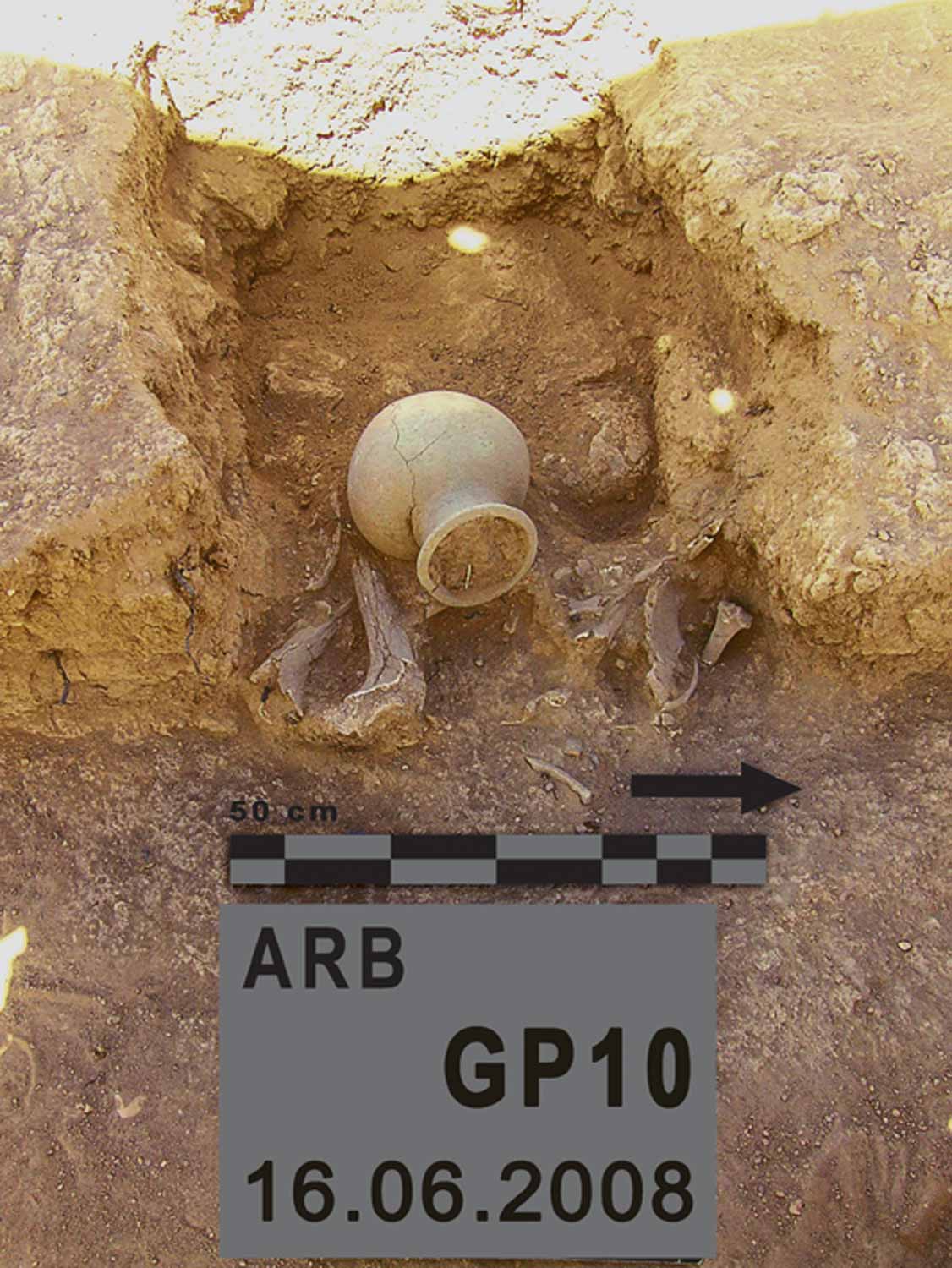
GP10 during exploration
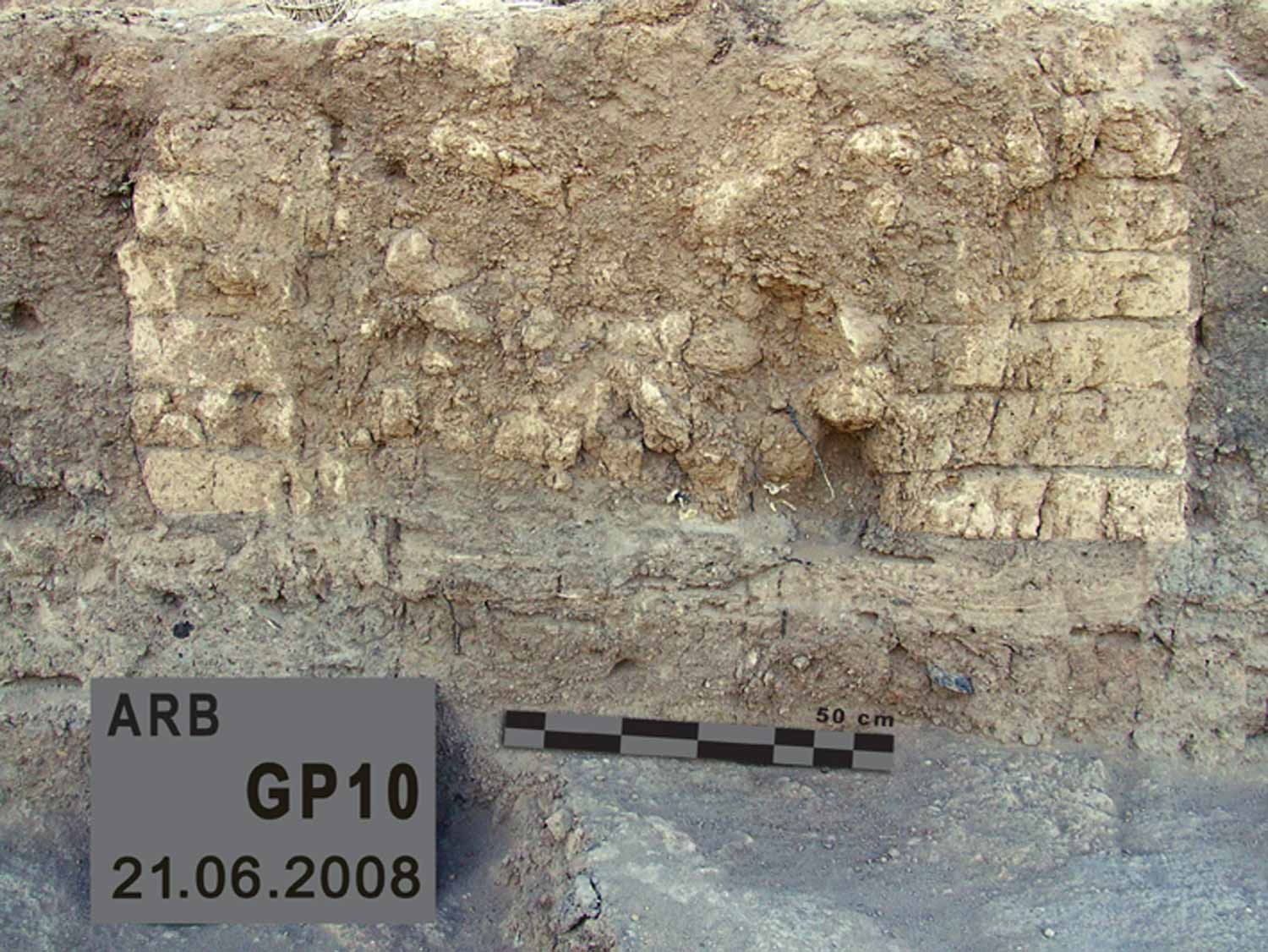
GP10 before exploration

Plan of GP10 before exploration

Plan of GP10 before exploration (with levels)

Plan of GP10 during exploration

Plan of GP10 during exploration with levels
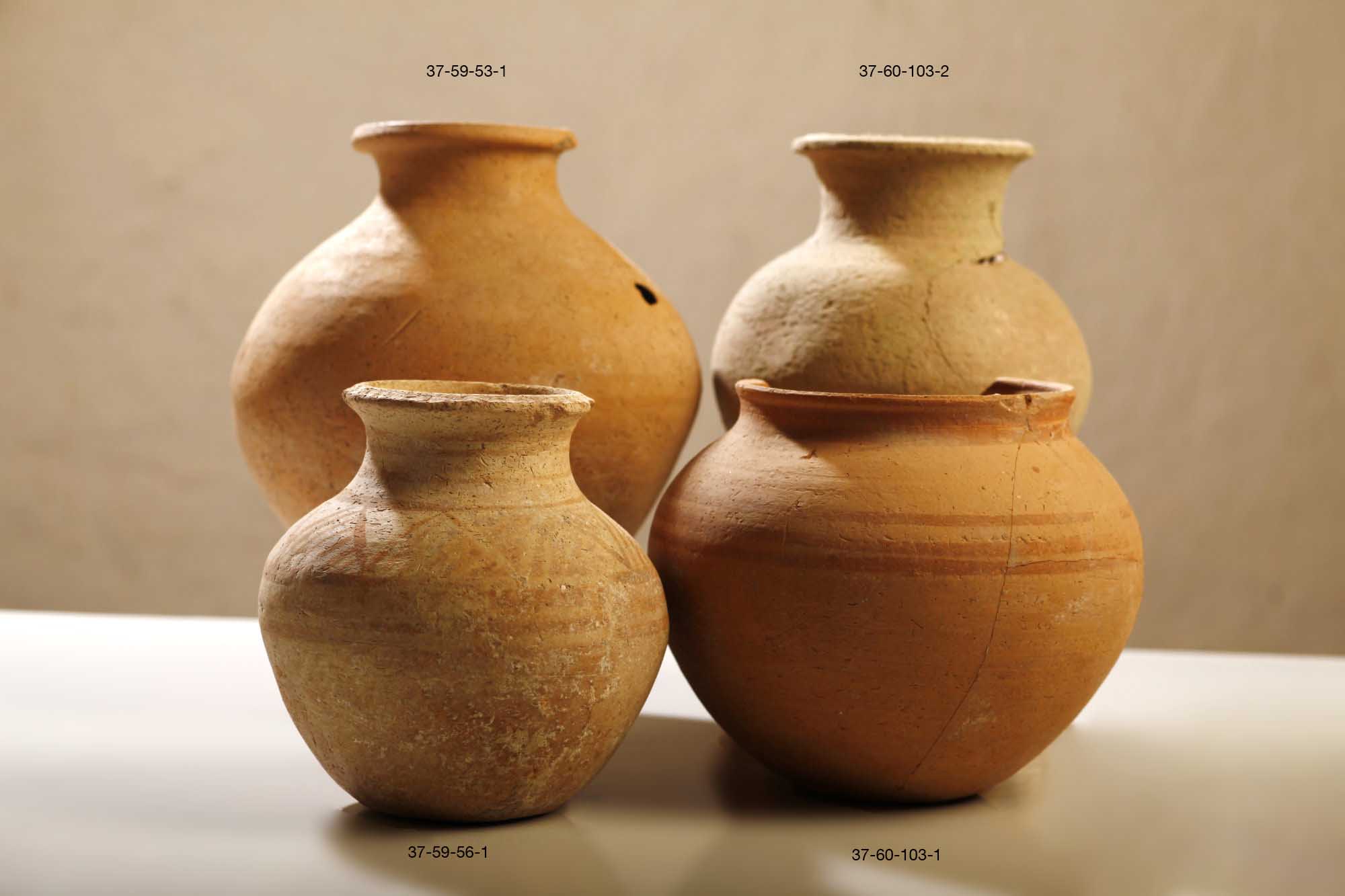
GP10. Pottery
GP10 before exploration