
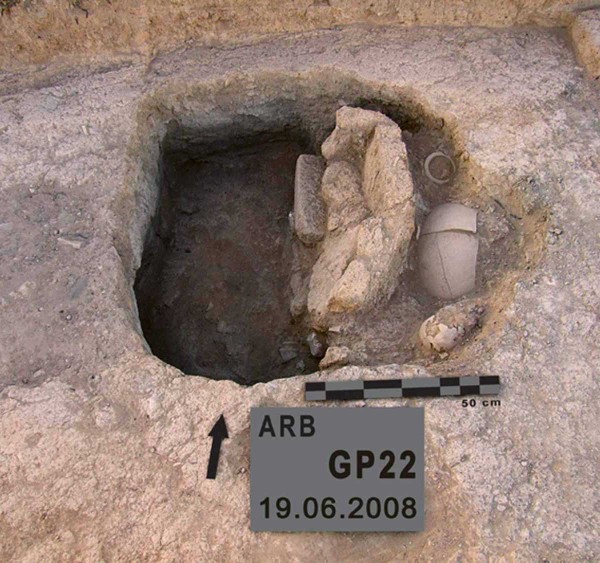
GP22
| GENERAL DESCRIPTION |
Type of burial. Shaft grave.
State of preservation. The grave was intact and well preserved.
Burial descriptions. The shaft of the grave, ca. 0.6 m deep, was rectangular in shape, about 1.15 m long on the N-S axis and 0.85 m wide. The side niche was carved in the eastern wall of the shaft. Its dimensions were 1.0 x 0.6 m. The niche was blocked by of wall of a kind built of re-used bricks that separated the niche and the shaft. It seems that there were three layers of bricks set horizontally and the fourth, top layer was composed of bricks set vertically. A plain storage jar with a narrow neck and a rib at its basewas used as a burial container. The vessel was broken before being used as a grave container; its base is missing. It was placed on its side, with the mouth to the NNE.The drawing of the vessel has been lost but on the basis of photographs and the plan of the grave its dimensions can be estimated at ca. 1.1-1.2 m in height and ca. 0.4 m in body diameter.
Human remains. The burial contained the remains of four children. Two of them were 4 years old, one was at the age of 5, and one was an infant. Bones were very badly preserved, fragile and fragmentary, and mixed in the case of three of the children, while the fourth child seemed to be lying in anatomical order but with no skull. It seems that the body was laid on its left side, on the NNE-SSW axis with legs to the NNE (towards the rim of the burial vessel). One skull has been found outside the vessel, close to its base and higher than the bones inside it. It is not certain whether that skull belonged to the child lying in anatomical order or not.
Animal remains. A few animal bones found in the burial (a fragment of a radius of a sheep/goat, a fragment of a metacarpus of a sheep, as well as three teeth and a fragment of a mandible of a pig) probably came from the earth used to fill the grave after the burial.
Evidence of burial rituals. Absent.
Burial goods. The children were equipped with five miniature jugs, all decorated with painted horizontal bands, which were placed inside the burial vessel. Two bigger jars stood on each other outside the burial vessel, next to its rim. The upper one was decorated with painted bands, the lower one with horizontal ribs at the base of the neck. Other finds included a bronze wire (pin?) found on the chest of the child lying in anatomical order. It was broken and had no head. There were also four beads (of agate, alabaster, cornelian, frit) and one trapezoidal pendant (of lapis lazuli). An item of interest was a cylindrical seal of agate depicting a contest scene between a lion and a gazelle (?). The seal is dated to the third quarter of the 3rd millennium BC. It was apparently reused in the MBA as an amulet.
Description Joanna Mardas/archaeologist/Inventory Xenia Kolińska/archaeologist
| BIOARCHAEOLOGICAL ANALYSIS |
Human remains
A small assemblage of eroded bones and many teeth of at least four individuals including one neonate and three children 4–5 years old.
Dr. Arkadiusz Sołtysiak/IA UW/anthropologist
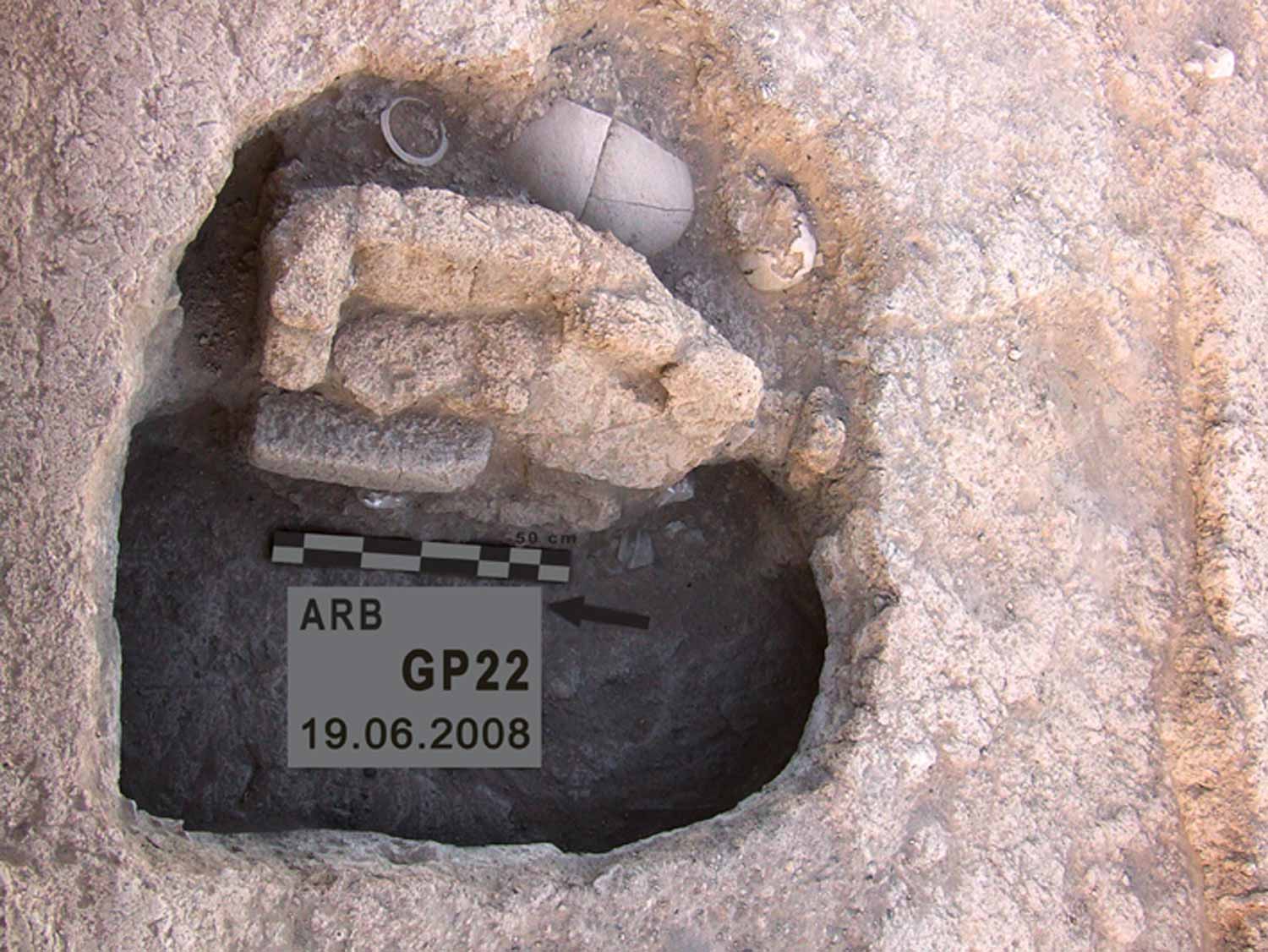
GP22 before exploration.
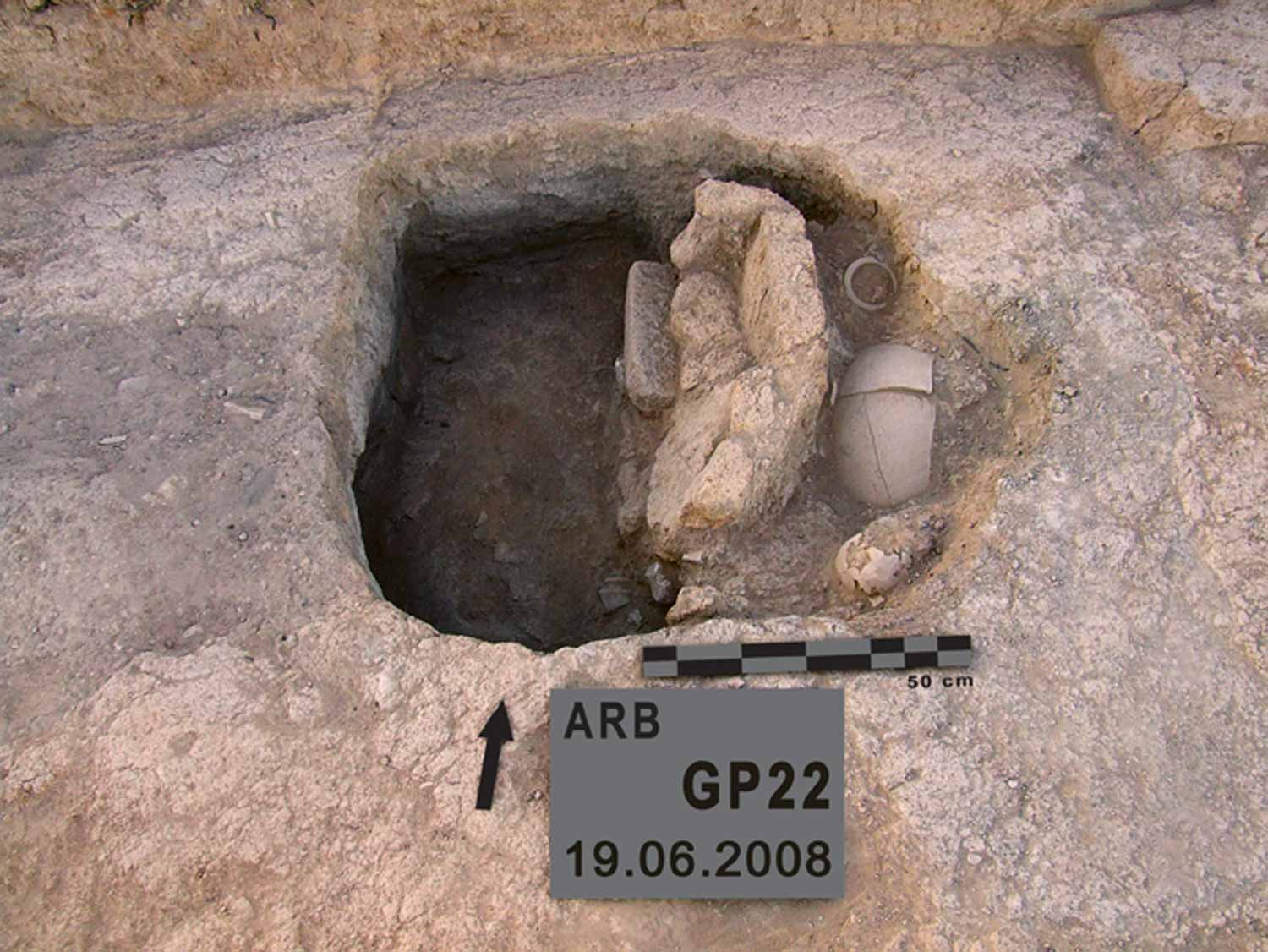
GP22 before exploration.
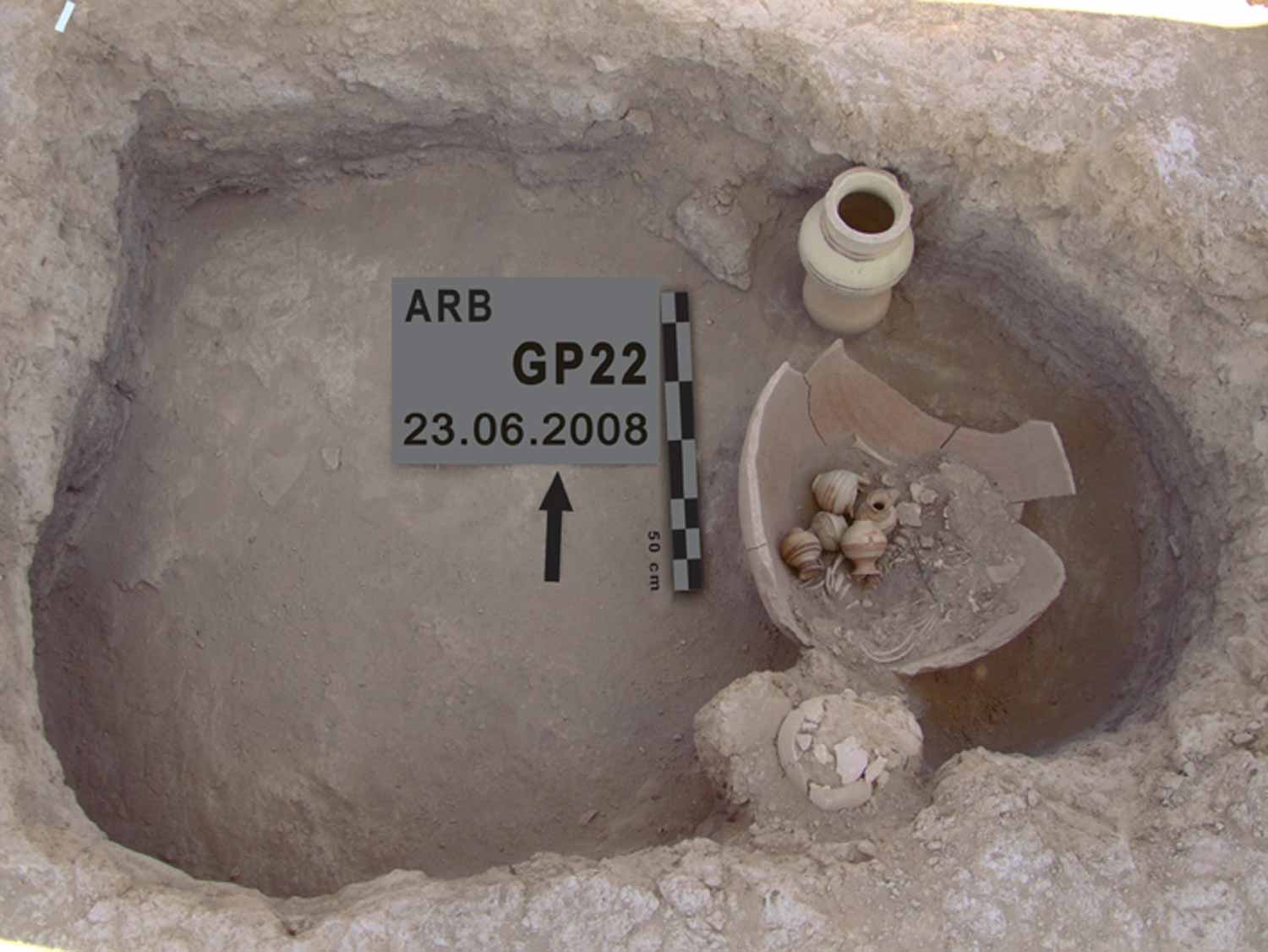
GP22 during exploration.
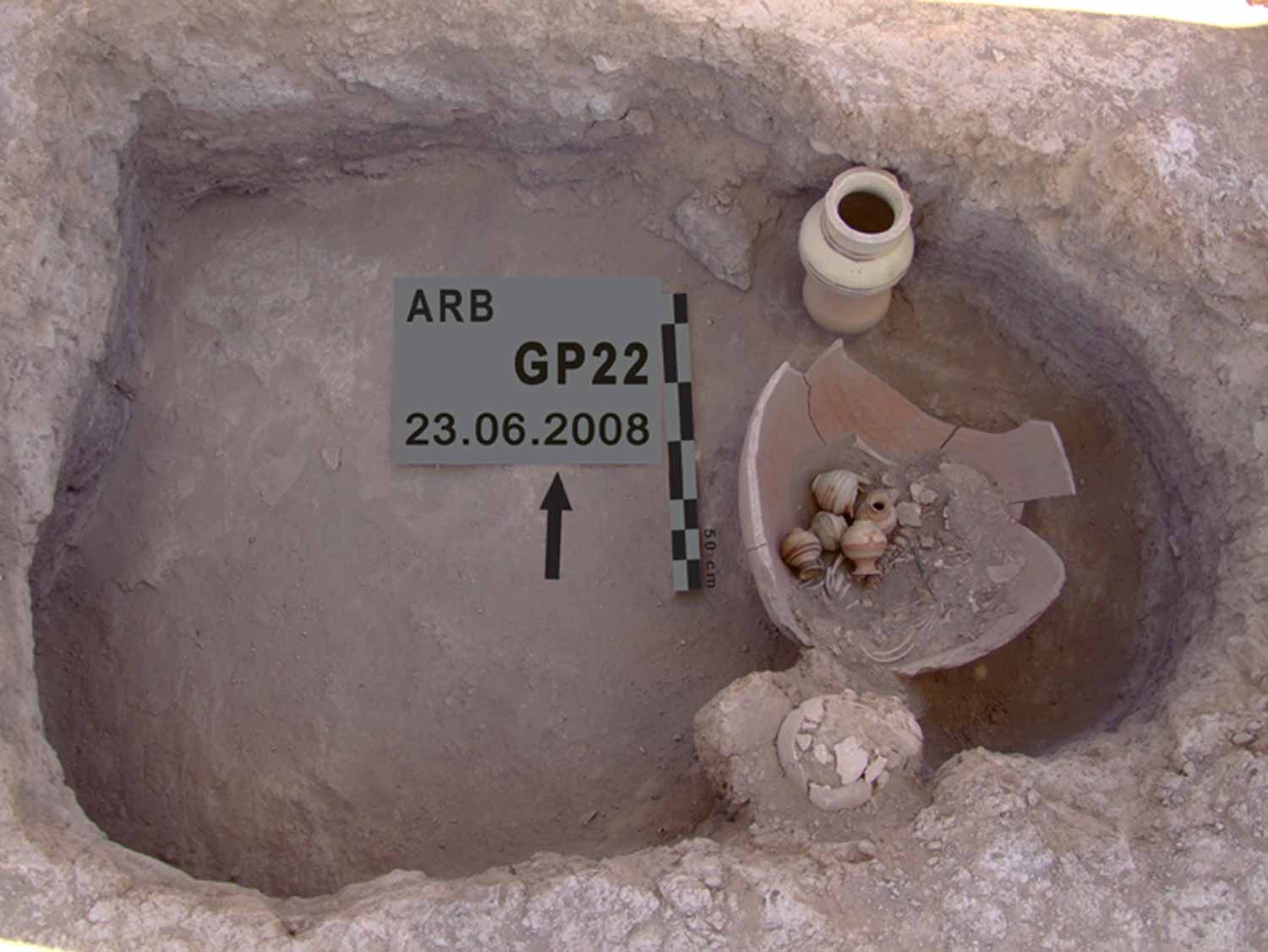
GP22 during exploration.
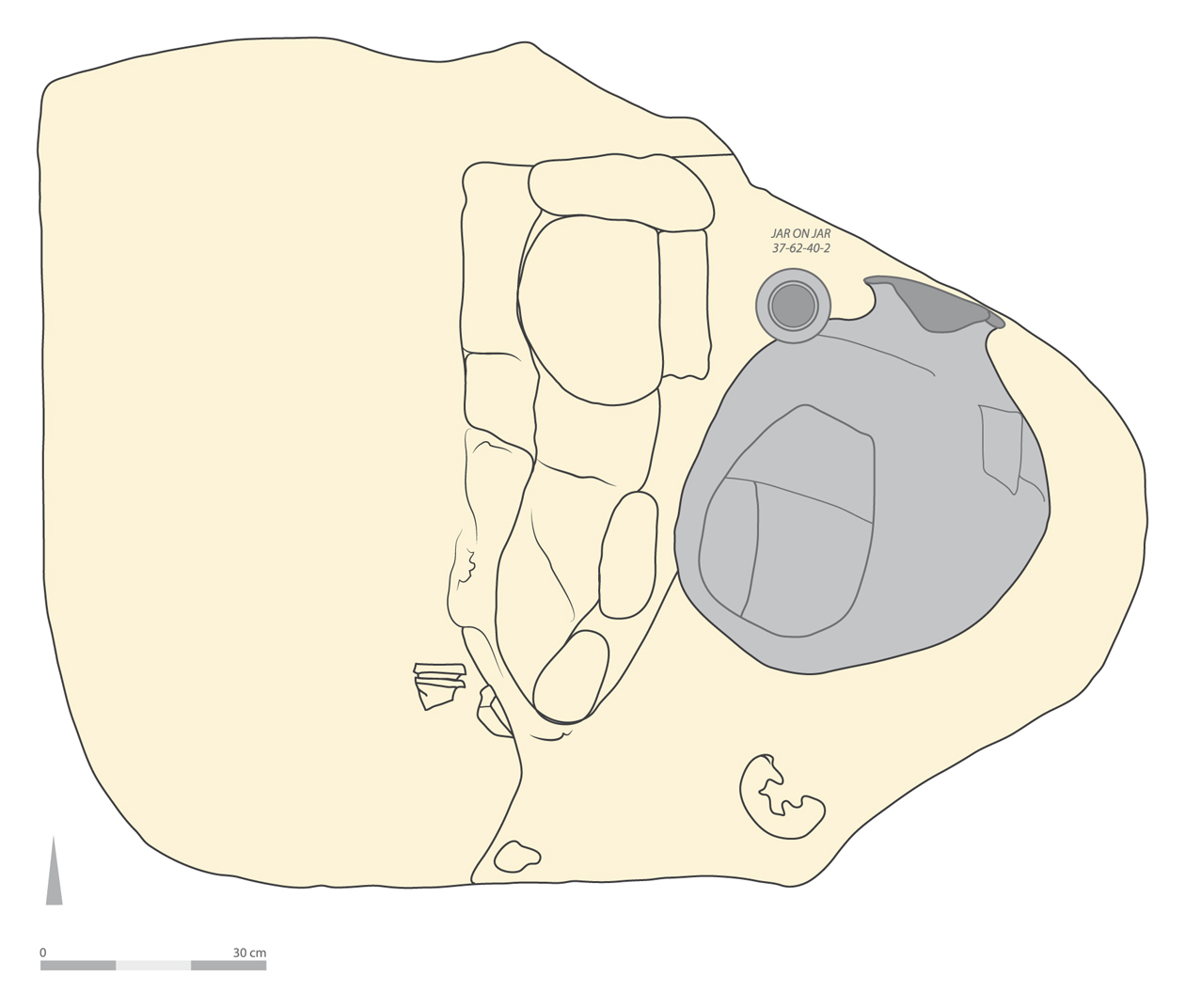
Plan of GP22 before exploration.
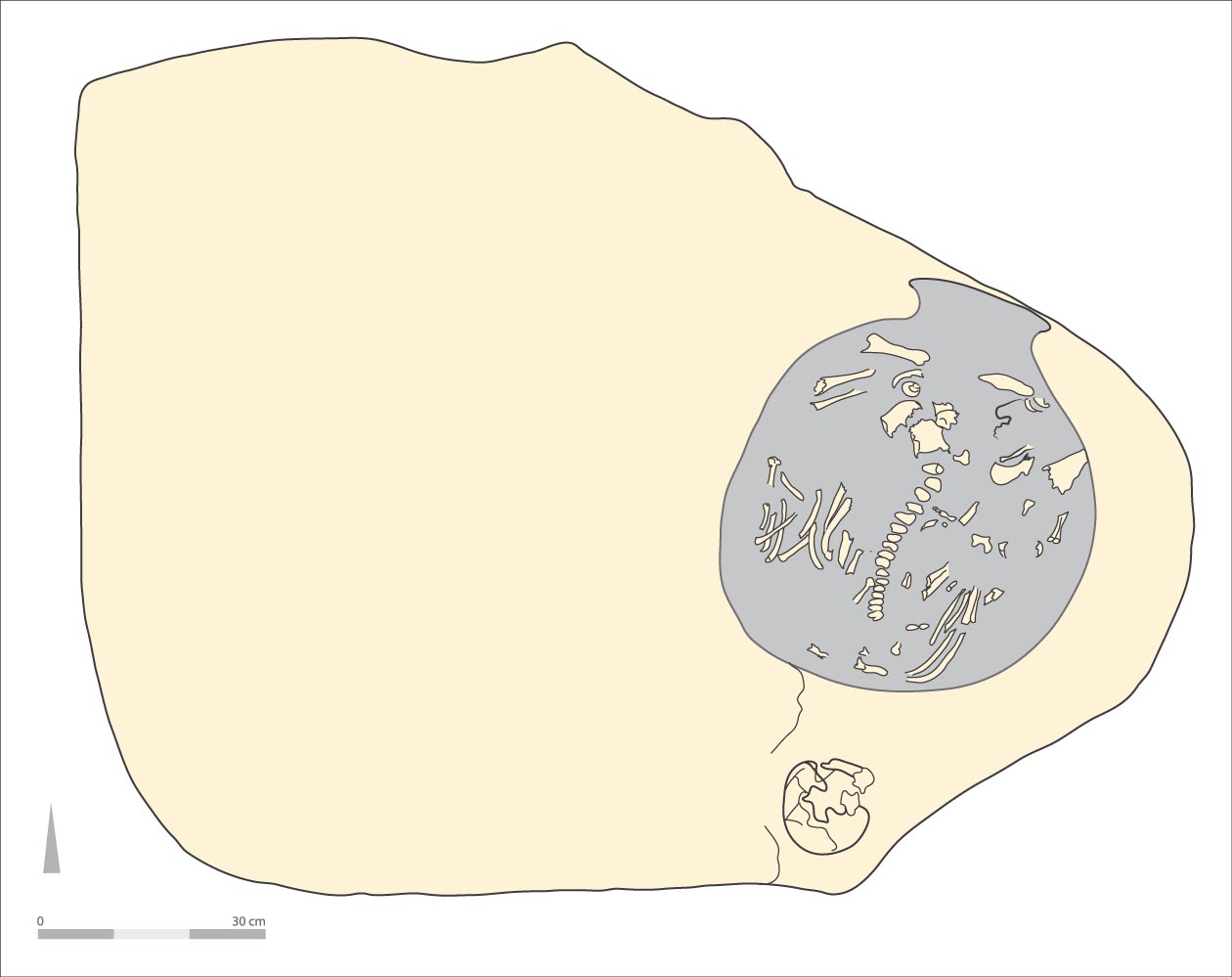
Plan of GP22 during exploration.
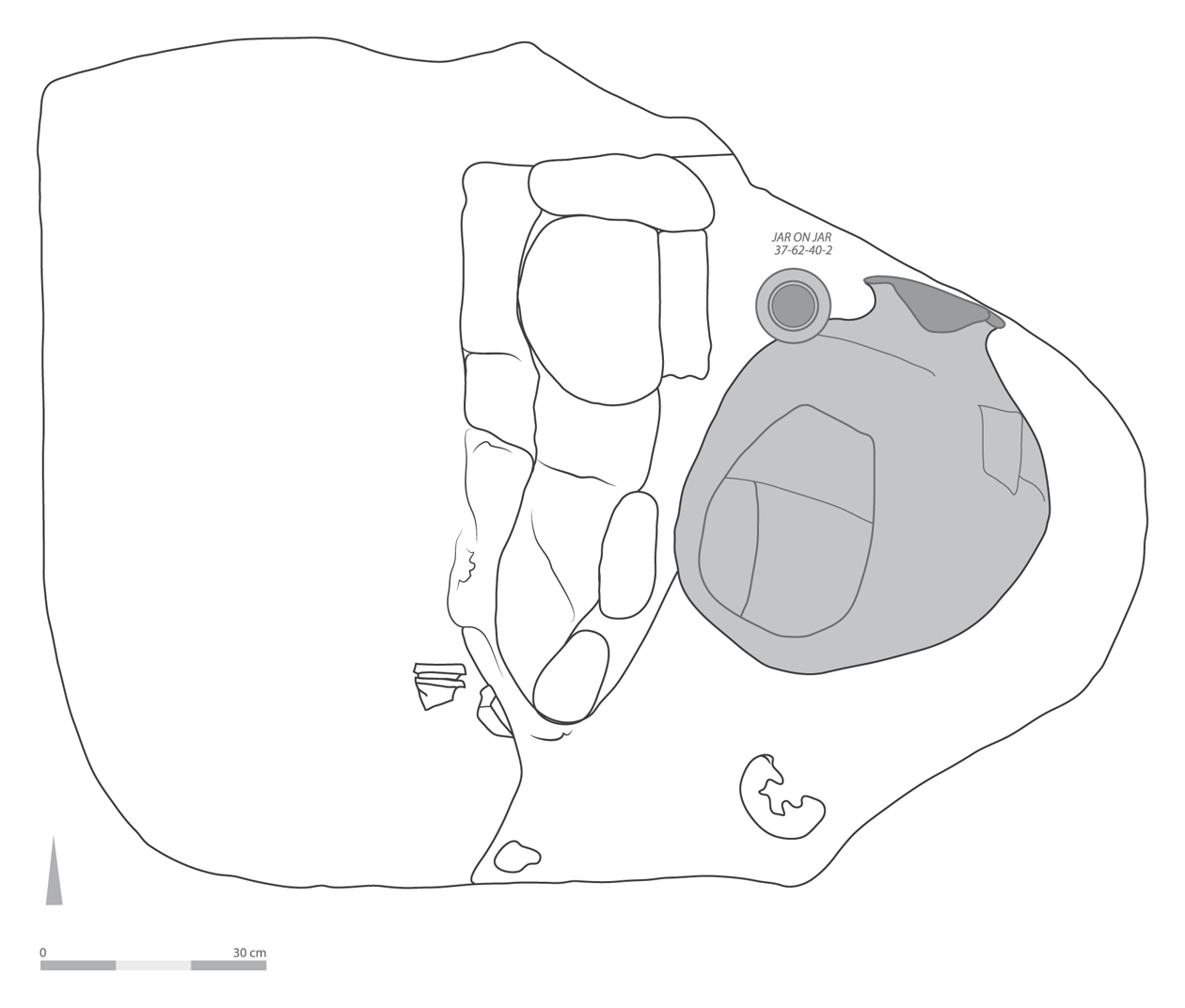
Plan of GP22 before exploration.

Plan of GP22 before exploration (with technical details).
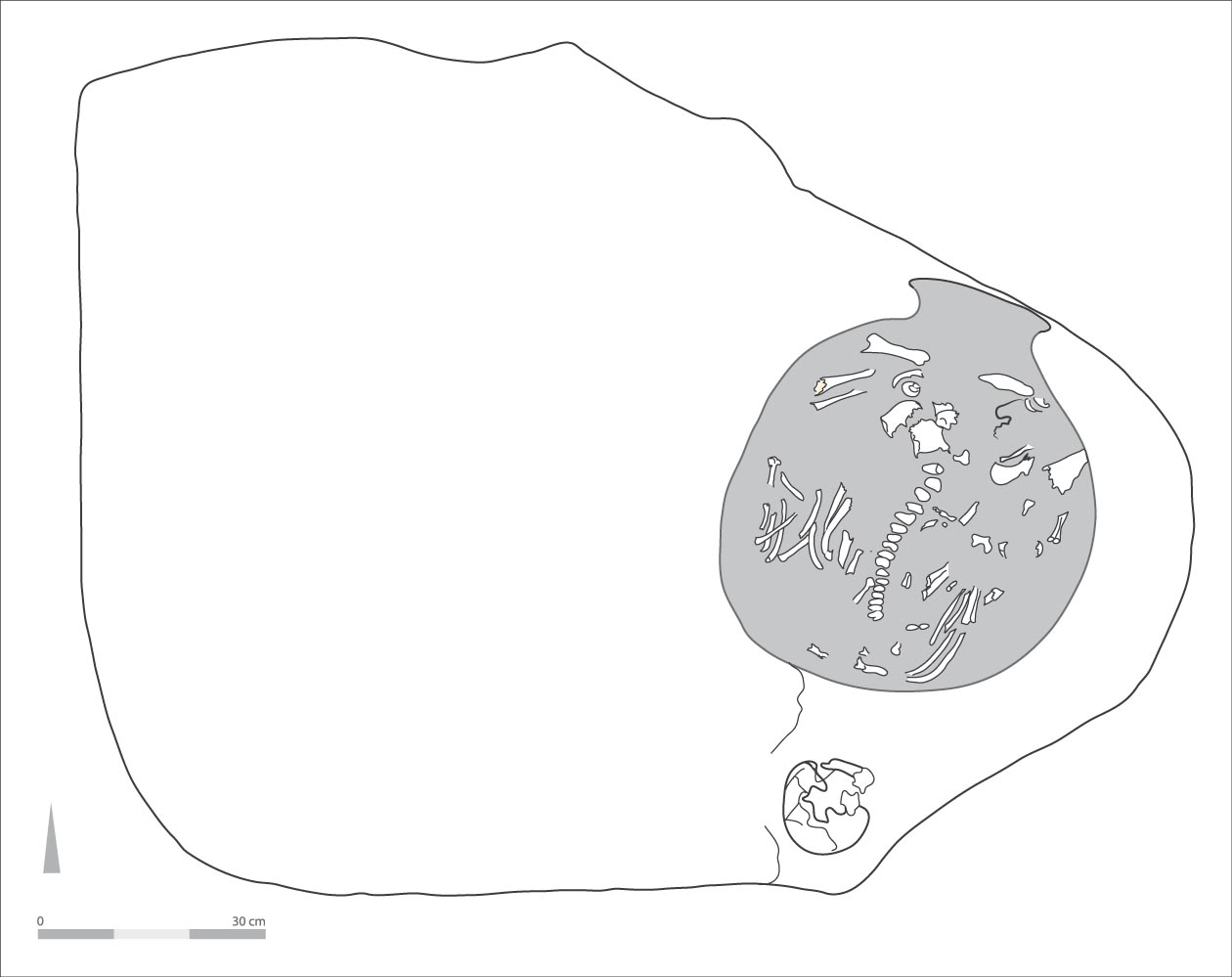
Plan of GP22 during exploration.

Plan of GP22 during exploration (with technical details).