
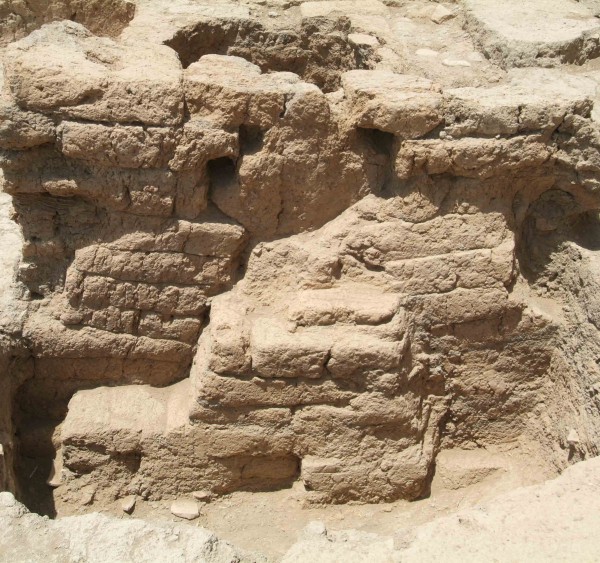
GP32
| GENERAL DESCRIPTION |
Type of burial and vault. Chamber grave, “diamond” vault.
State of preservation. The grave was intact and well preserved.
Burial descriptions. The grave was rectangular in shape, oriented on the E-W axis. The outer dimensions of the grave were 2.0 x 1.3 m; the inside dimensions of the chamber were 1.5 x 0.95 m. The vault had collapsed, and bricks were resting on the chamber fill and burial goods; only a single brick by the facade has remained in the original position. The top of the vault was originally ca. 1.0 m above the floor level of the chamber, and the inside height of the chamber can be reconstructed as 0.5 m. The grave was entered through a shaft/vestibule located on its eastern side, measuring 1.25 x 0.6 m and at least 1.5 m deep.
Human remains. Four adults were buried in the grave: three of unknown sex and one 30-35-year-old woman. The bones of the deceased were badly preserved, mixed, crushed and fragile. It is difficult to say anything about the position of the last body because of the bad state of preservation of the bones. Most of the bones lay in a disarticulated position in the western half and in the middle of the chamber. The last burial, that of a woman, was located in the eastern part of the chamber, head towards the west and back to the southern wall of the chamber.
Animal remains. Animal bones from the chamber have not been studied. A skull of an Equidae (about 5 years old) was lying directly on the SW corner of the wall of the grave chamber. It is not clear whether it was intentionally deposited on the structure of the chamber or came with the soil used to fill the pit. Because of the size of the skull, the first possibility seems much more likely.
Evidence of burial rituals. A pot decorated with painted bands had been deposited in the northern part of the funerary shaft.
Burial goods. The deceased were equipped with two vessels: a storage jar and a small, deep bowl, both decorated with painted horizontal bands. Both were standing in the SE corner of the chamber, the jar closer to the entrance, and the bowl under the southern wall. Among the bones inside the chamber, three bronze pins with nail-like heads have been found, each of them lying next to one of the better-preserved skulls. A bronze spearhead has been found next to the eastern wall of the chamber. Among the burial goods were also four beads (three made of cornelian, one of rock crystal) and a bronze earring/ring with overlapping ends. The attribution of metal finds to a particular deceased is impossible. One more vessel, a pot with painted decoration of horizontal stripes, stood in the NE corner of the shaft.
Description Joanna Mardas/archaeologist/Inventory Xenia Kolińska/archaeologist
| BIOARCHAEOLOGICAL ANALYSIS |
Human remains
Very eroded and weathered bone fragments of four individuals. All skeletons were highly incomplete, and the attribution of elements to specific individuals was based only on archaeological documentation. It was likely a secondary deposit, as the colour of teeth attributed to two individuals was different (light beige and brownish respectively). The cranial vaults were highly incomplete, but on one of them, an area of obliterated porosity can be observed (HR_FIG.13).
Dr. Arkadiusz Sołtysiak/IA UW/anthropologist
Animal remains
The chamber grave GP32 with the "diamond" vault contained osseous elements of the skull and mandible as well as molars, premolars and incisors of an animal of the family Equidae. The skull was placed on the brick structure of the burial chamber, and exactly on its southwestern corner. In the grave, equipped with a communication shaft from the east, four adults were buried, including one 30-35 years old woman. The size of the preserved remains of an equine animal suggests that they belonged to a donkey. Based on the abrasion of the incisors, the age of the animal was estimated at approximately 5 years.
Dr. Joanna Piątkowska-Małecka/IA UW/archaeozoologist
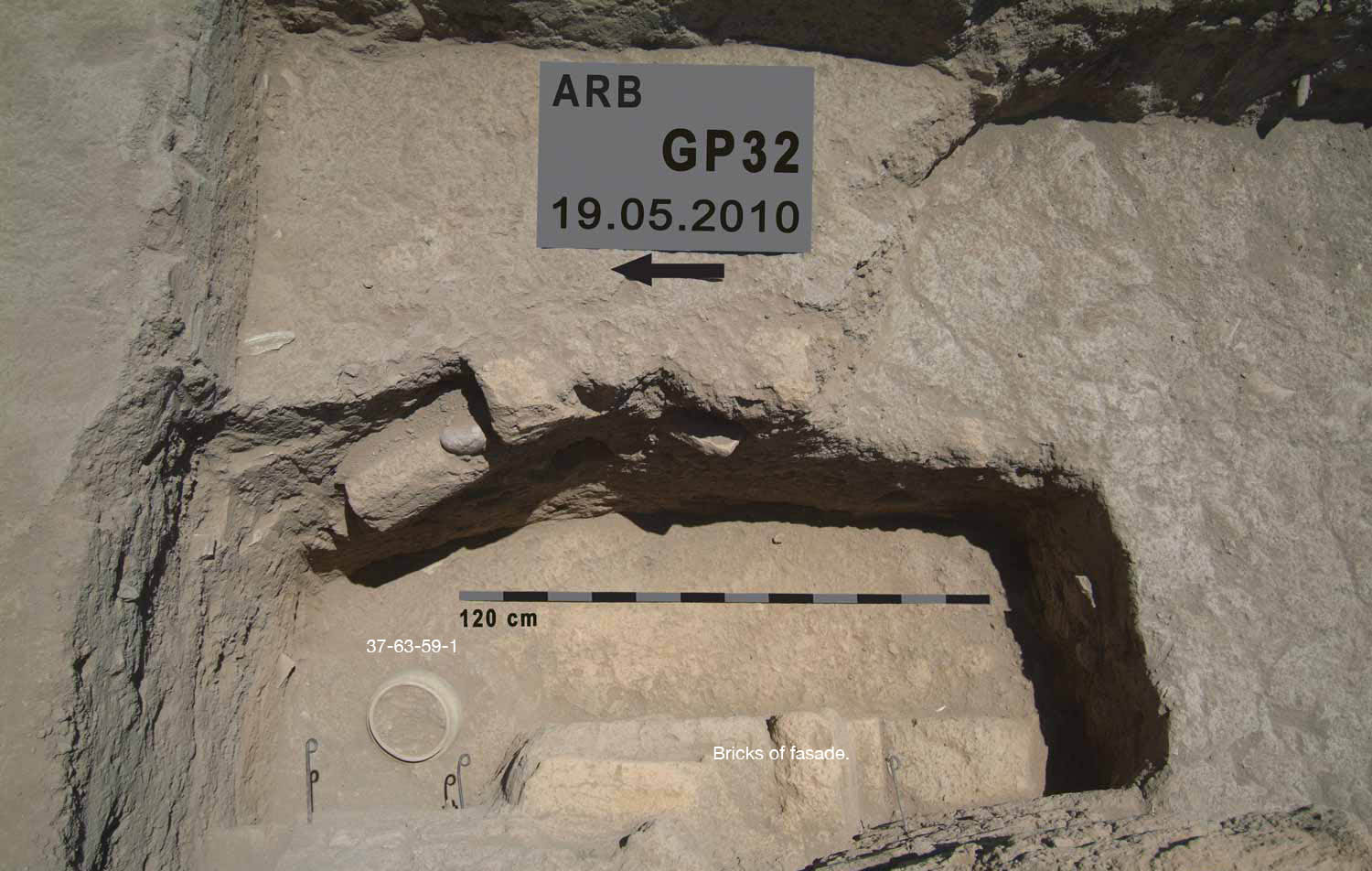
Shaft of GP32 with storage jar on left.

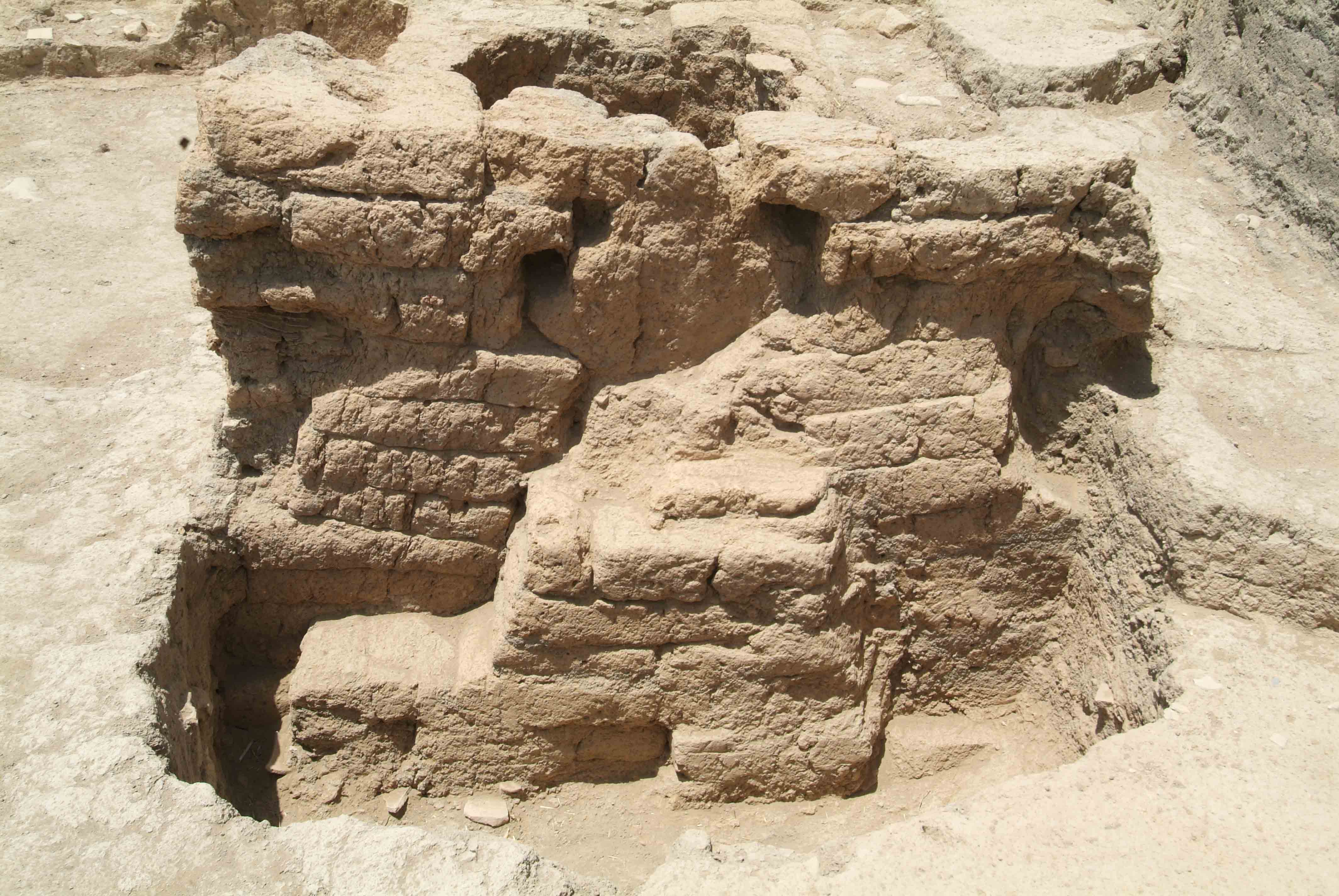
Fasade of GP32.
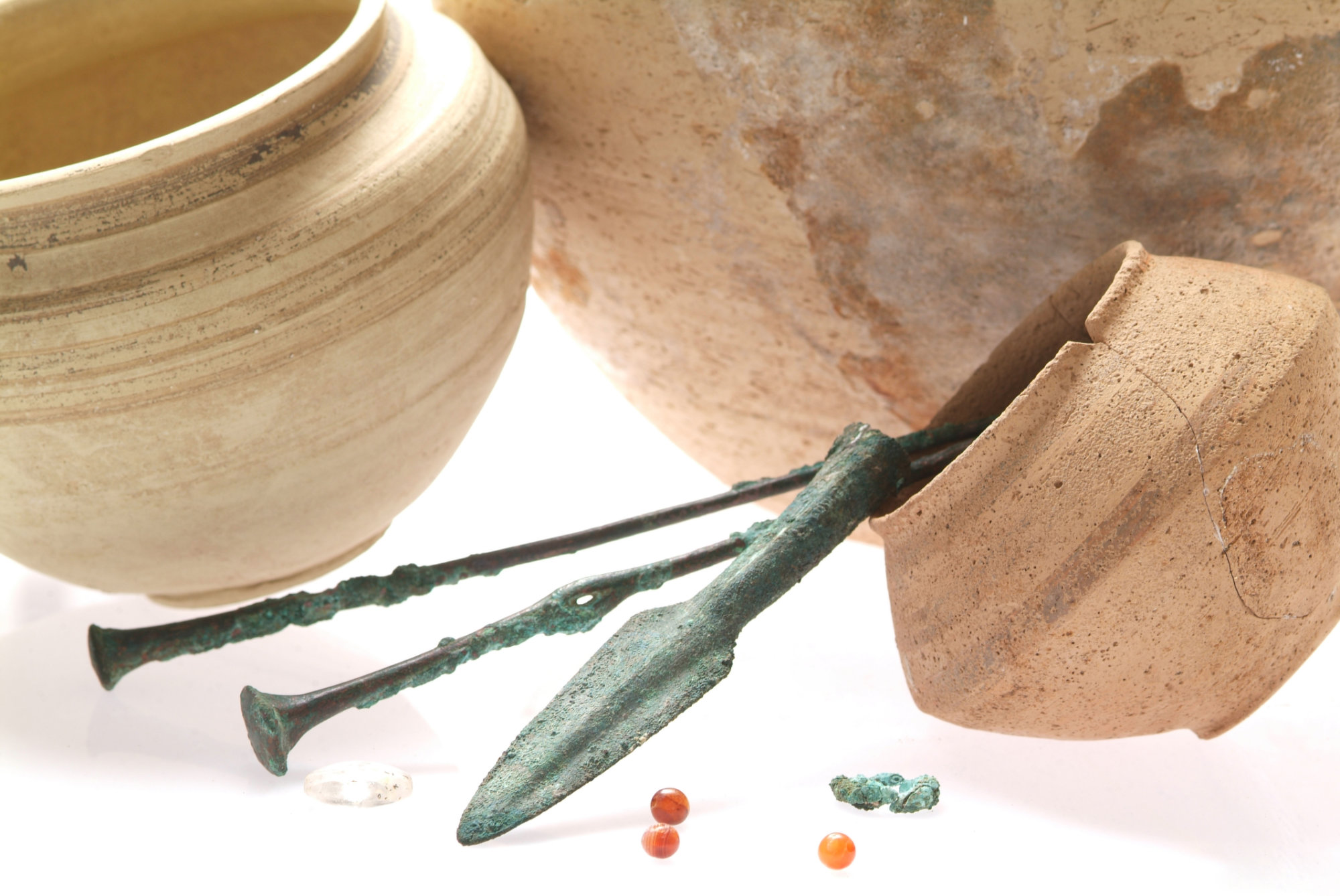
GP32 Burial gifts.
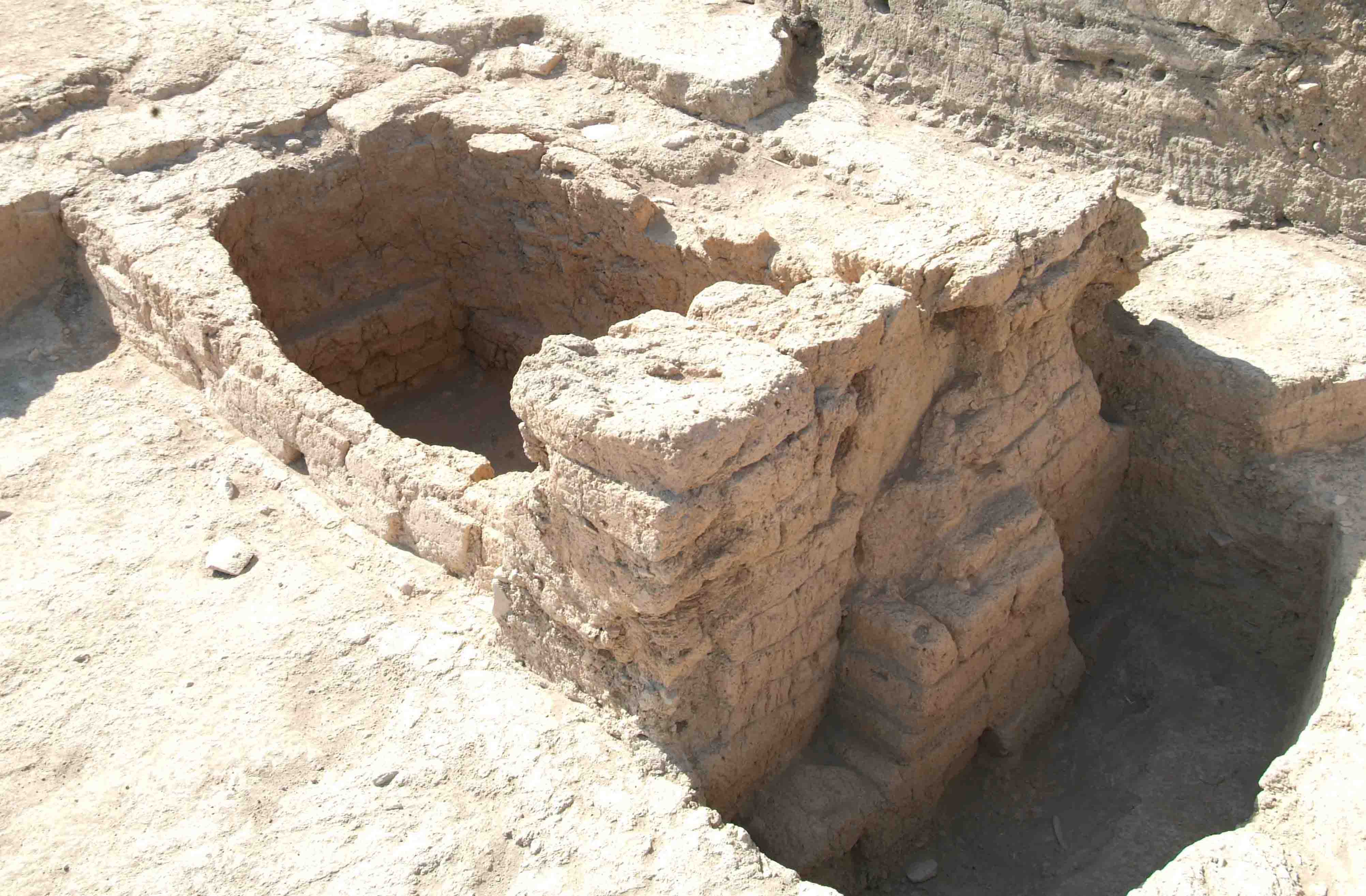
GP32 after exploration seen from south east.

GP32 before exploration, seen from north.
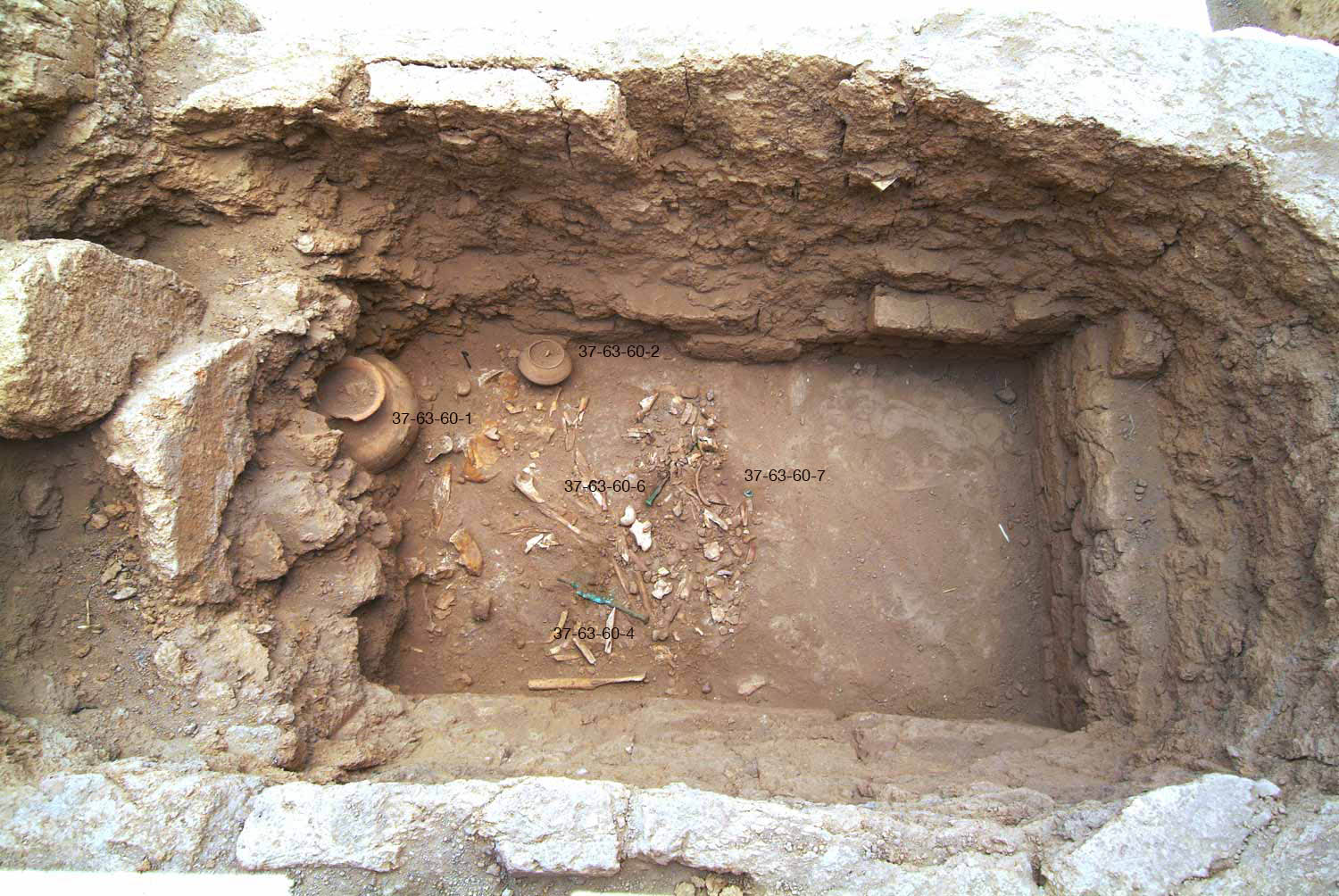
GP32 - distribution of artefacts.
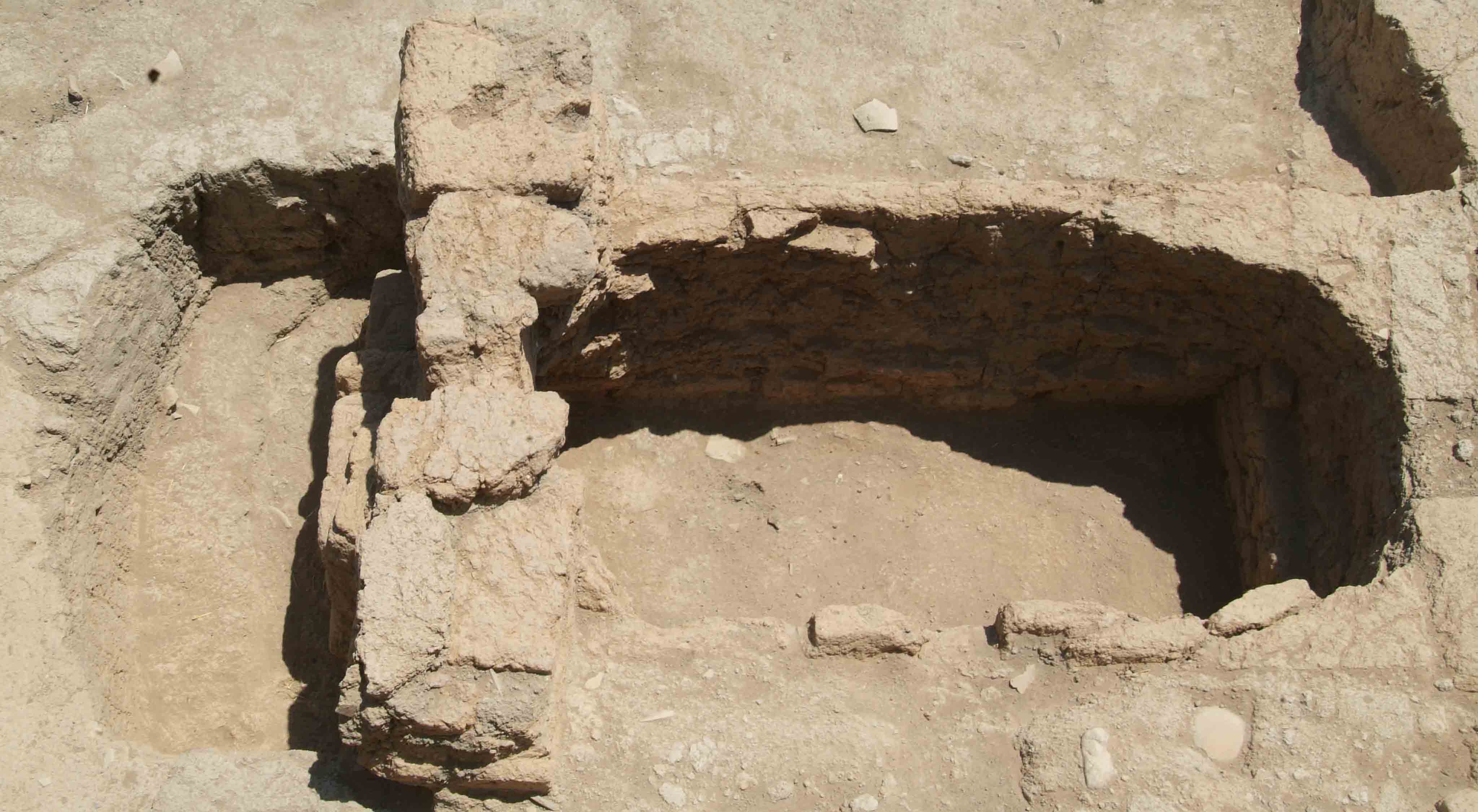
Explored chamber of GP32.

Collapsed vault of GP32 seen from west.
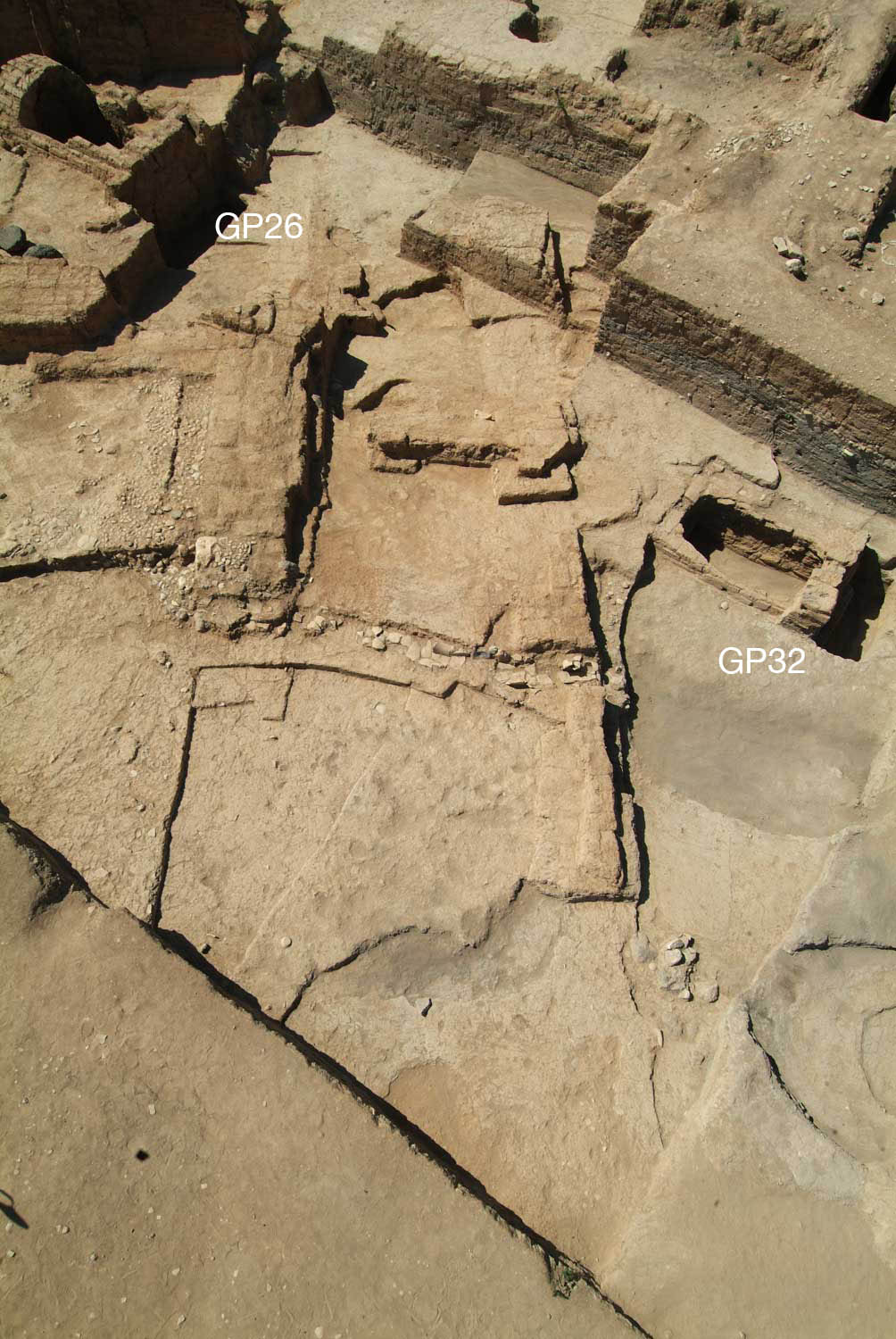
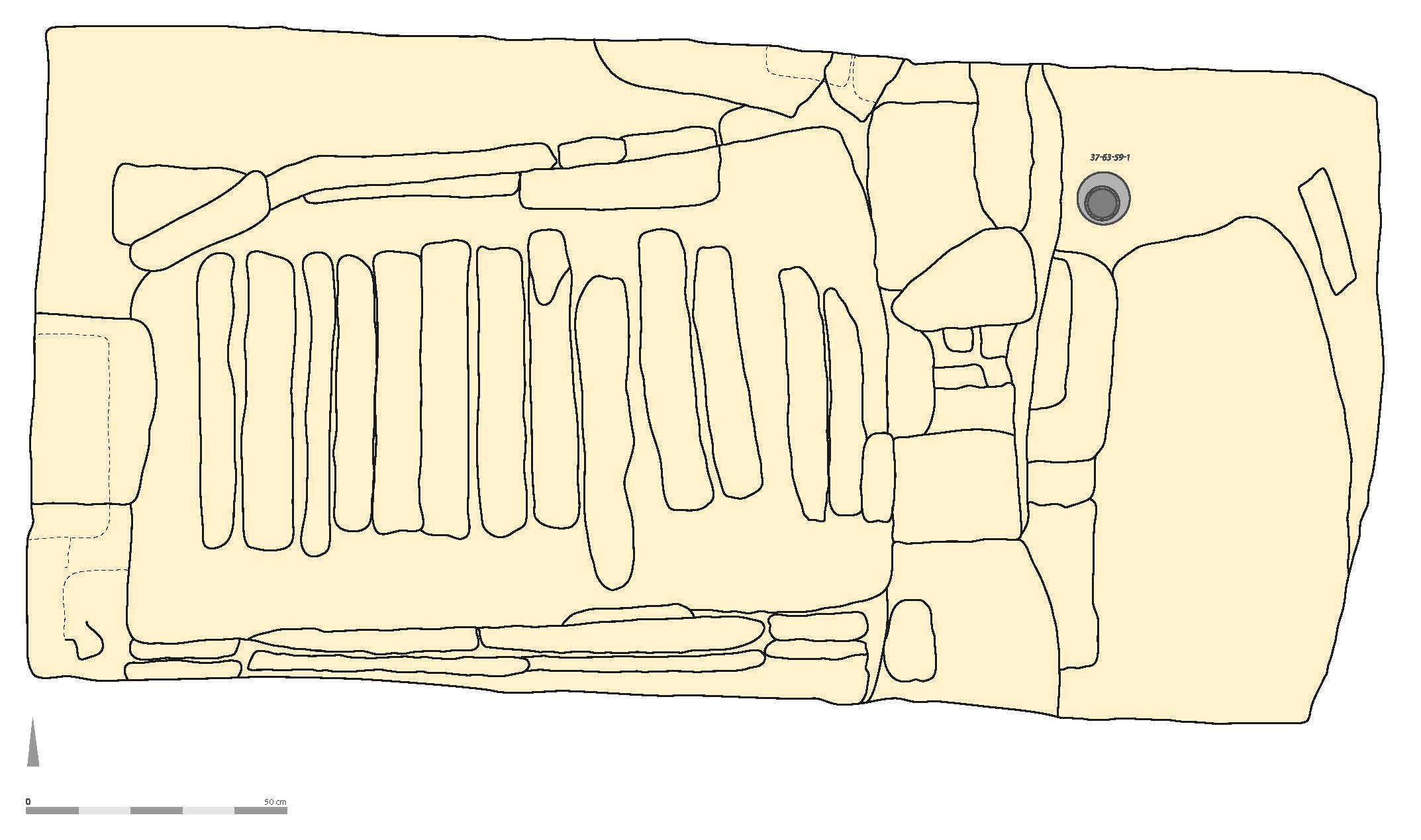
Plan of GP32 before exploration.
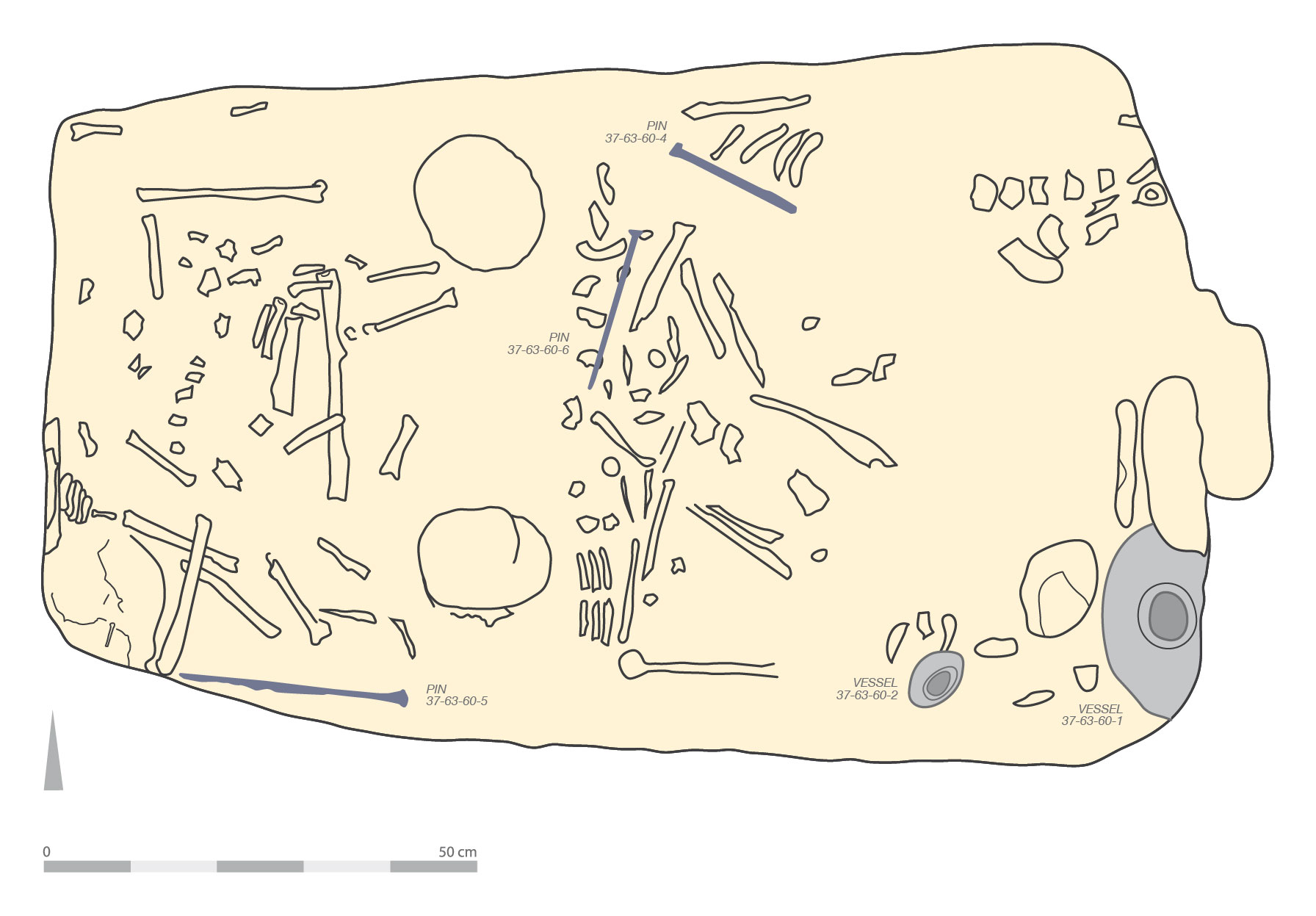
Plan of GP32. Distribution of artefacts.
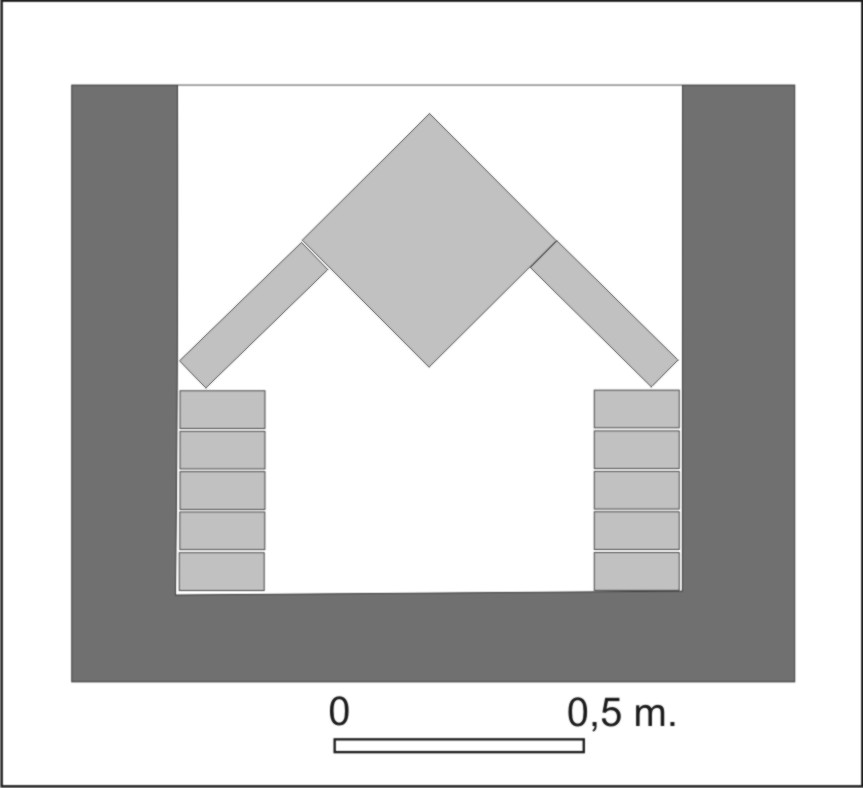
Reconstruction of vault.
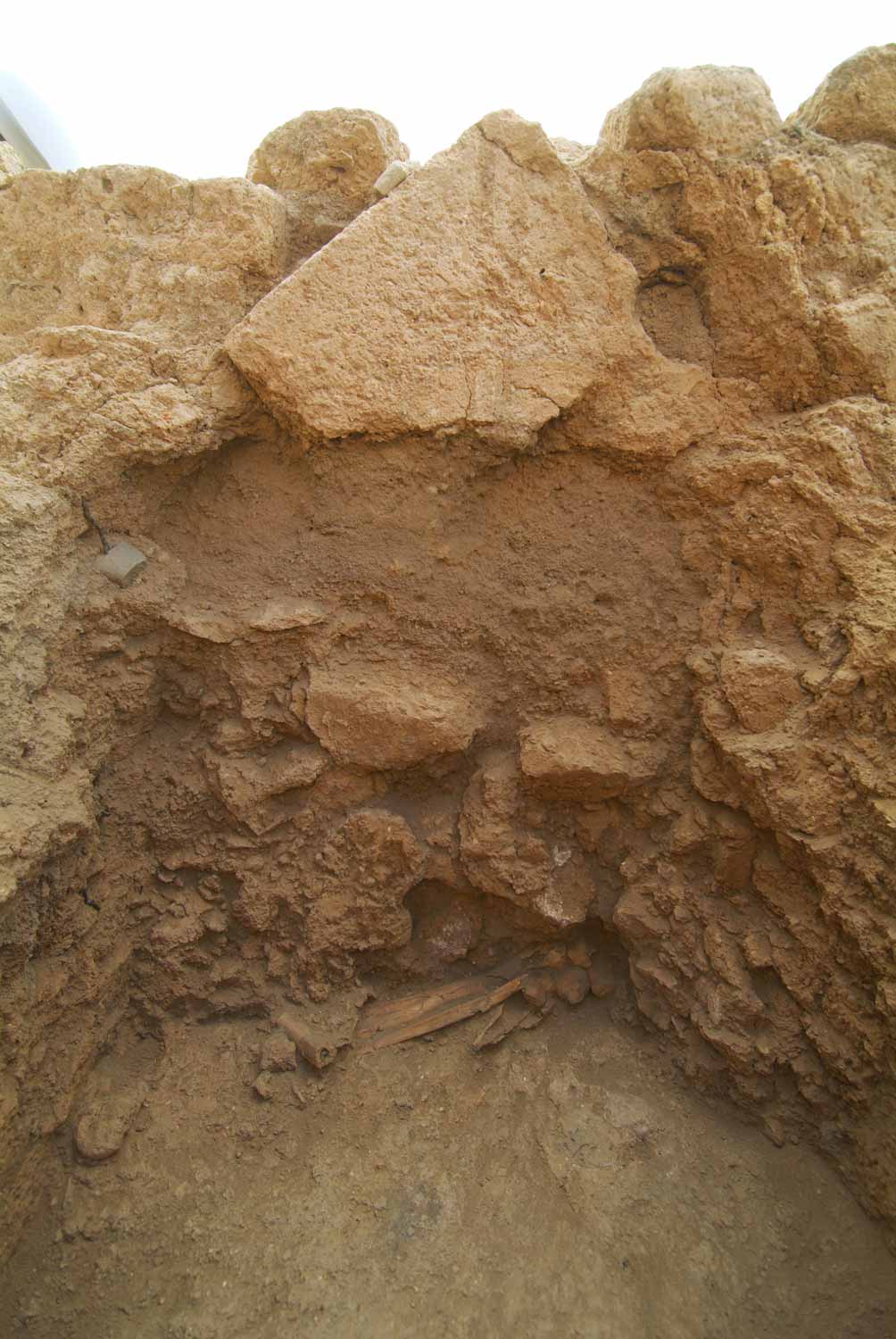
Second brick of vault on original position.
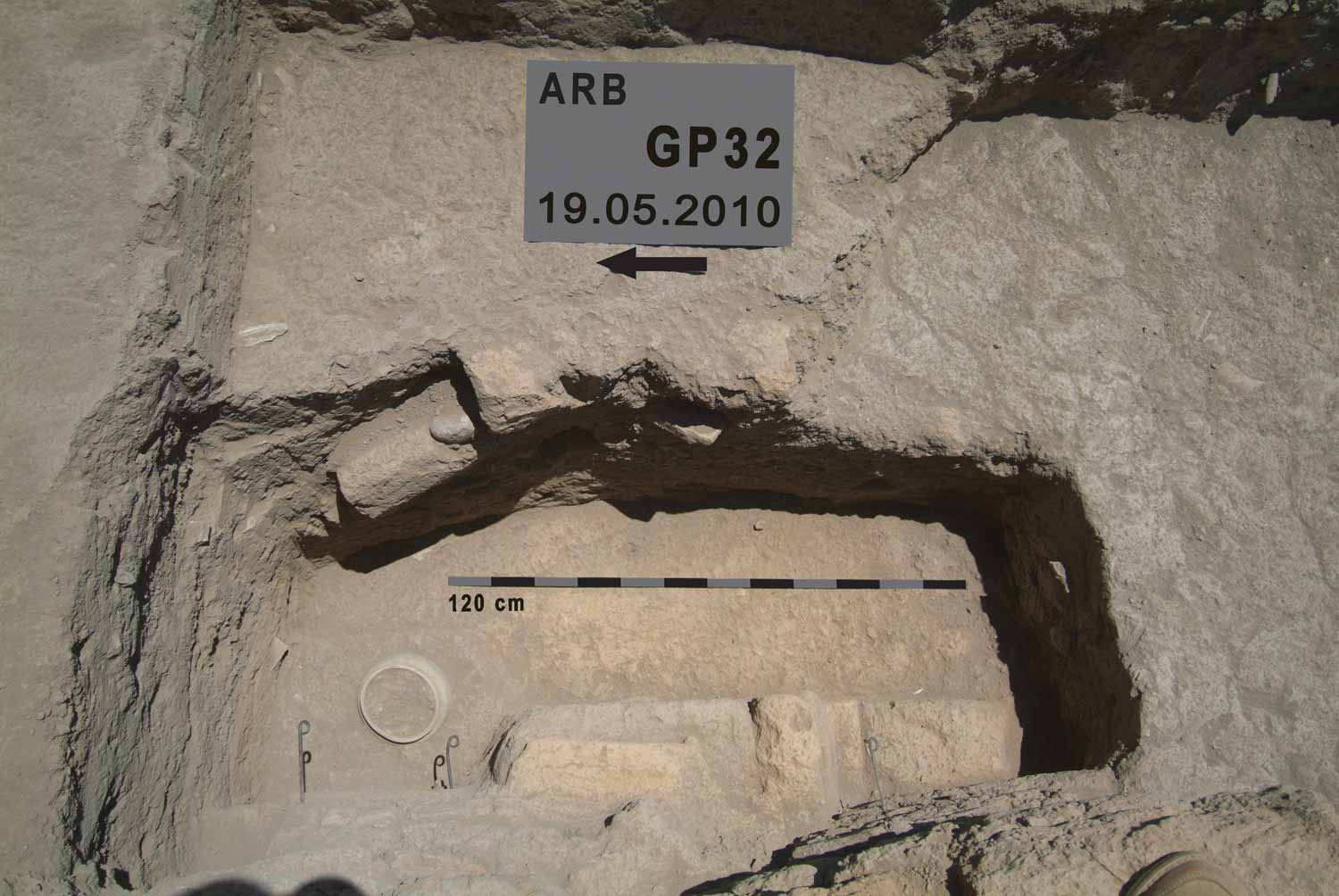
Explored shaft of GP32, seen from west.