
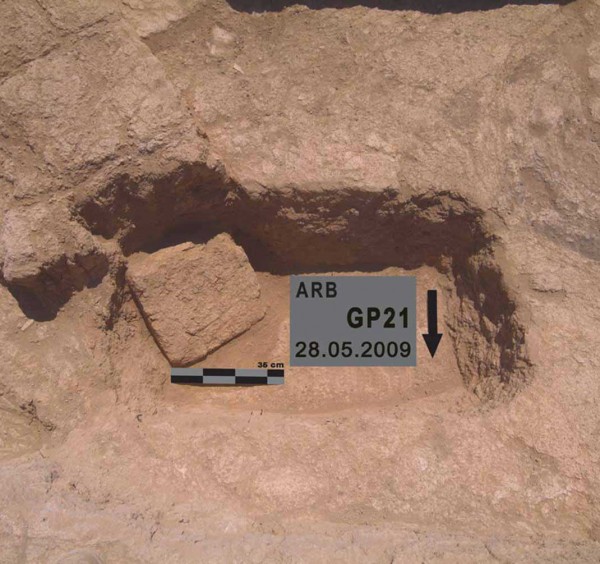
GP21
| GENERAL DESCRIPTION |
Type of burial. Shaft grave.
State of preservation. The grave was well preserved and intact.
Burial descriptions. The grave cut partly through the post-Akkadian wall W25 so the level from which the grave had been dug in must have been higher. The shaft was rectangular, about 0.8 m long on the E-W axis and 0.5 m wide. The preserved depth of the shaft is ca. 0.4 m. The side niche was carved in the SE corner of the shaft. It measured about 0.45 x 0.5 m. A large Kitchen Ware pot was used for the burial. It lay on its side, on the NW-SE axis with the rim to the NW. The rim was blocked by a single brick (34 x 34 x 7 cm). The pot is not decorated except for a polish applied horizontally on the shoulders and vertically on the widest part of the body.
Human remains. The grave belonged to one child (foetus). The bones were quite well preserved although the skull was broken. The child lay in anatomical order, on its right side, on the NW-SE axis with the head to the NW.
Animal remains. Absent.
Evidence of burial rituals. Absent.
Burial goods. The child was equipped with two miniature vessels. One was a jar decorated with painted horizontal stripes; the other was a small bowl, handmade and unbaked.
Description Joanna Mardas/archaeologist/Inventory Xenia Kolińska/archaeologist
| BIOARCHAEOLOGICAL ANALYSIS |
Human remains
An almost complete and relatively well-preserved skeleton of a foetus (8 months in utero).
Dr. Arkadiusz Sołtysiak/IA UW/anthropologist
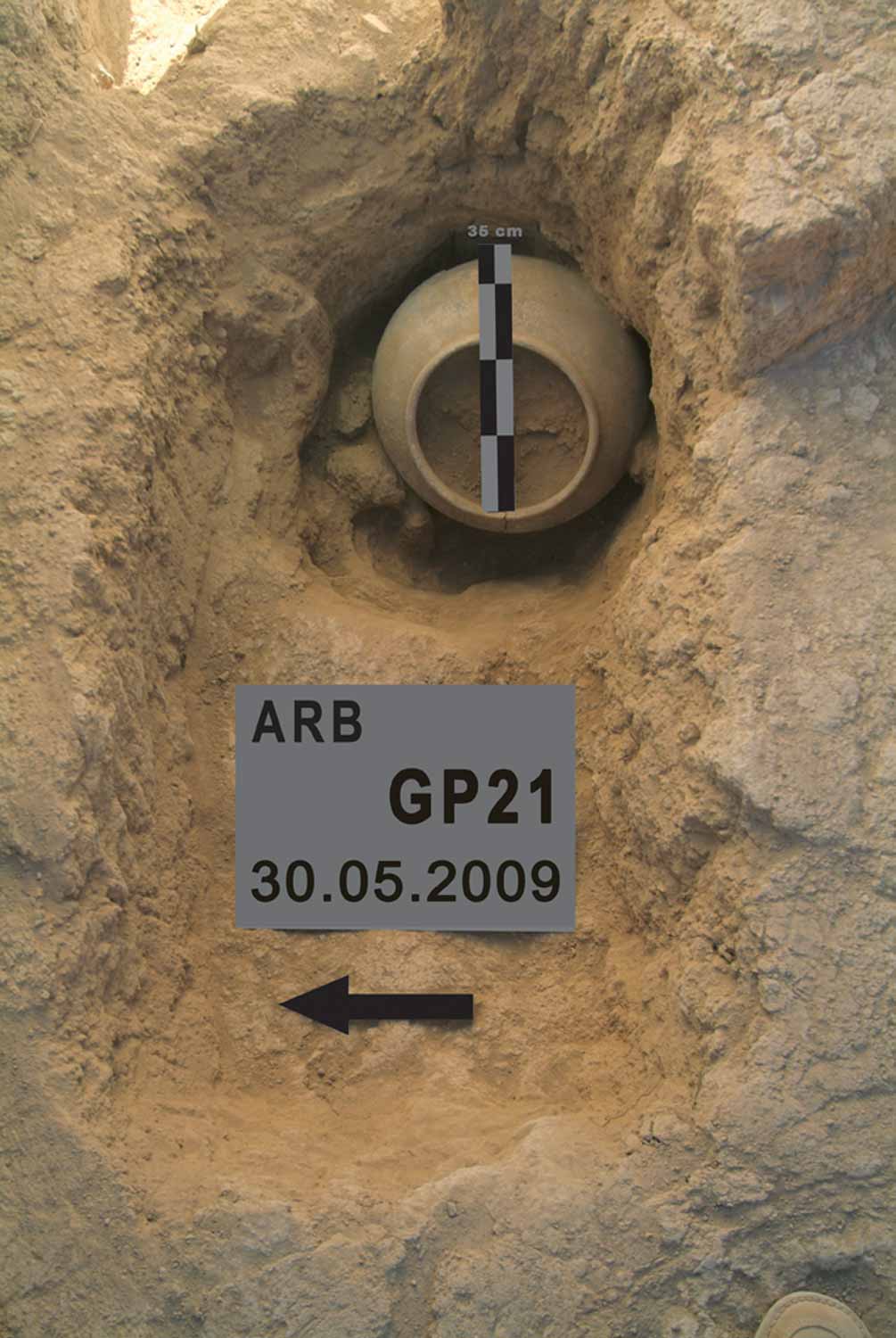
GP21 during exploration.
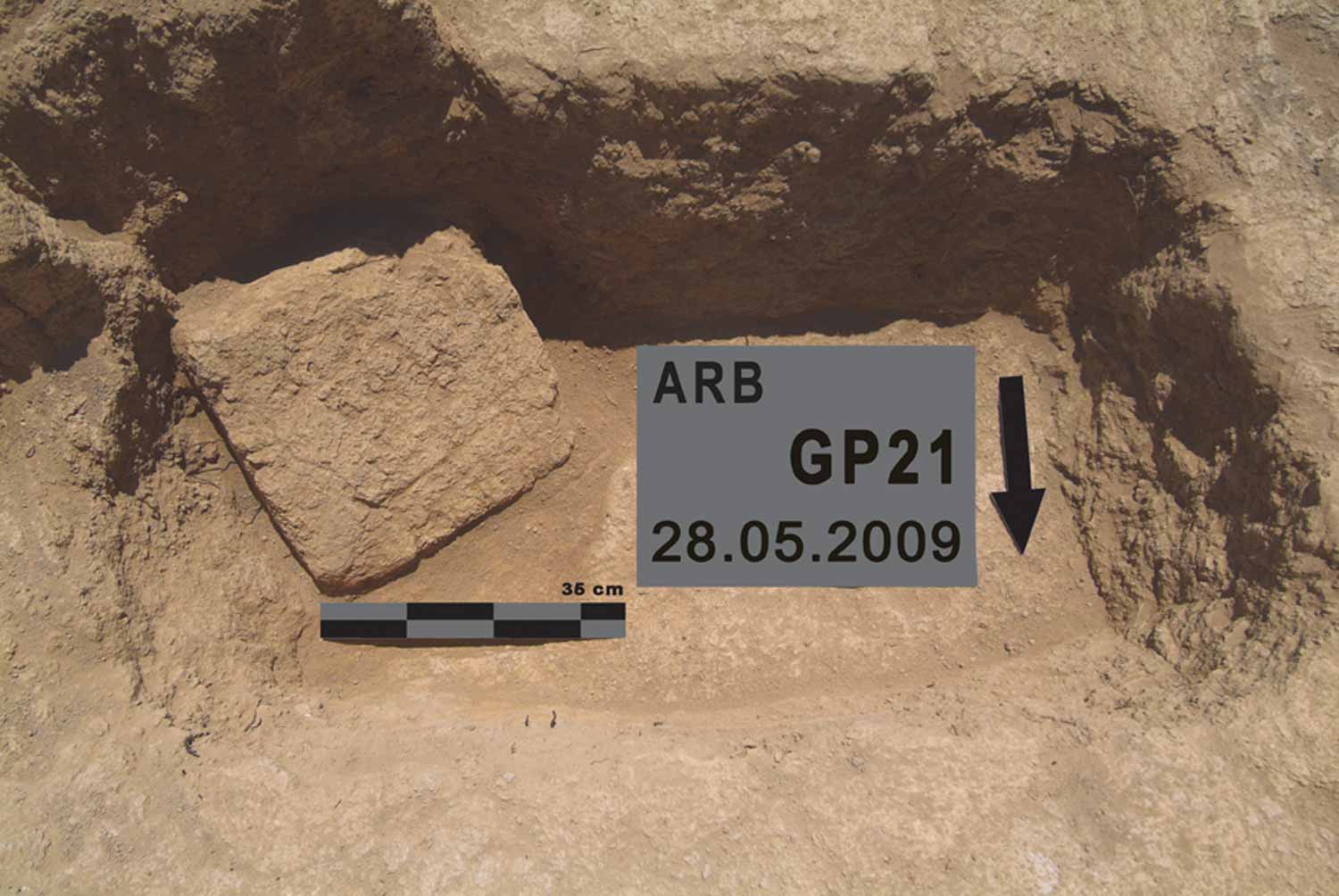
GP21 before exploration.
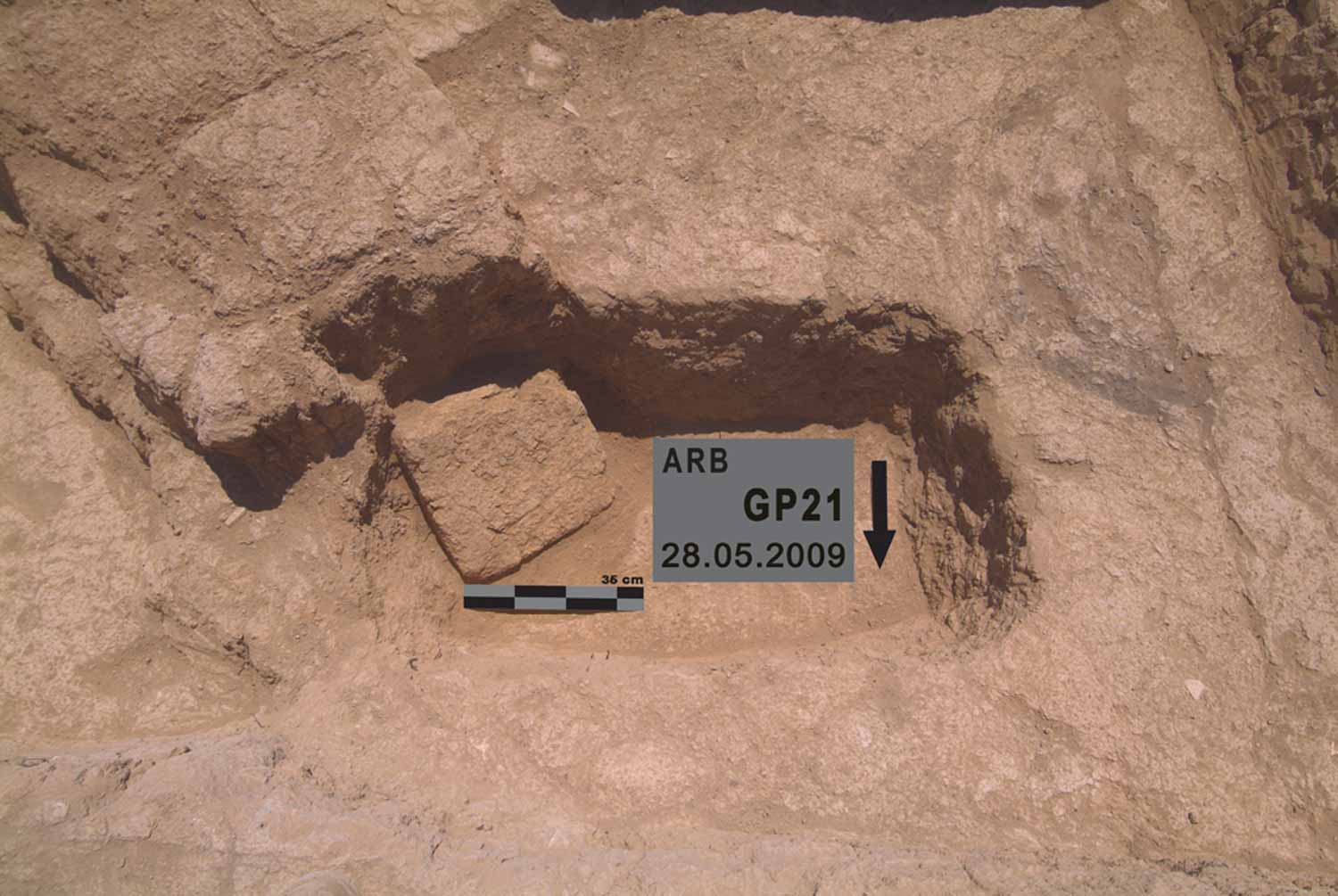
GP21 before exploration.
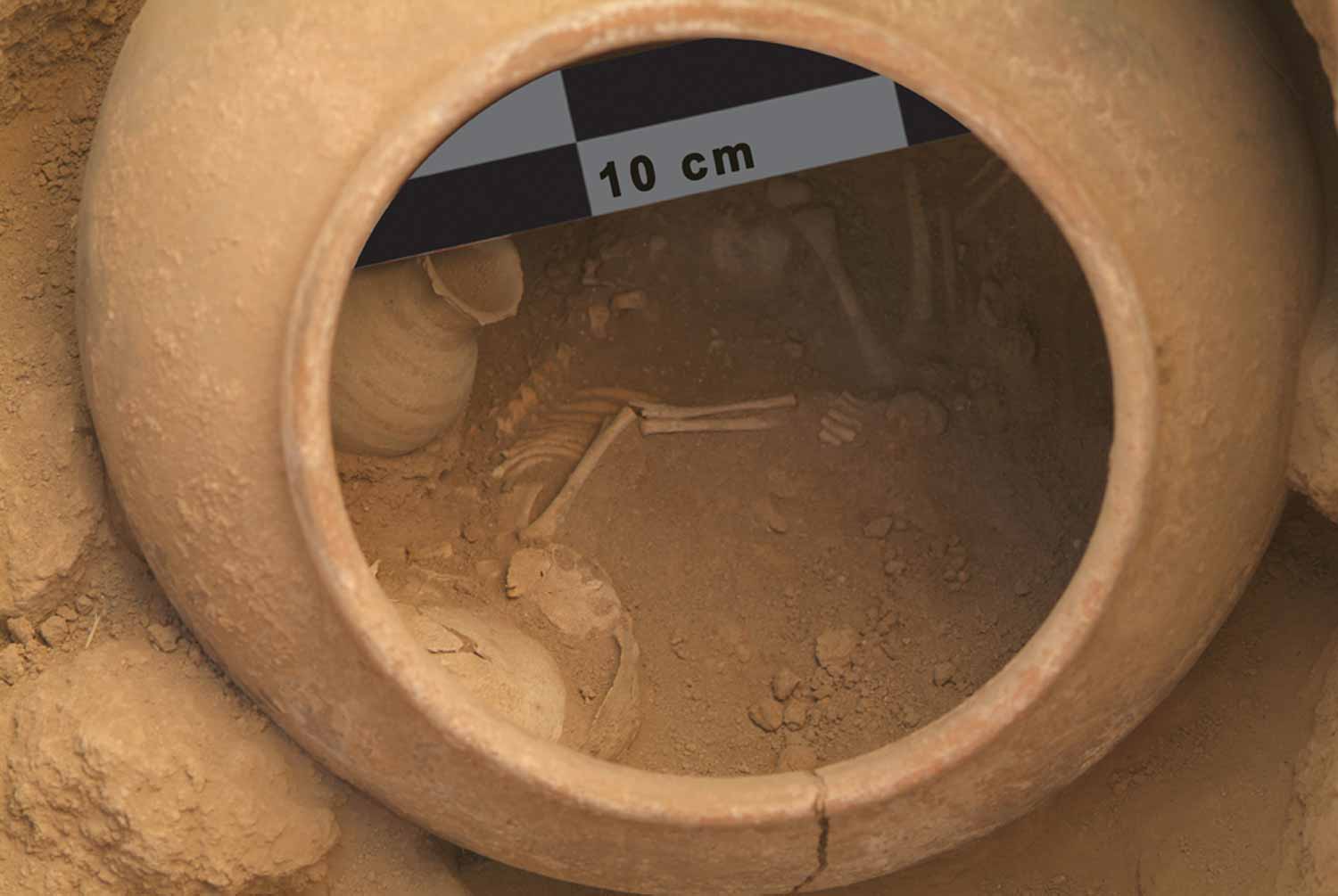
GP21 during exploration.
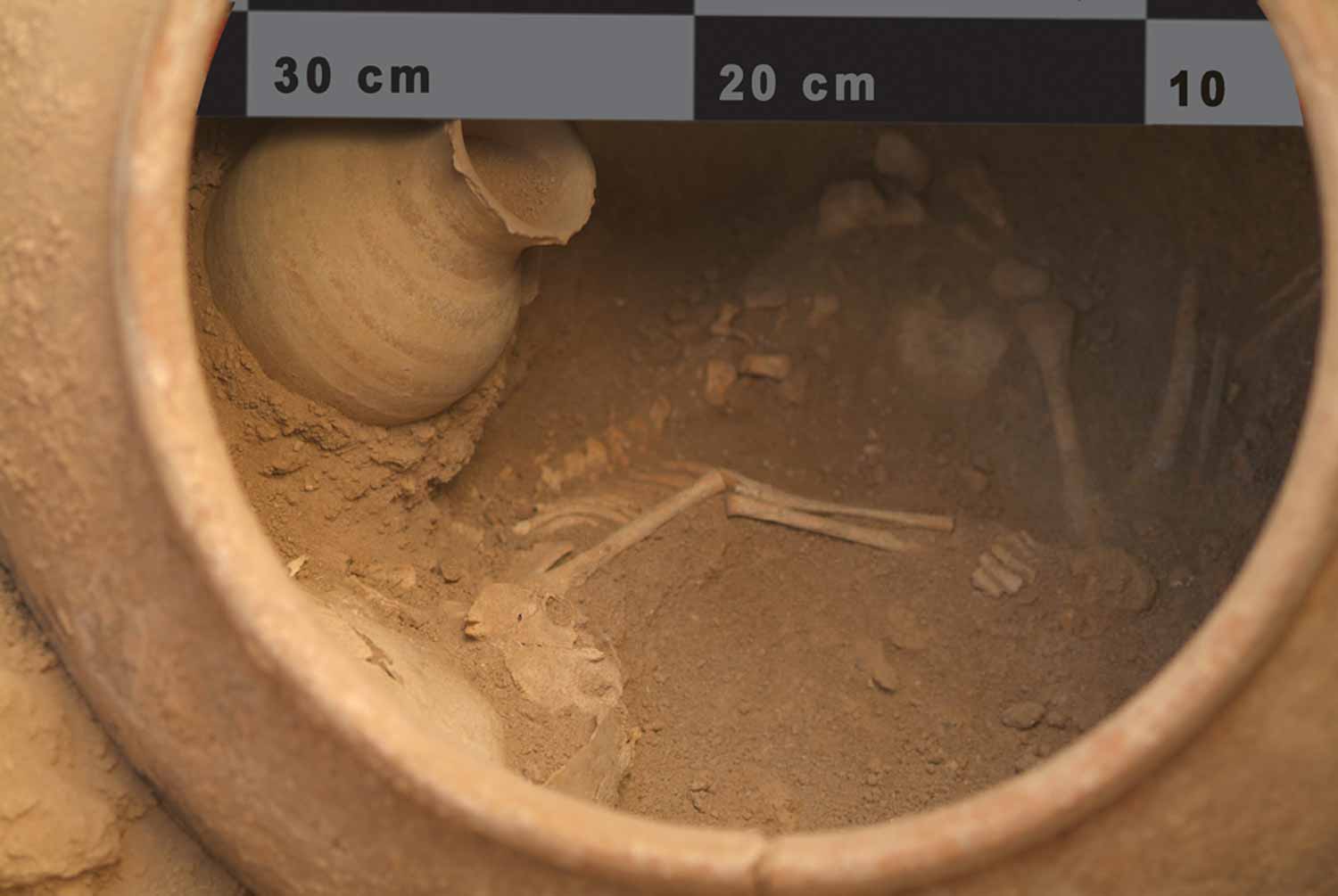
GP21 during exploration.

Plan of GP21 GP21 during exploration.