
GP04
| GENERAL DESCRIPTION |
Type of burial. Shaft grave.
State of preservation. The grave was well preserved and intact and has been fully excavated.
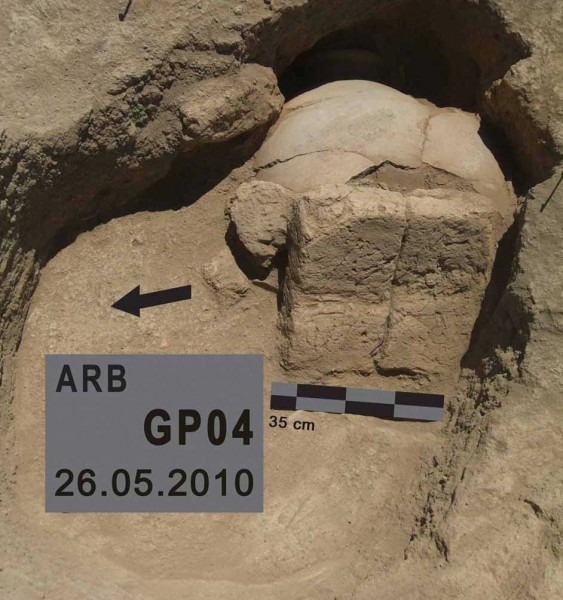
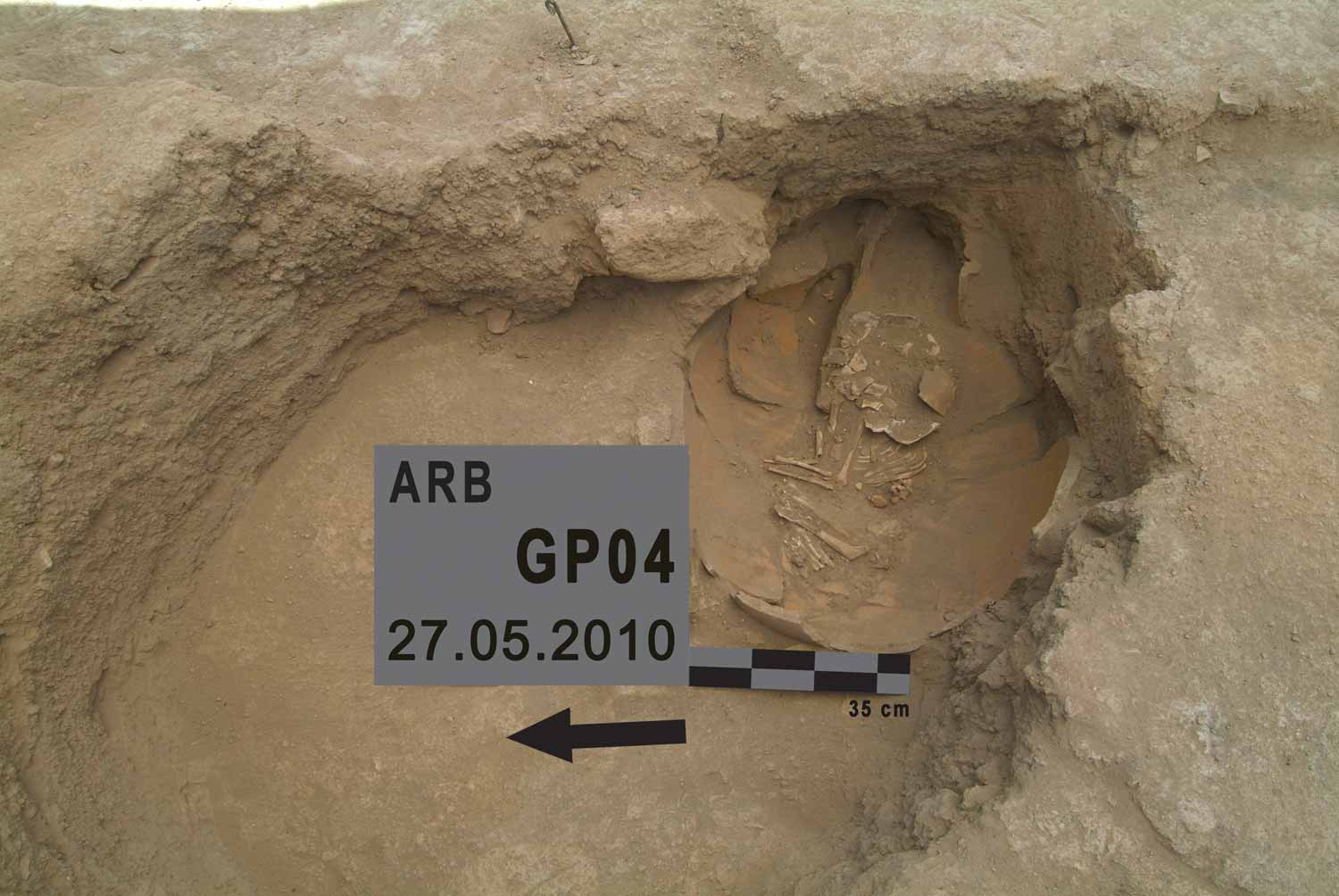
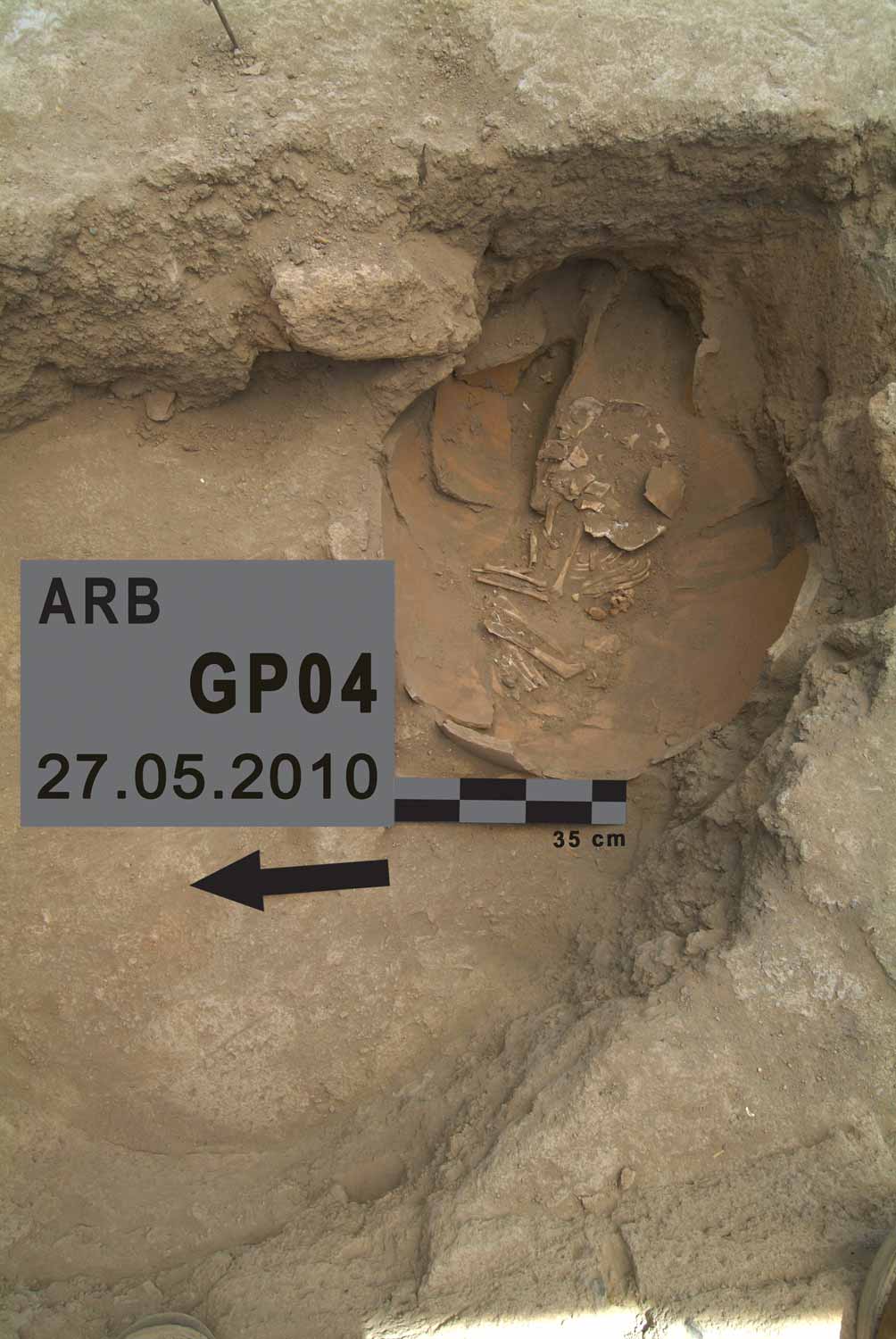
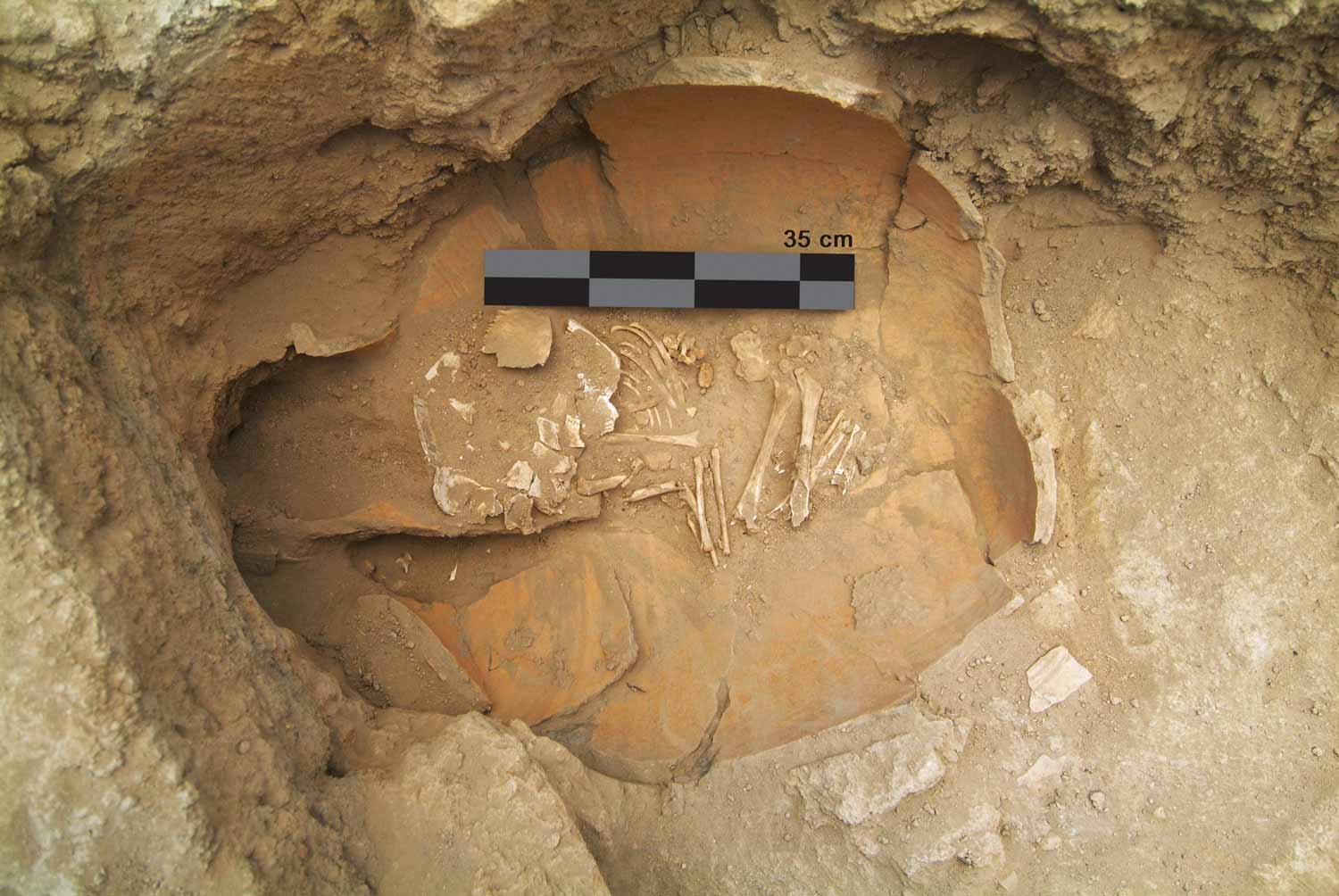
Burial descriptions. The shaft was in the shape of a slightly elongated circle measuring about 0.95 m on the NW-SE axis and 0.8 m on the NE-SW axis. It was ca. 1.0 m deep. A side niche was dug into the SE part of the shaft; its inner dimensions were 0.5 x 0.65 m. In the niche, a pottery vessel was placed on its side; its mouth was closed by two rectangular bricks (38 x 18 x 9 cm), which were set almost vertically and leaned on thevessel inside. The burial container was a storage jar with a neck and narrow rim. The vessel lay on the E-W axis, with the rim to the east. It was broken and had no bottom already at the time of the burial.
Human remains. The grave belonged to a 3-year-old child. The skeleton lay in anatomical order, on the E-W axis with the head to the east. The child lay on its right side with both legs and arms bent. The bones were badly preserved, very fragile and incomplete, and the skull was crushed.
Animal remains. Absent.
Evidence of burial rituals. Absent.
Burial goods. Only one bead was found inside the grave, close to the child’s chest. It was very small (1 cm long) and shaped like an axe.
Description Joanna Mardas/archaeologist/Inventory Xenia Kolińska/archaeologist
| BIOARCHAEOLOGICAL ANALYSIS |
Human remains
A fairly complete and relatively well-preserved skeleton of a 3-year-old child. Bones were slightly weathered and mixed with remains of a subadult animal. Initial cribra orbitaliawas accompanied by hypervascularization and endocranial porosity around the sagittal sulcus of the occipital bone (HR_FIG.3). Very clear linear enamel hypoplasia has been observed at developing crowns of anterior permanent teeth.
Dr. Arkadiusz Sołtysiak/IA UW/anthropologist

GP04. Plan during exploration.

GP04. Plan before exploration.

GP04. Plan before exploration with levels.
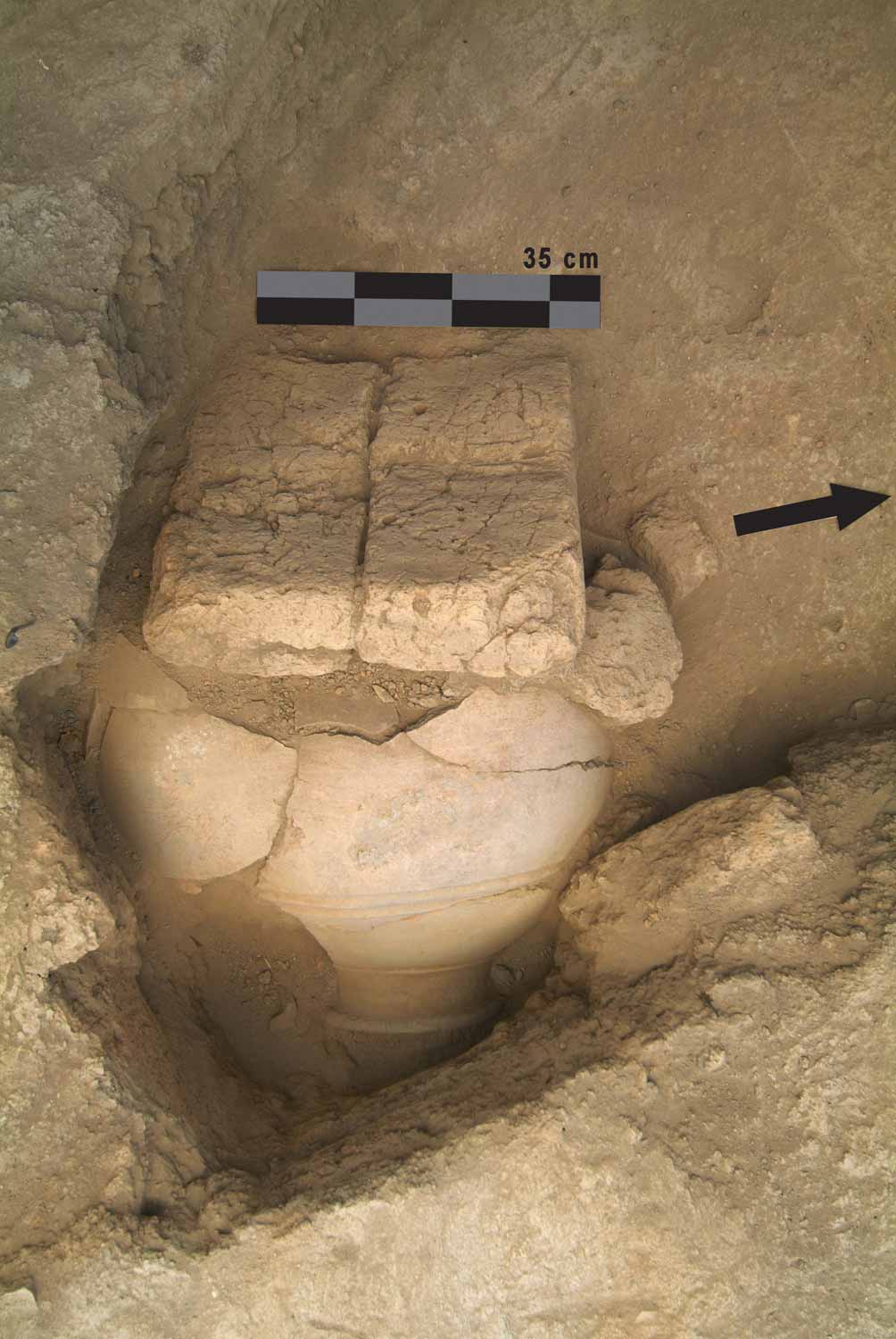
GP04. Burial container blocked with bricks.
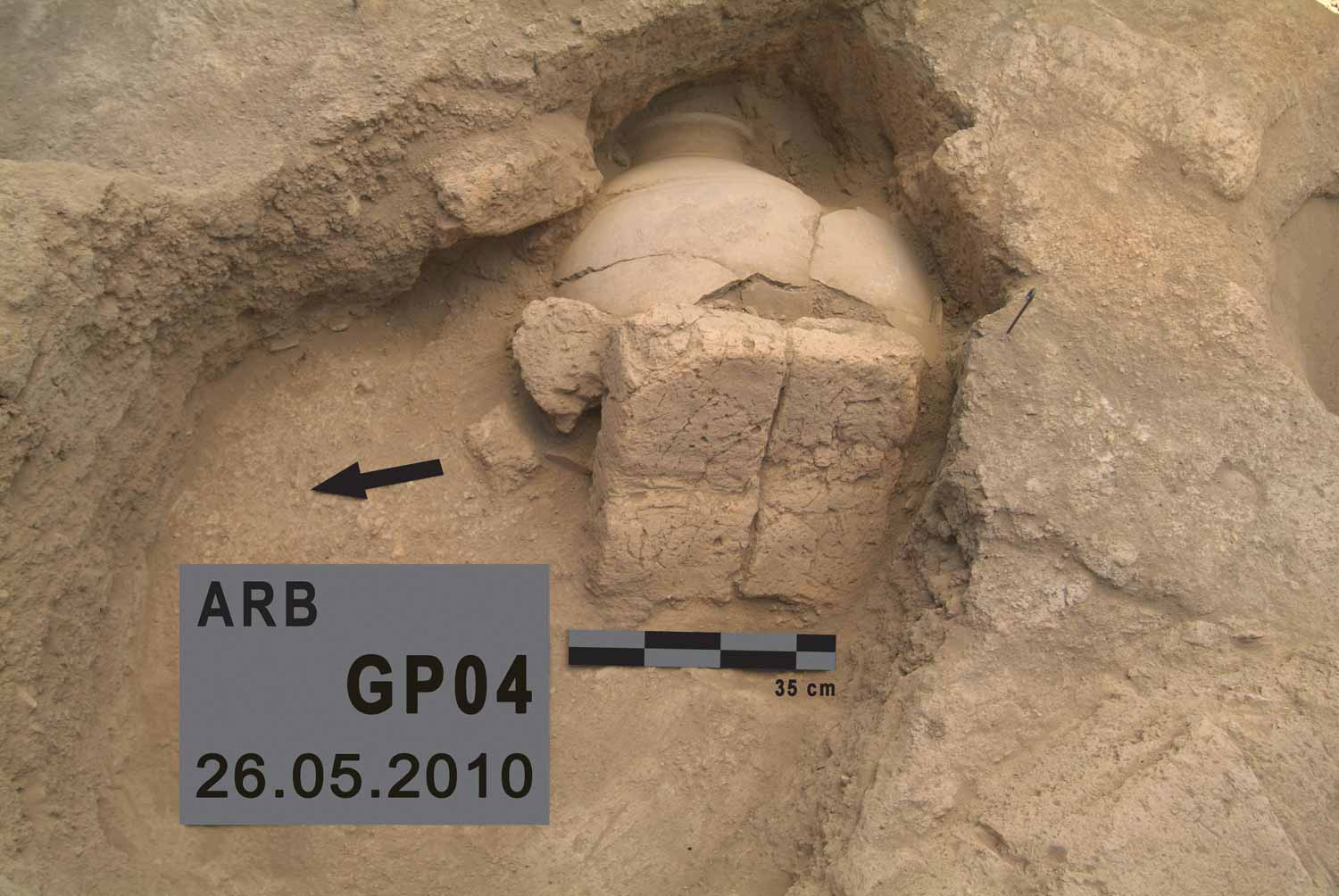
GP04. Burial container blocked with bricks.
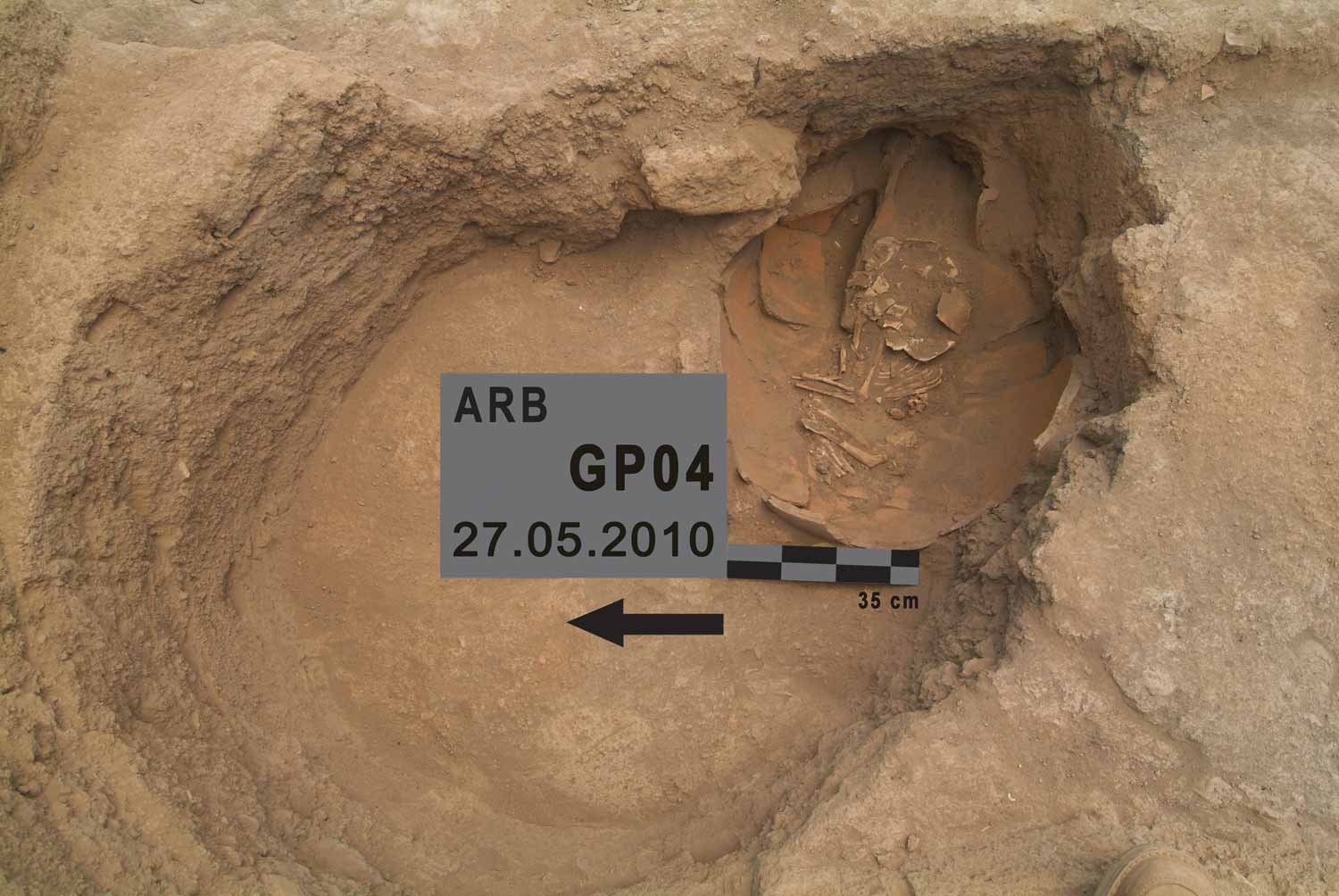
GP04. Burial during exploration.
GP04. Burial during exploration.
GP04. Burial during exploration.
GP04. Burial during exploration.