
GP57
| GENERAL DESCRIPTION |
Type of burial. Shaft grave.
State of preservation. The grave was intact and has been fully excavated.
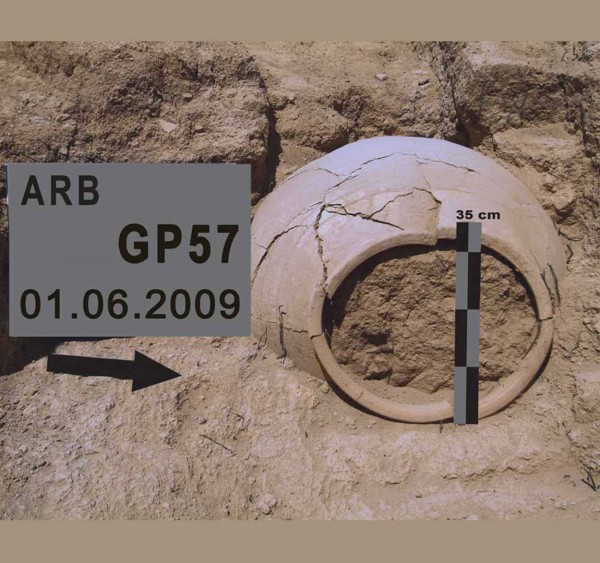
Burial descriptions.The shaft was circular in shape, its dimensions were about 0.9 x 0.7 m, and it was ca. 0.6 m deep. The niche was located on the western side of the shaft. Its dimensions were 1.1 x 0.7 m. The entrance was not blocked. The burial storage jar was complete but broken. It lay on its side, on the E-W axis with the rim to the east. The rim was closed by three bricks (36 x 38 x 8 cm). The first one was set vertically and was directly closing the rim. The second one was set vertically and perpendicularly to the first one from the south. The third lay horizontally on the vessel and the first brick. The jar was decorated on the shoulders with a wavy line under three groups of comb grooves.
Human remains. The grave belonged to a 3-year-old child. The bones were mixed and badly preserved.
Animal remains. Absent.
Evidence of burial rituals. Absent.
Burial goods. The deceased was equipped with seven small jugs and three shallow bowls. A bigger jar stood outside, between the burial vessel and the wall of the niche. Six of the small jugs are decorated with painted horizontal stripes, and one of them has also cross-hatched triangles. The seventh small jug is decorated with painted vertical stripes. The bowls are decorated with painted lines on the rim. The bigger jar standing outside is decorated with painted horizontal stripes. The child also had some jewellery: 12 beads (1 rock crystal, 3 frit/faience and 8 cornelian) and 4 bronze pieces.
Description Joanna Mardas/archaeologist/Inventory Xenia Kolińska/archaeologist
| BIOARCHAEOLOGICAL ANALYSIS |
Human remains
A very small number of human elements retrieved from an assemblage of animal bones. One adult individual was represented only by a fragment of a patella and distal epiphysis of a metacarpal. There are also a few bone fragments of children and dentition of at least three individuals with roughly the same age-at-death of c. 3 years (MNI based on the number of left mandibular first molars). Their remains were likely moved to the secondary deposit from different places, as the colour of teeth attributed to specific individuals is different: beige, brownish and brownish with irregular black staining.
Dr. Arkadiusz Sołtysiak/IA UW/anthropologist

PLAN OF GP56 AND 57 (WITH LEVELS).

PLAN OF GP56 AND 57.

PLAN OF GP56 AND 57.
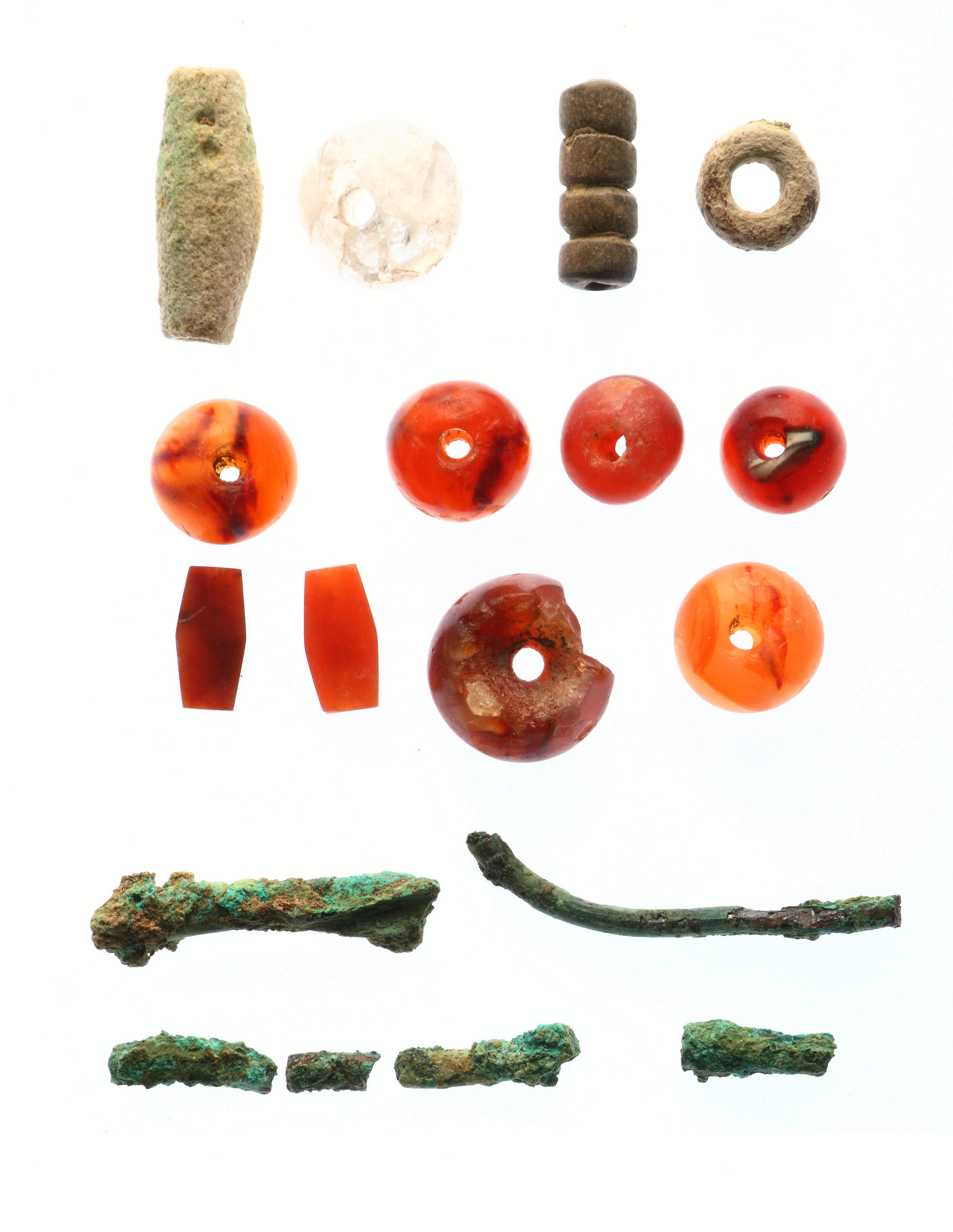
GP57. PERSONAL ADONMENT.
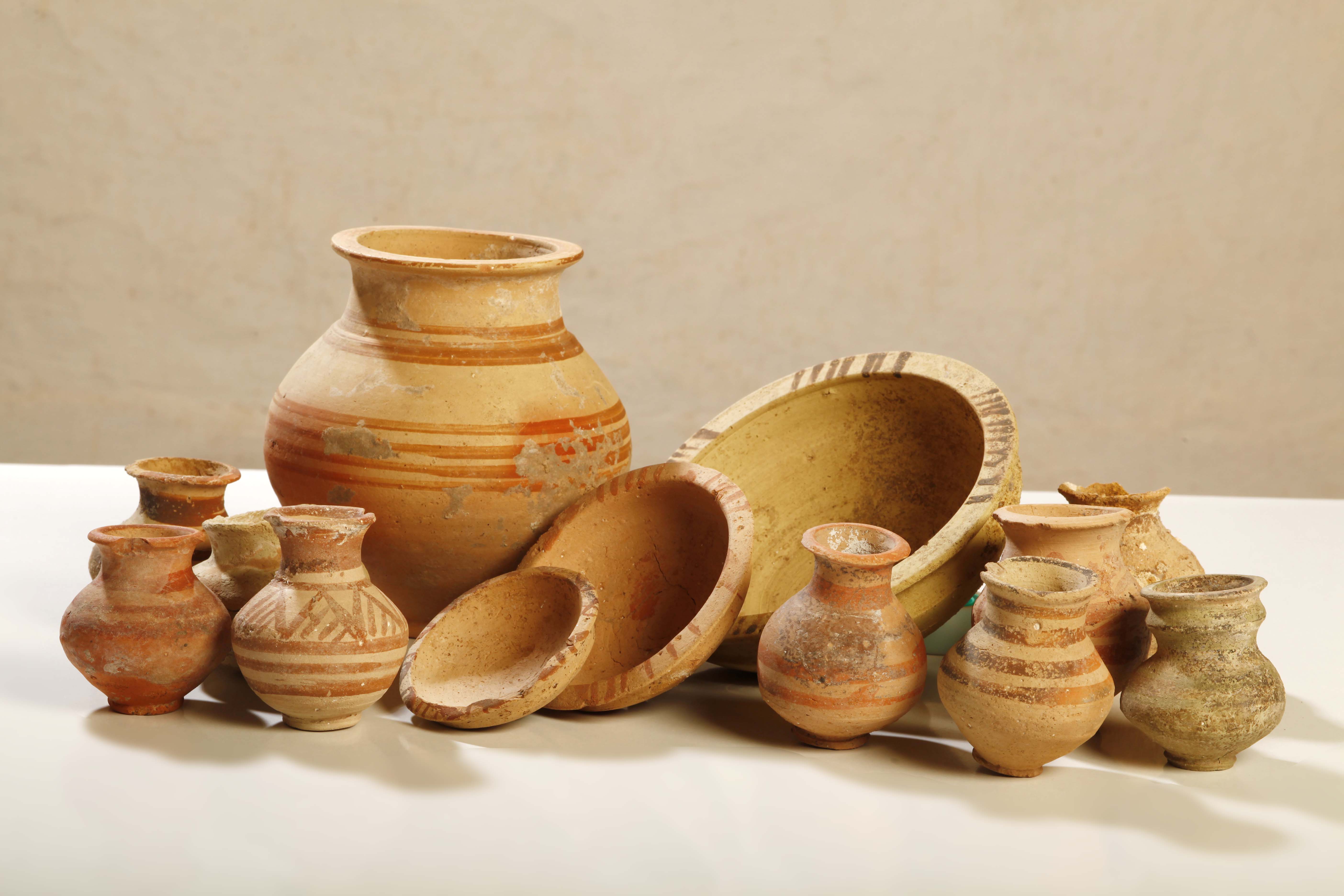
GP57. POTTERY.
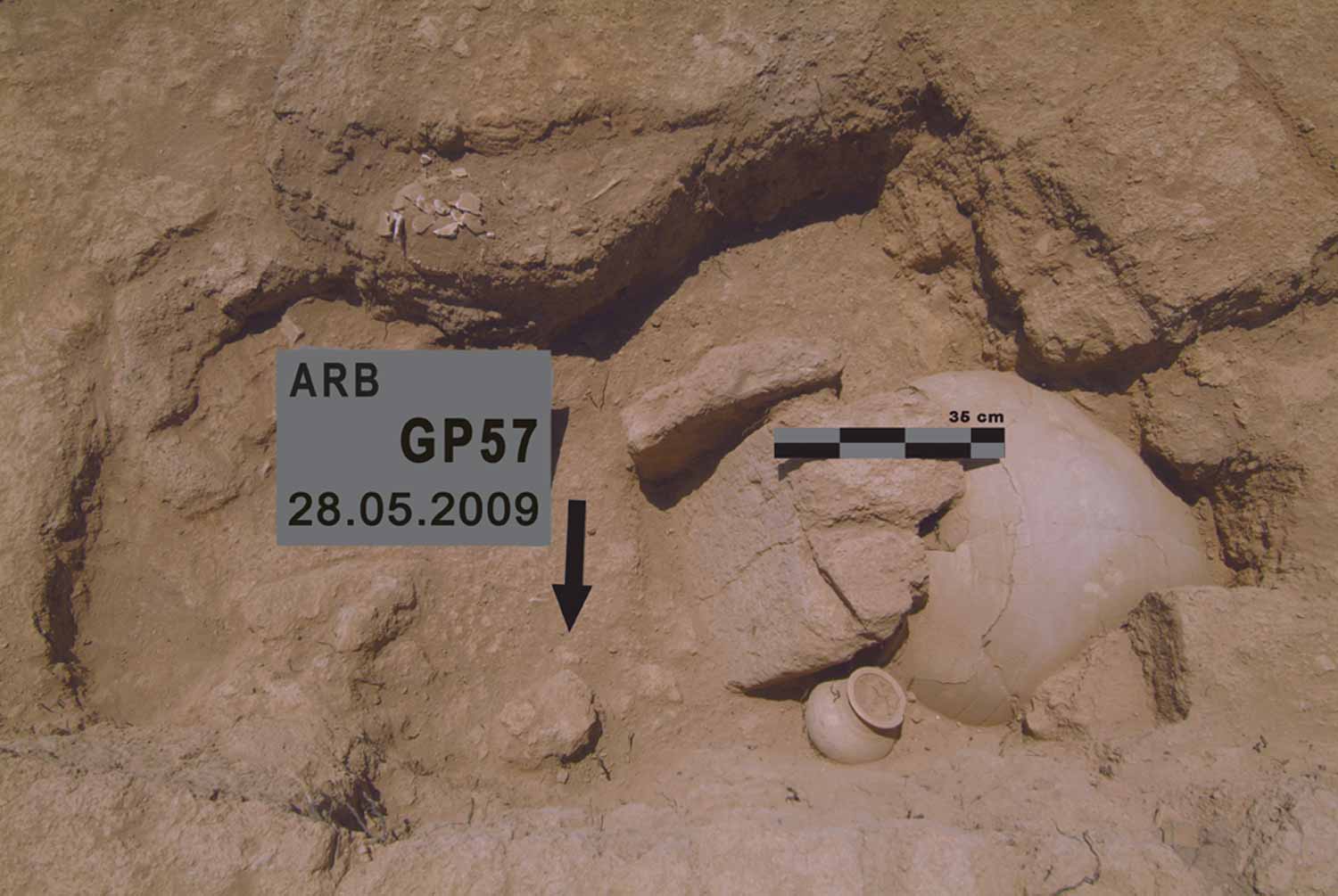
GP57 BEFORE EXPLORATION.
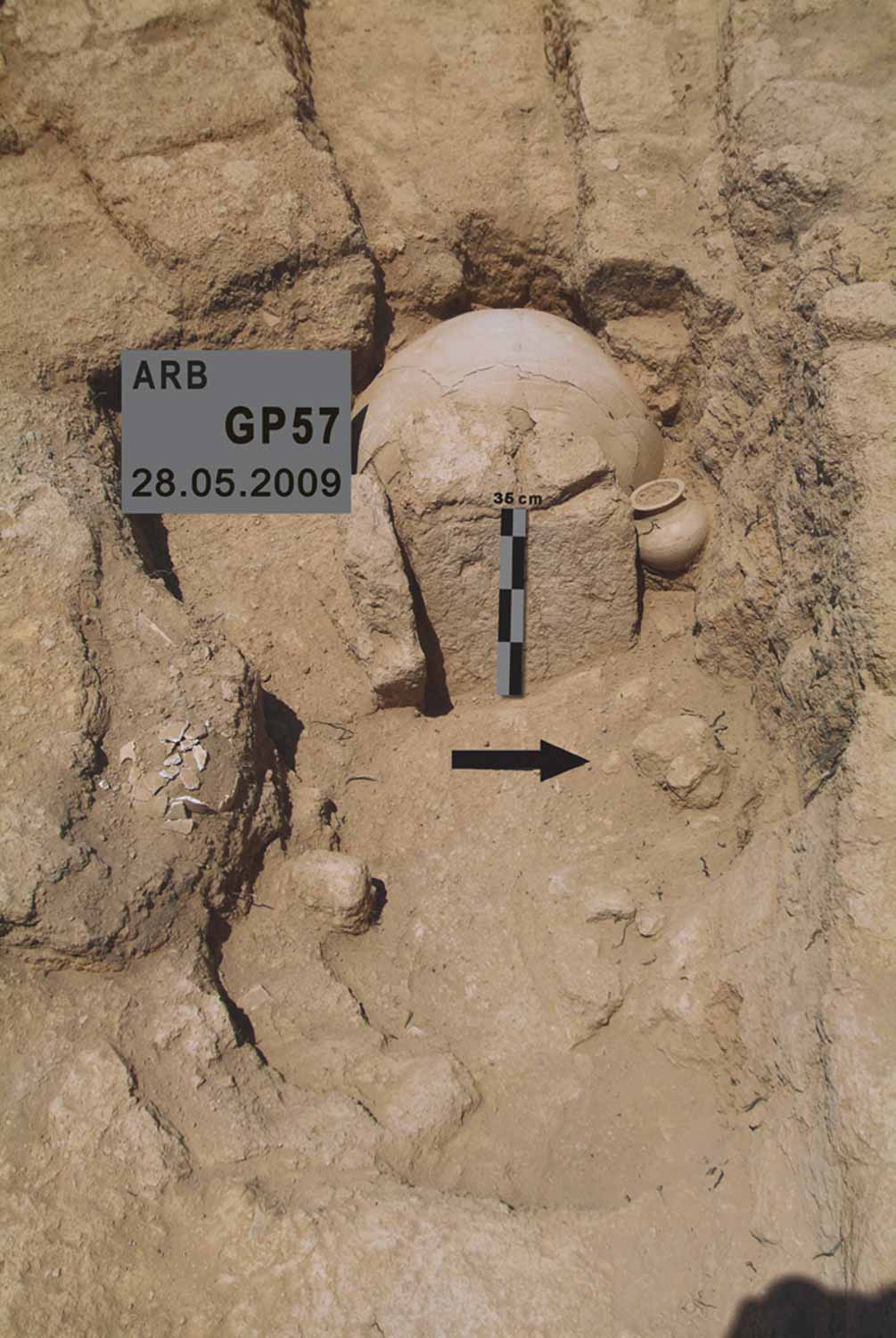
GP57 BEFORE EXPLORATION.
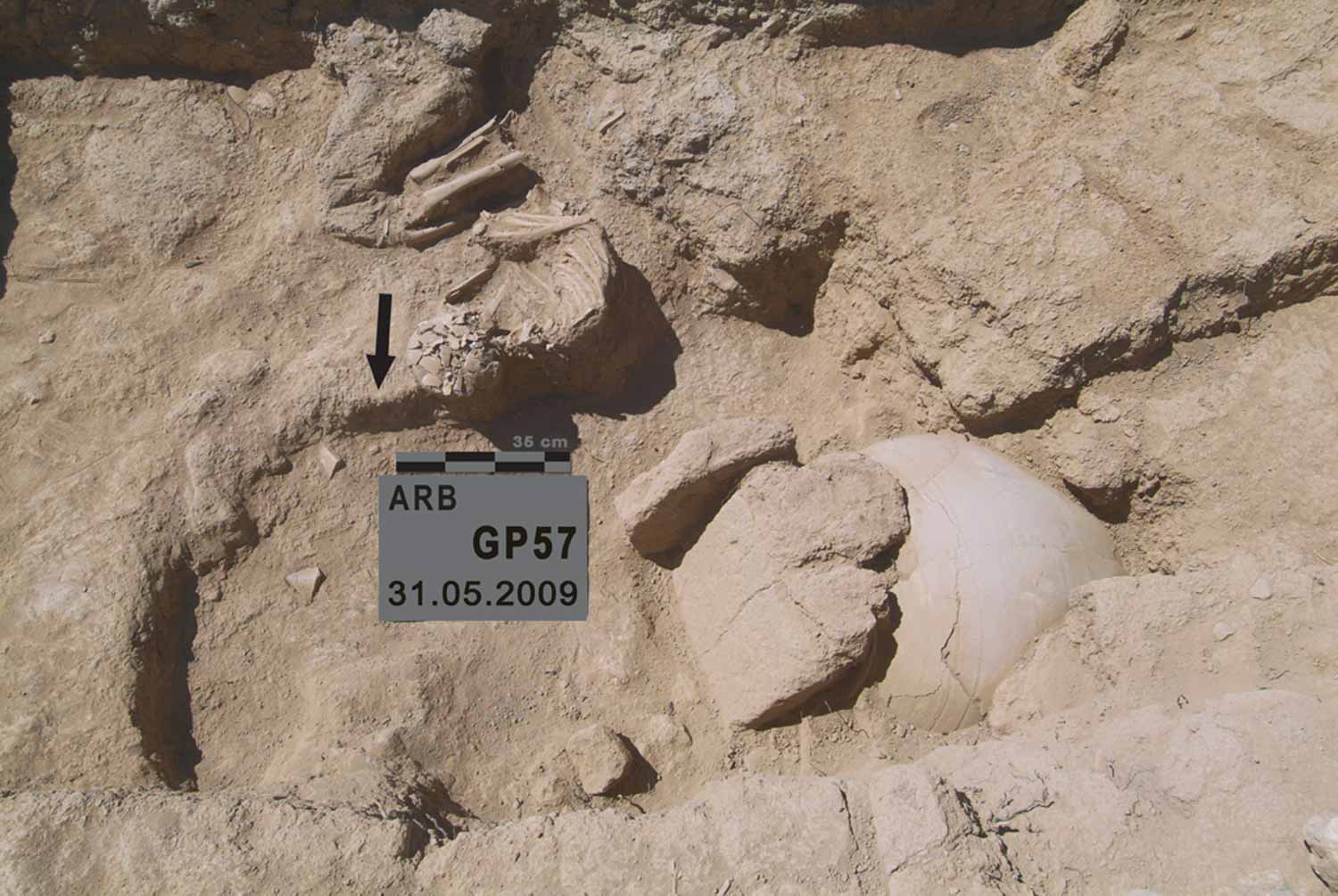
GP57 BEFORE EXPLORATION.
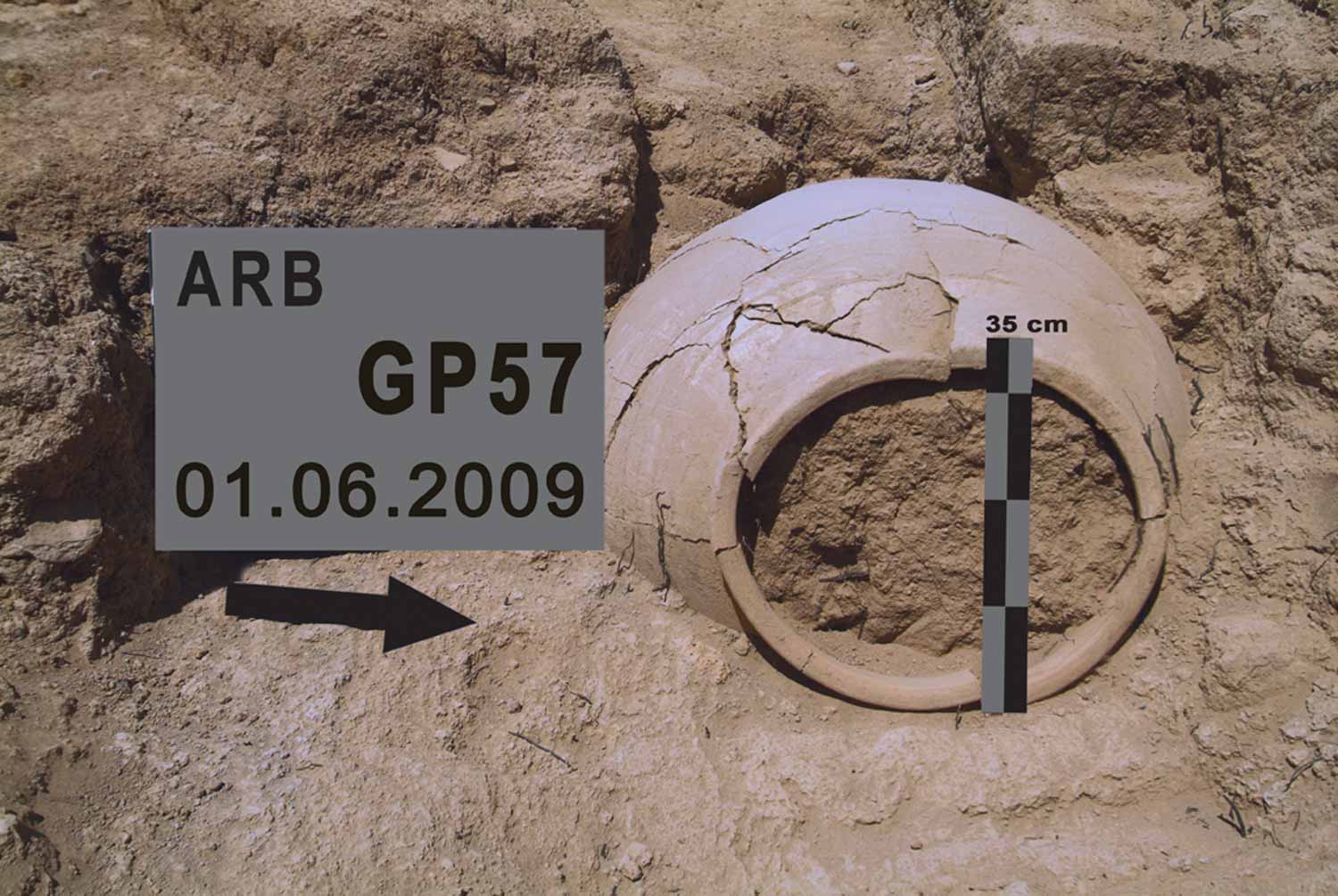
GP57 BEFORE EXPLORATION.
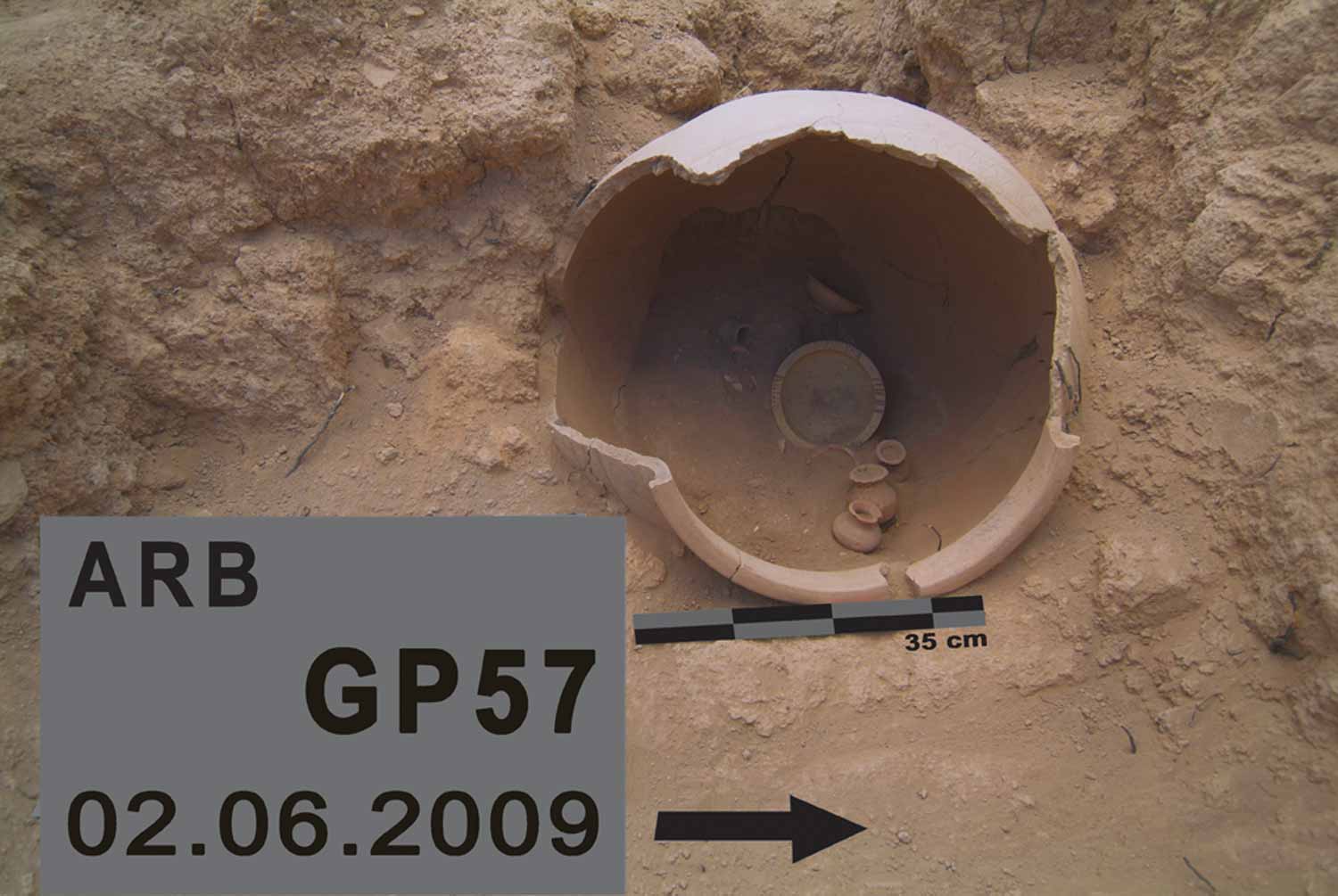
GP57 EXPLORATION IN PROGRESS.
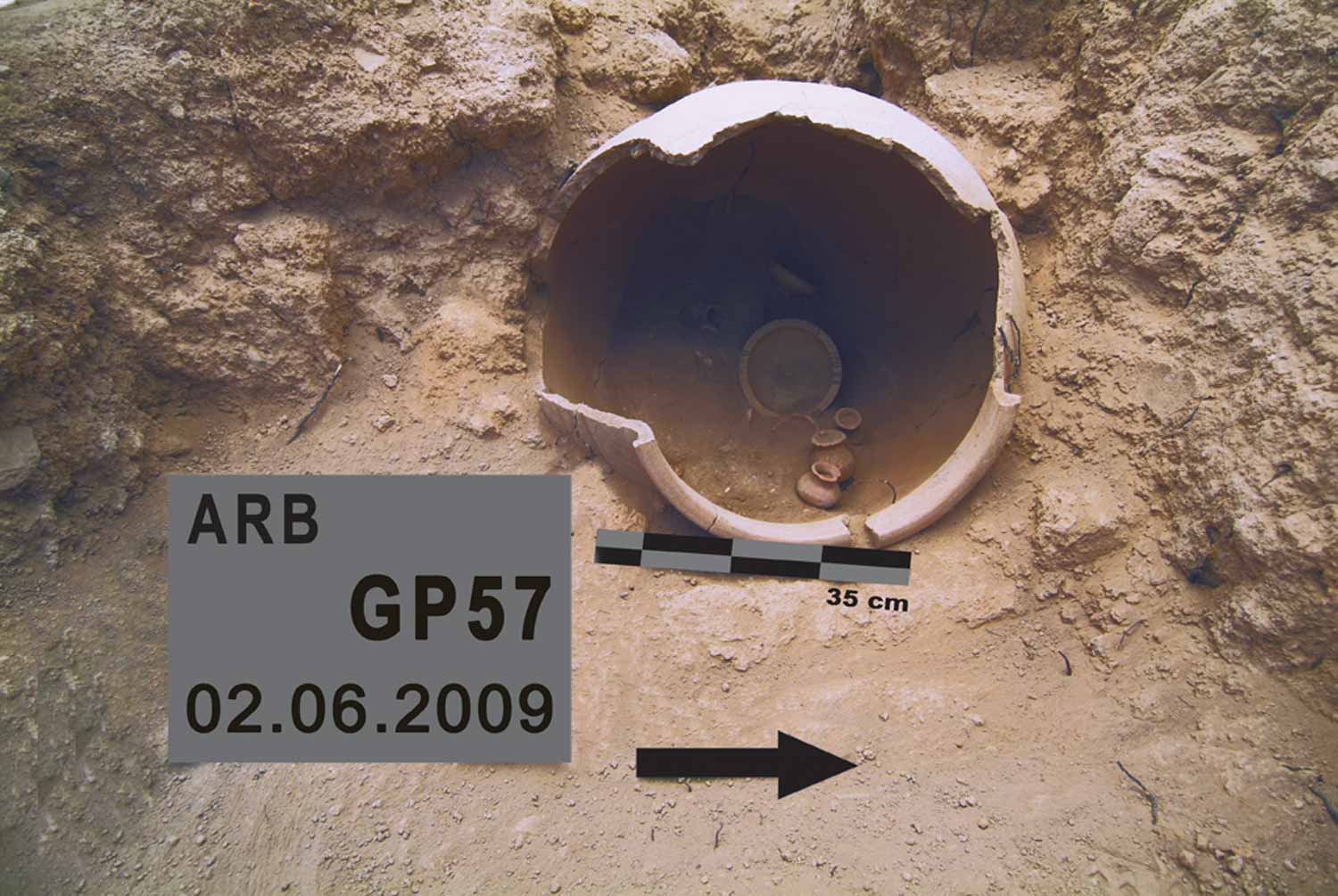
GP57 EXPLORATION IN PROGRESS.
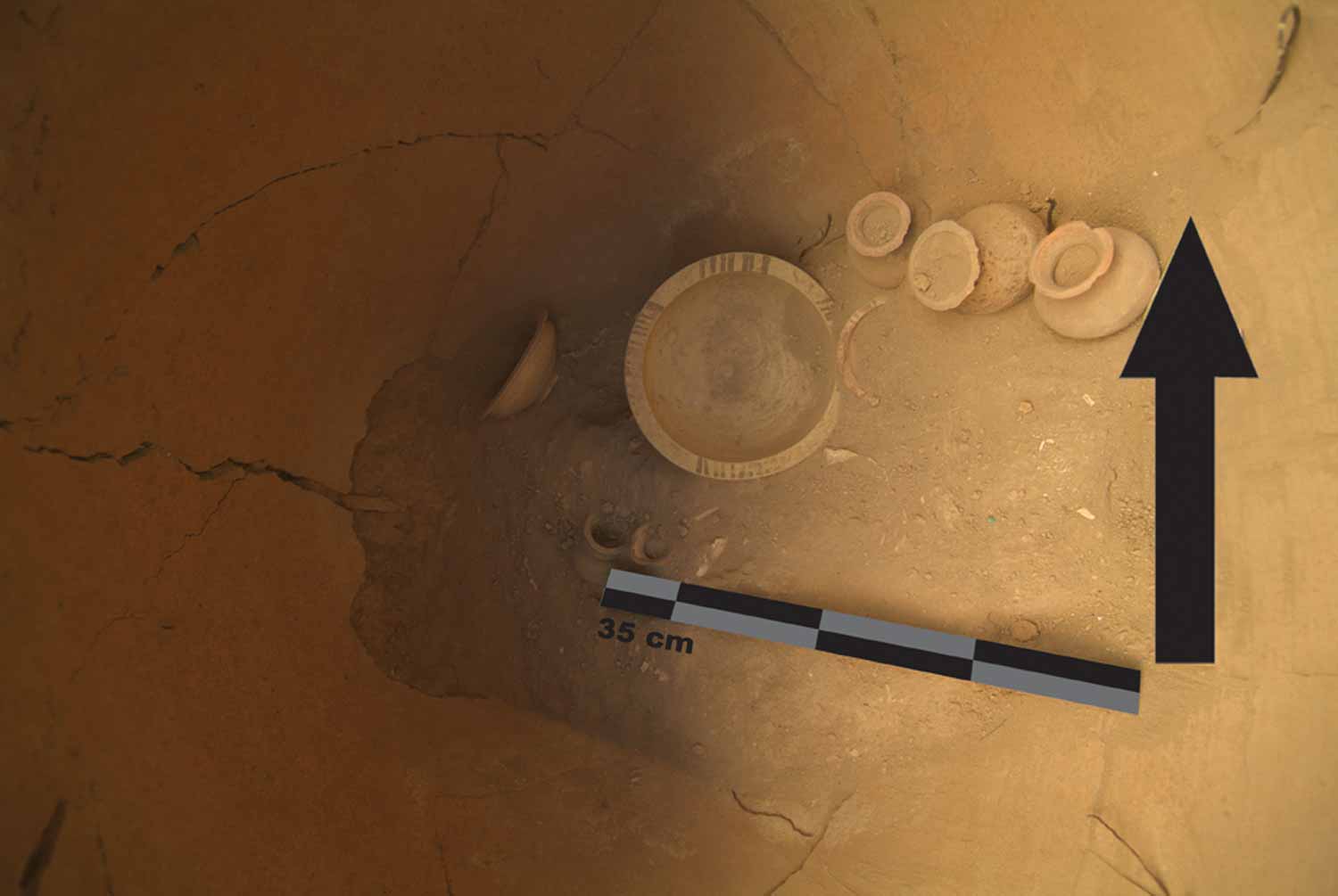
GP57 EXPLORATION IN PROGRESS.
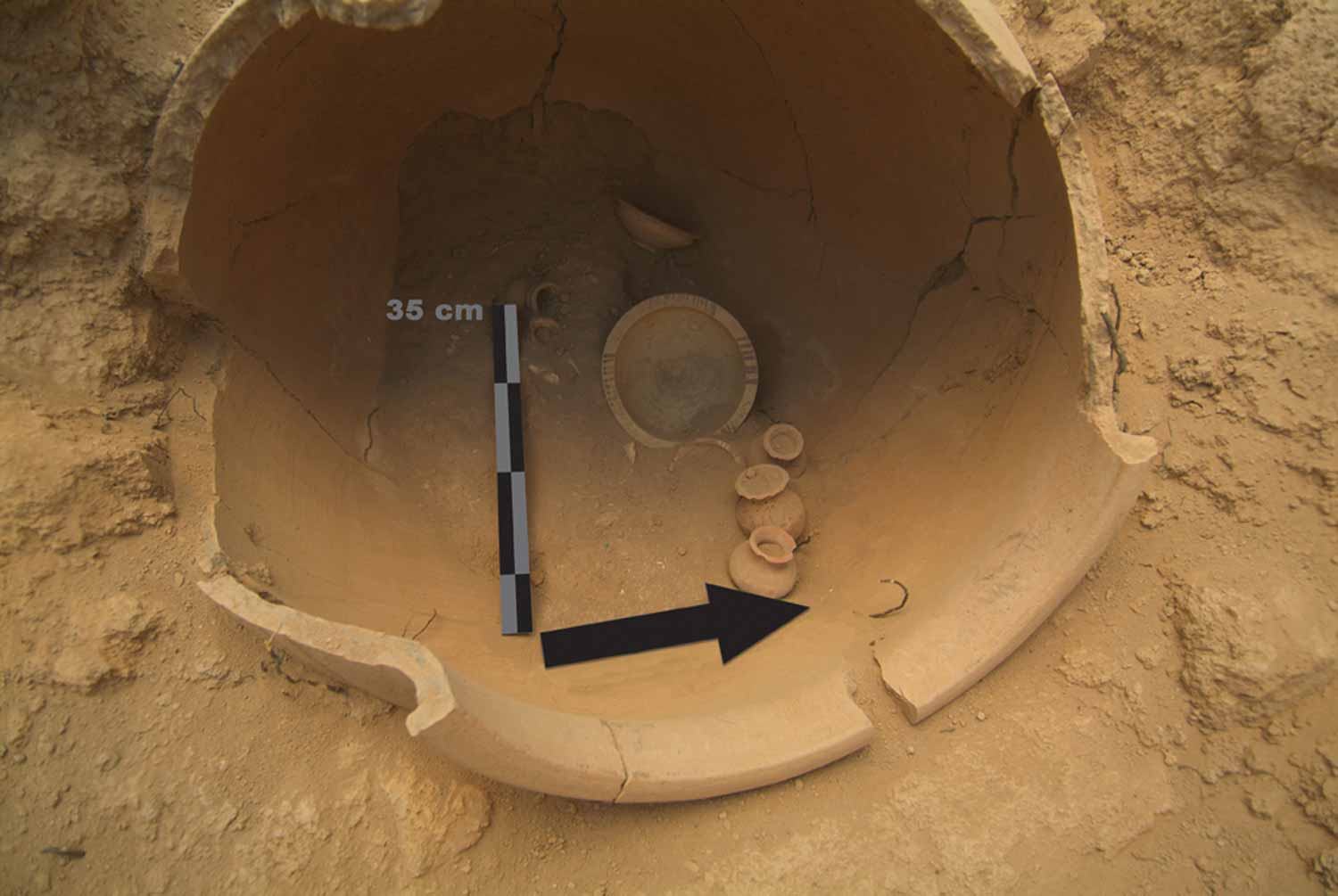
GP57 EXPLORATION IN PROGRESS.
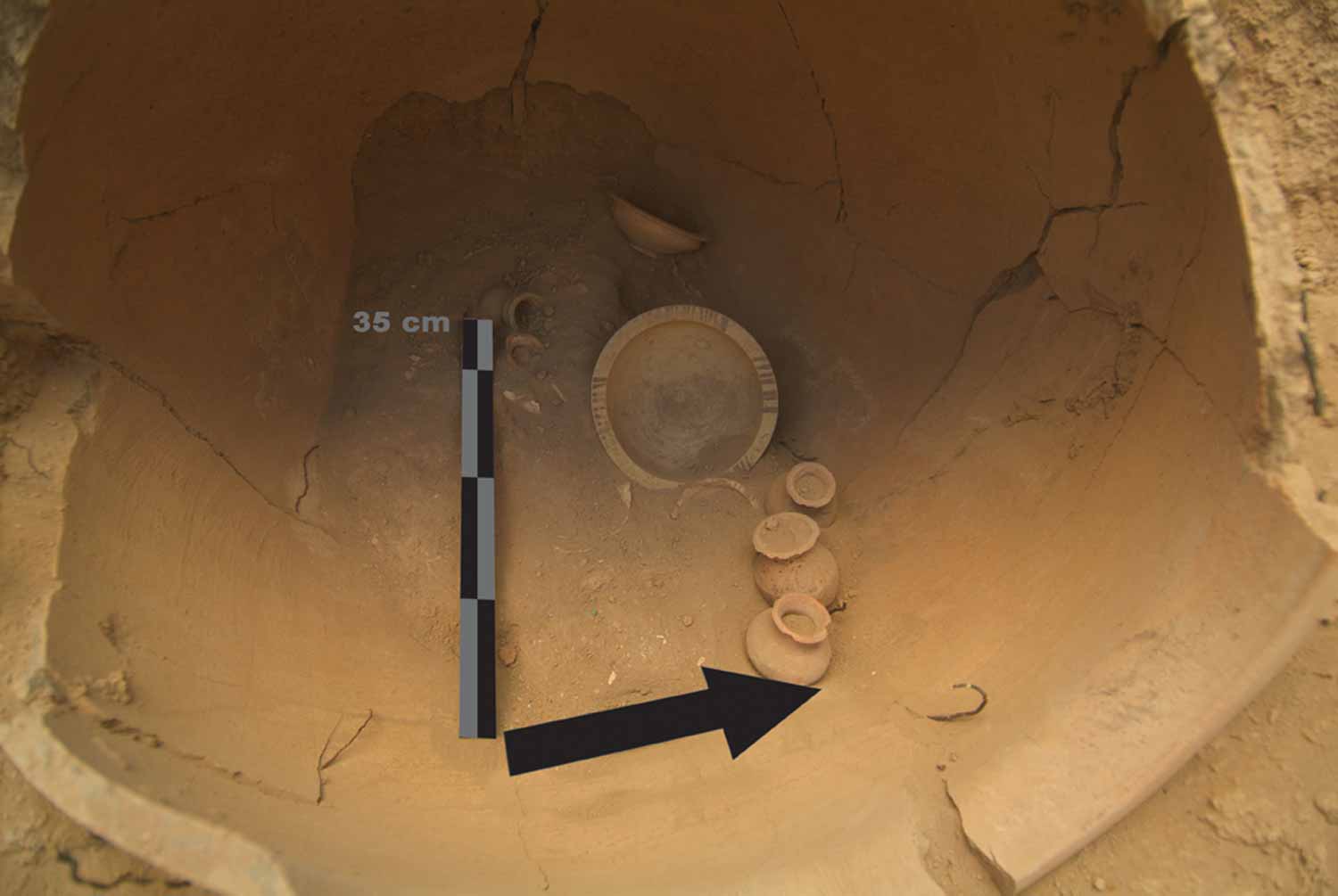
GP57 EXPLORATION IN PROGRESS.