
GP23
| GENERAL DESCRIPTION |
Type of buria. Shaft grave.
State of preservation. The grave was well preserved and has been fully excavated.
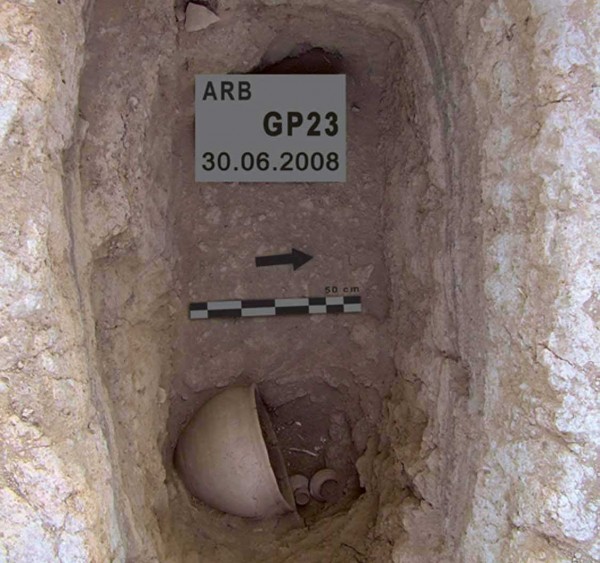
Burial descriptions. The shaft of the grave was rectangular; it was about 1.05 m long on the E-W axis and about 0.8 m wide on the N-S axis, and its depth was ca. 1.0 m. The grave niche was carved in the eastern wall of the shaft. Its dimensions were 0.4 x 0.7 m. The entrance was blocked by two bricks set vertically, which separated the vessel containing the body of a child from the shaft. The burial vessel was a pot with a wide rim. It lay on its side, on the N-S axis with the rim to the north. The vessel was well preserved, cracked but almost complete, as only a small part of the bottom was missing. The pot was decorated with a row of fingernail imprints which underlined the border between the neck and shoulders. Just below them on the vessel’s shoulders was a grooved wave.
Human remains. The grave belonged to a 4-year-old child. The bones were fragile and badly preserved but still in anatomical order. The child lay on its left side, on the N-S axis with the head to the north. The head and part of the chest protruded from the vessel, and only the lower parts of the body lay directly inside it
Animal remains. Absent.
Evidence of burial rituals. Absent.
Burial goods. The child was equipped with three small vessels. One is a small pot with quite a wide rim and decorated with painted horizontal stripes. The second is a small jar decorated with painted horizontal stripes. These two vessels have broken and incomplete rims. The third vessel is a miniature goblet (undamaged), decorated with painted cross-hatched triangles. All three vessels stood outside the burial vessel, close to its rim and in front of the child. There was also one bead.
Description Joanna Mardas/archaeologist/Inventory Xenia Kolińska/archaeologist
| BIOARCHAEOLOGICAL ANALYSIS |
Human remains
An incomplete and poorly preserved skeleton of a child, with slight evidence of weathering. Not only was enamel hypoplasia present on the germs of permanent teeth but an irregular hypoplastic area-type lesion was also observed on the left deciduous canine.
Dr. Arkadiusz Sołtysiak/IA UW/anthropologist

Plan of GP23 during exploration.

Plan of GP23 during exploration.

Plan of GP23 during exploration.

Plan of GP23 during exploration.
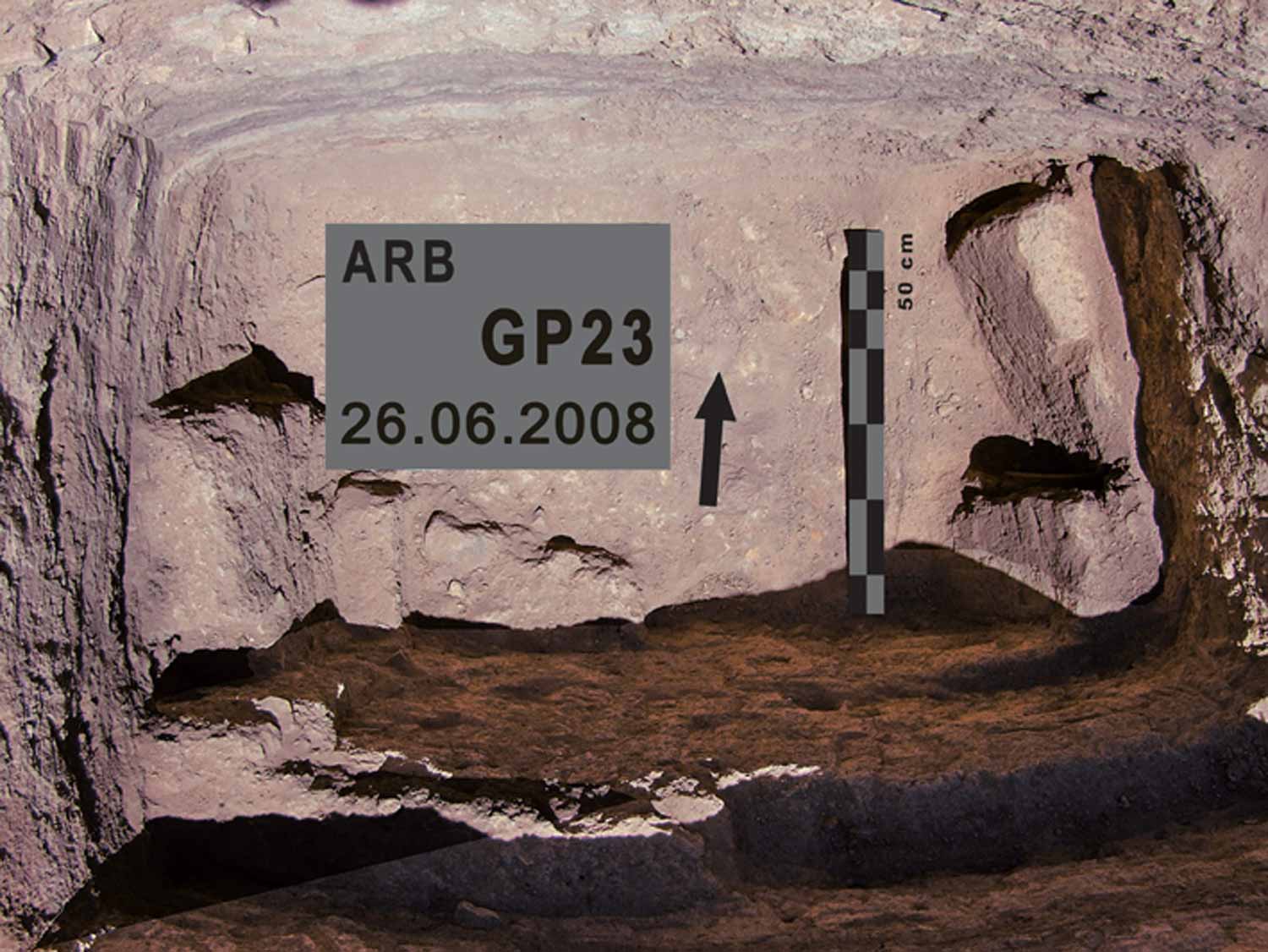
GP23 before exploration.
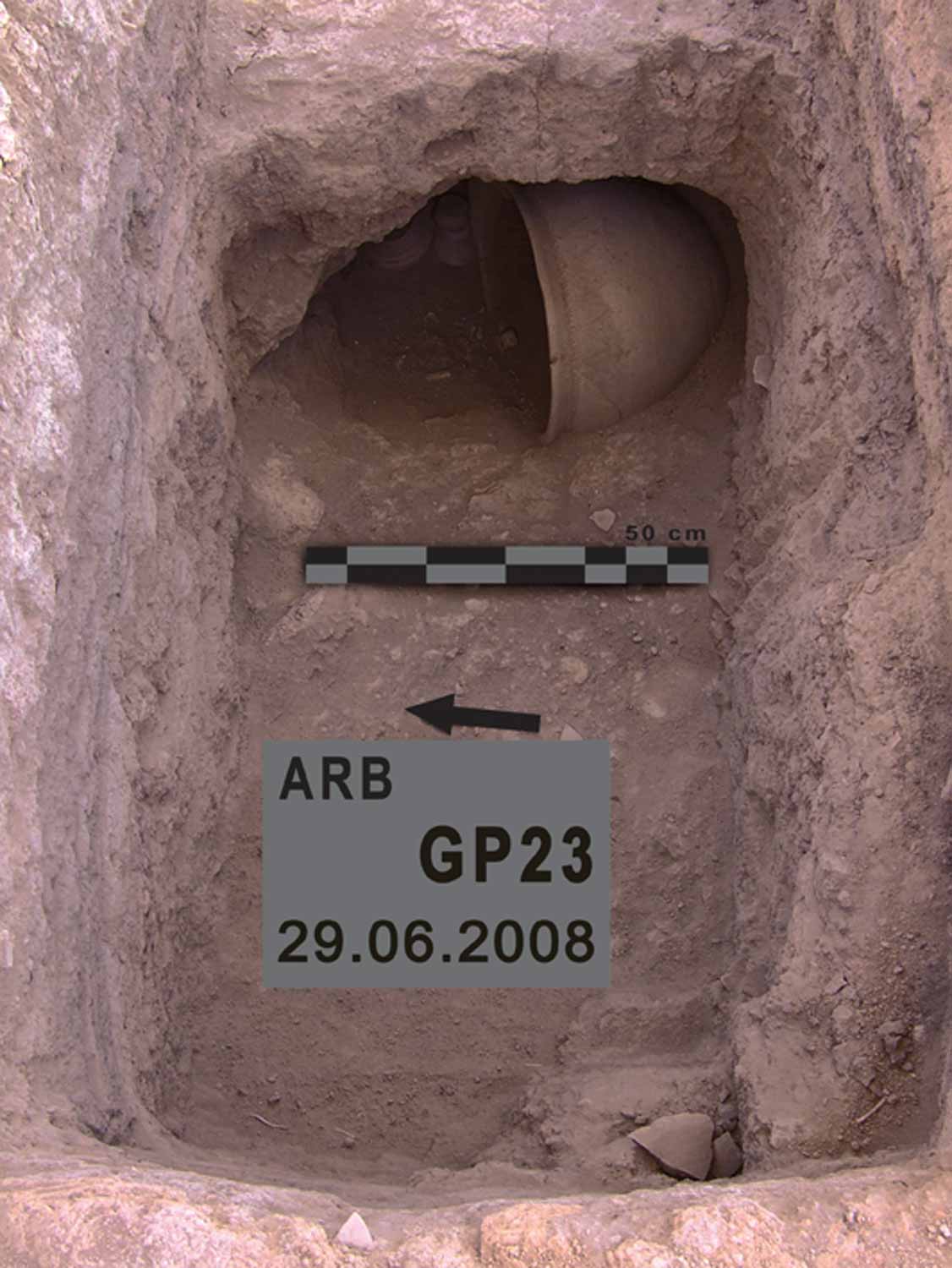
GP23 during exploration.
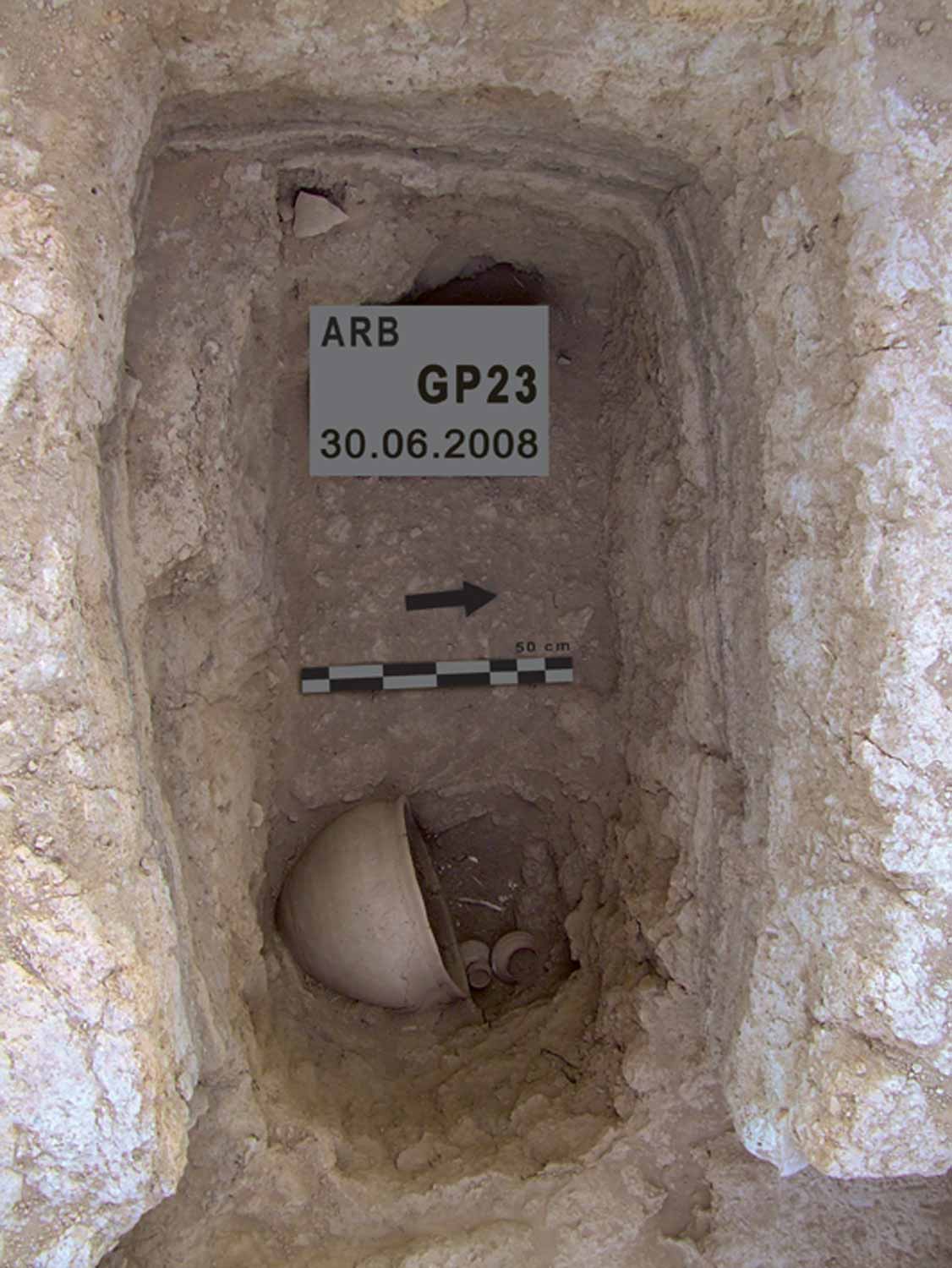
GP23 during exploration.