
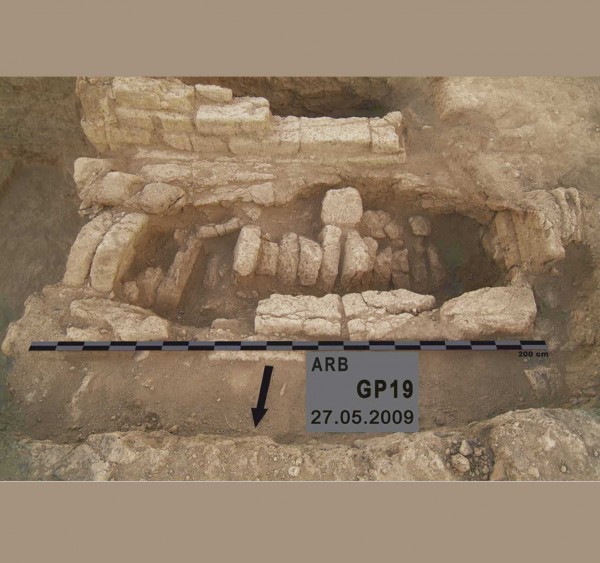
GP19
| GENERAL DESCRIPTION |
Type of burial and vault. Chamber grave, “diamond” vault.
State of preservation. The grave was intact and quite well preserved although the walls were damaged. It has been fully excavated.
Burial descriptions. The grave was oriented on the NEE-SWW axis. Its inner dimensions were 1.8 x 0.7 m, while the outer were 2.15 x 1.1 m. The grave consisted of two long walls, northern and southern, built of 4-5 rows of bricks set horizontally. The shorter walls were not closed by bricks. The grave was covered by one row of bricks set in a diamond pattern. There was no shaft which would have provided access to the grave from one of the shorter walls. The grave was preserved in a worse state than GP18. The upper rows of bricks were highly eroded and cracked. The closing bricks had fallen into the chamber.
Human remains. The grave belonged to a young woman. The bones were badly preserved, very fragile and cracked. The skeleton was in anatomical order. The deceased lay on her right side, on the NEE-SWW axis with the head to the west. Her legs were strongly bent.
Animal remains. Behind the head of the deceased, a skeleton of a young sheep/goat was found. There was also a fragment of ulna which belonged to a pig, but it might have come from the filling of the grave chamber.
Evidence of burial rituals. The young sheep/goat and meat offerings were deposited in the grave chamber.
Burial goods. The deceased was equipped with one vessel which stood behind her back. The jar is decorated with two double grooves on the shoulders. There were also some elements of jewellery. On the chest lay a bronze pin with a melon head, close to it was a small bronze disc (Ø2 cm) with a hole (Ø0.7 cm), and a bronze ring decorated with four horizontal ribs was found on the finger of the right hand. Over 100 beads of various shapes and materials were found above the woman’s head. Among them was one bigger trapezoidal pendant made of orange frit.
Description Joanna Mardas/archaeologist/Inventory Xenia Kolińska/archaeologist
| BIOARCHAEOLOGICAL ANALYSIS |
Human remains
A poorly preserved and incomplete skeleton of a gracile adult individual, likely female. Weathering and root etching were common (HR_FIG.8).
Dr. Arkadiusz Sołtysiak/IA UW/anthropologist
Animal remains
The vaulted chamber grave with the “diamond” arrangement GP19 contained 145 bone remains, located in the northwestern part of the burial chamber, behind the head of an adult woman buried there. Apart from one fragment of the pig's ulmar bone, these were most probably remains of one individual of a sheep or goat. It was mainly represented by vertebrae from various parts of the vertebral column and ribs (96.5%). In addition, there were a few cranial fragments (1.4%) and extremity bones (a total of 2.1%, including a fragment of the shoulder blade, and of metacarpal and tibial bone). At the time of death, the animal was about 3 years old.
Dr. Joanna Piątkowska-Małecka/IA UW/archaeozoologist
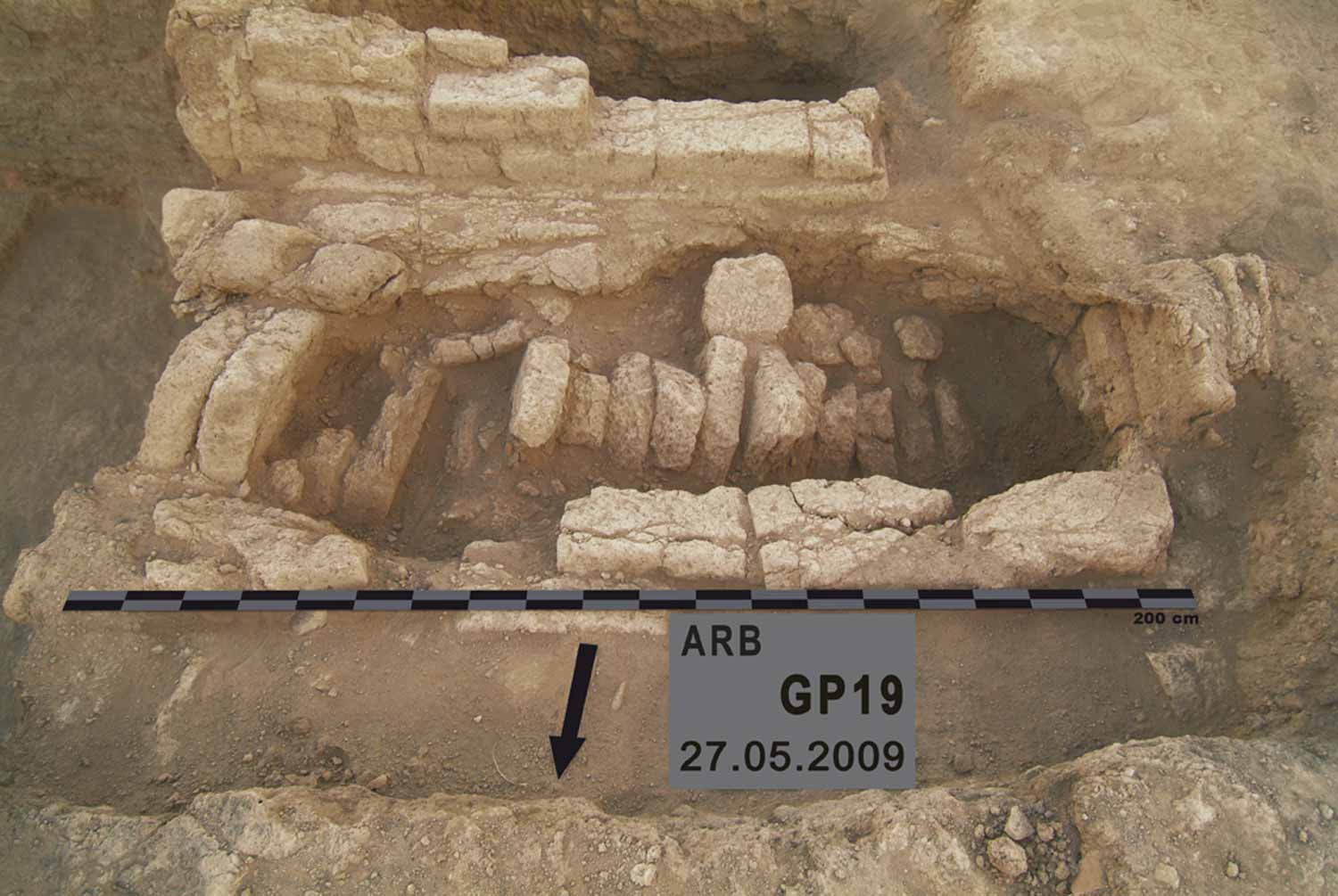
GP19 before exploration, seen from North
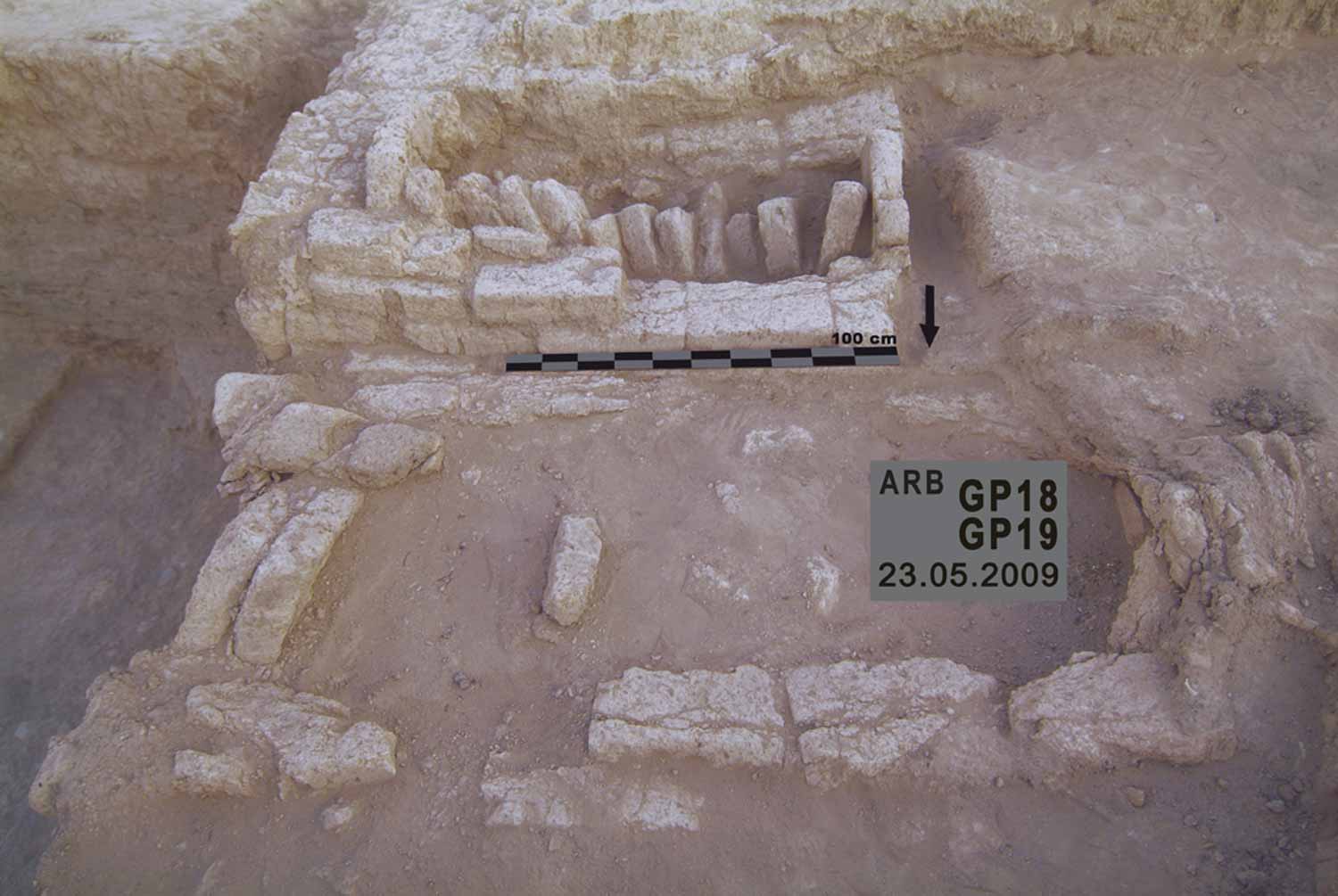
GP18 and GP19 before exploration, seen from North
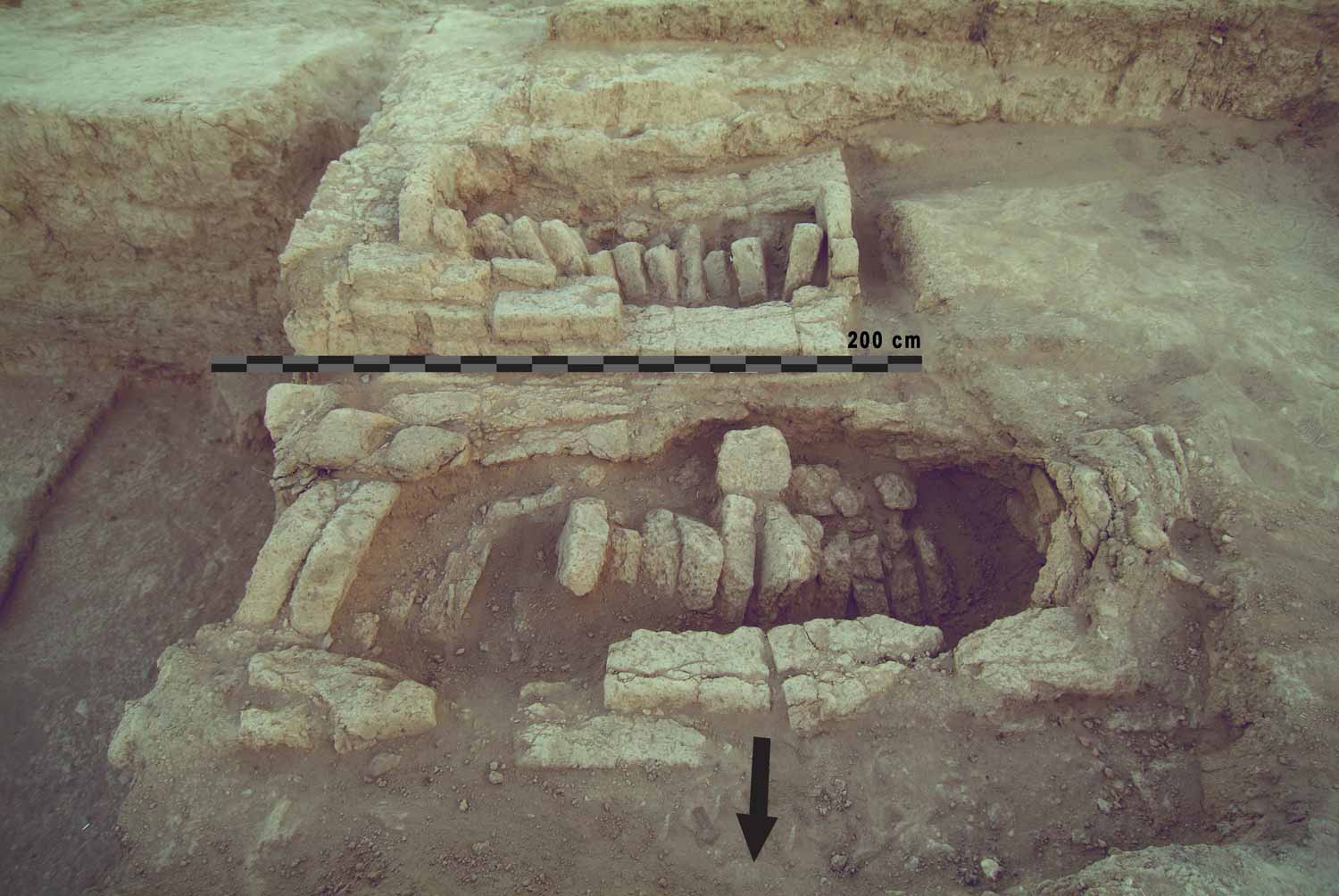
GP18 and GP19 before exploration, seen from North
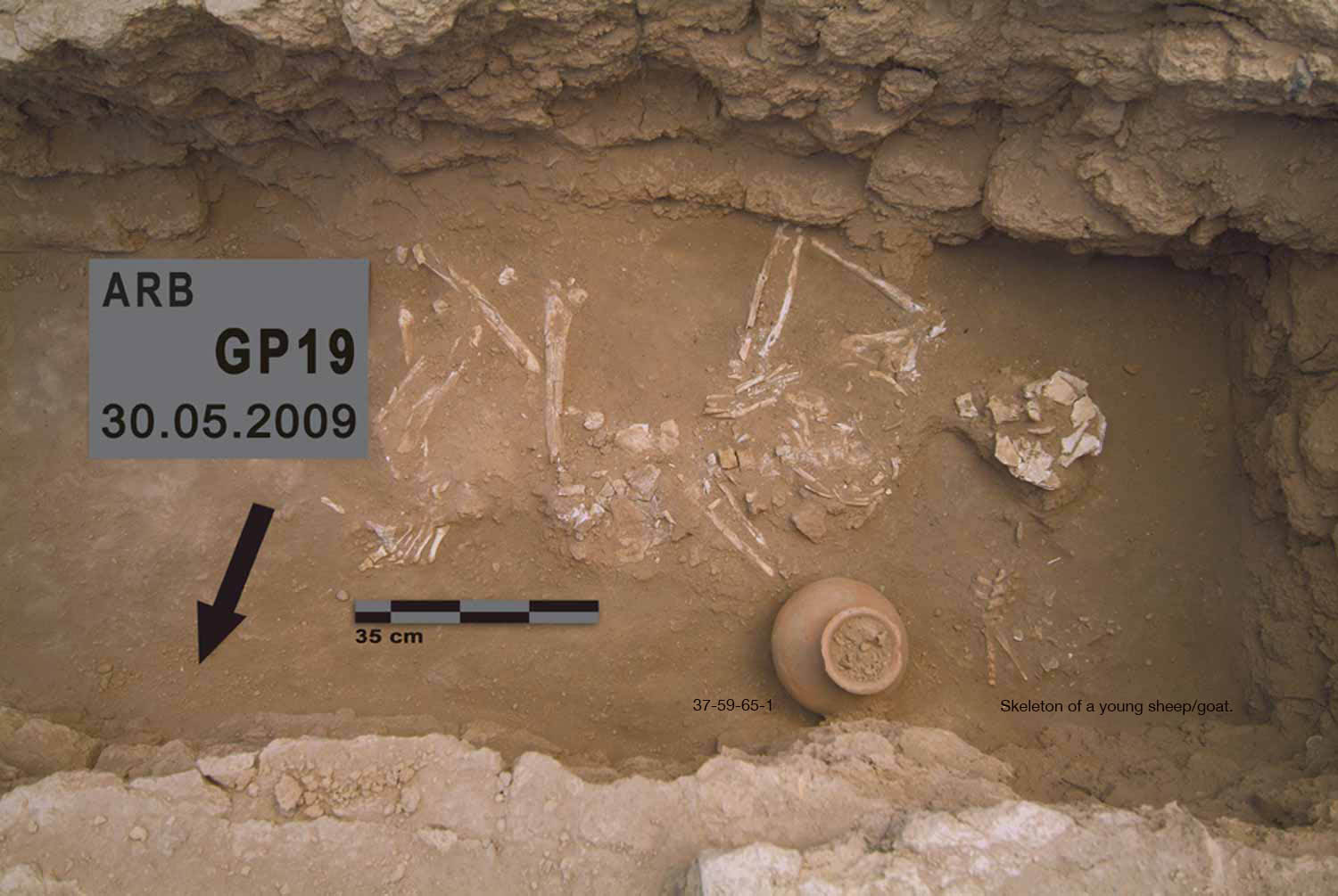
GP19. Animal remains in situ
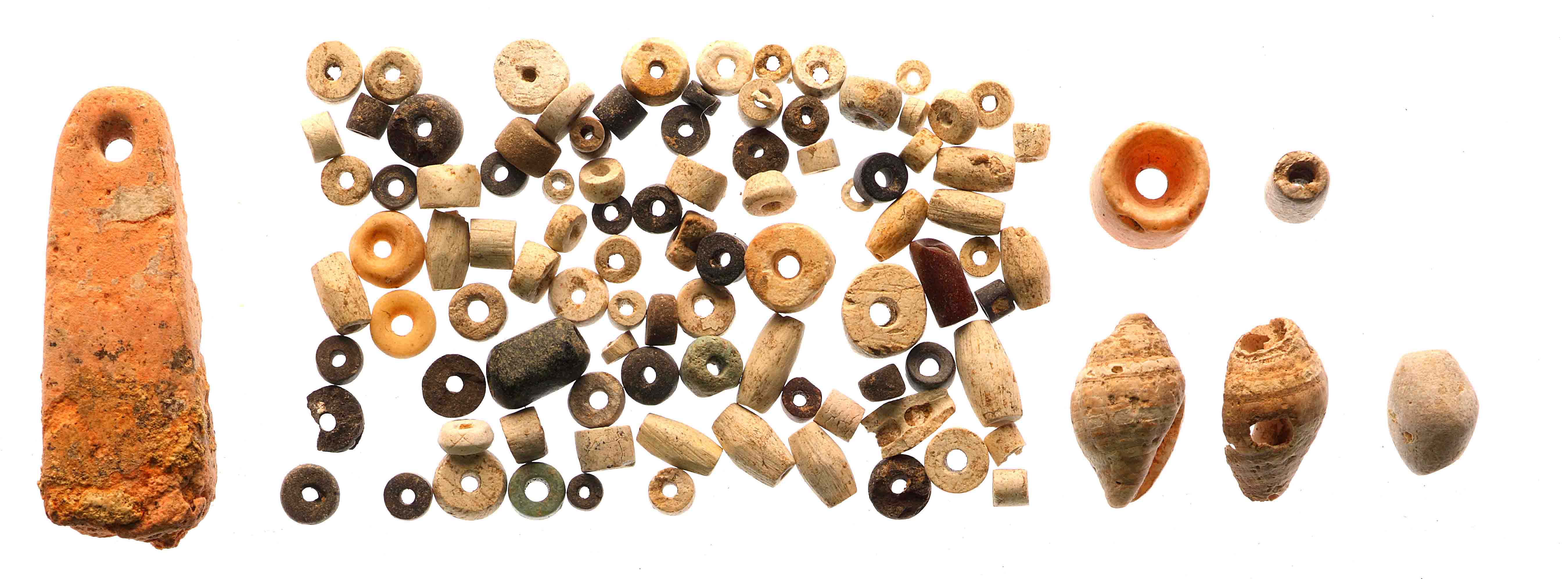
GP19. Beads

Plan of GP19 before exploration

Plan of GP19 before exploration (with levels)
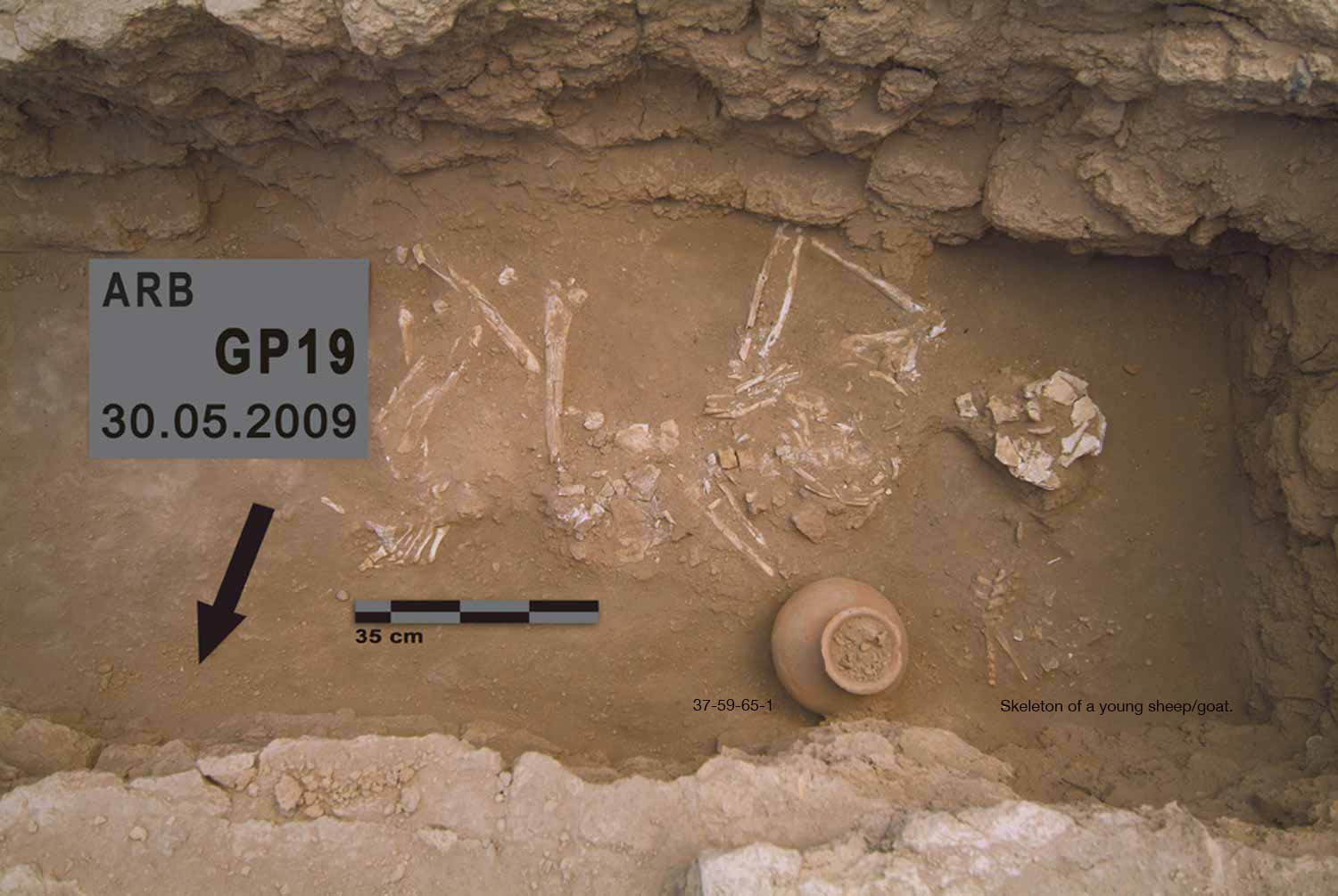
GP19 after exploration, seen from North