
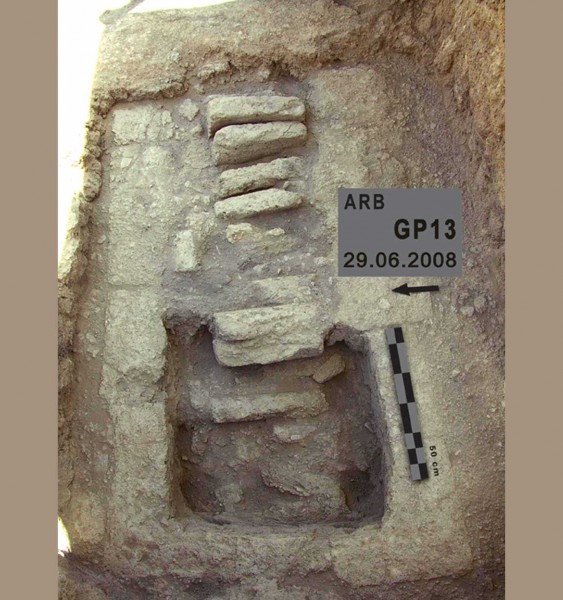
GP13
| GENERAL DESCRIPTION |
Type of burial and vault. Chamber grave, “diamond” vault.
State of preservation. The grave was intact and quite well preserved and has been fully excavated.
Burial descriptions. The chamber was oriented on the NE-SW axis. The outer dimensions were 1.95 x 1.05 m and the inner 1.75 x 0.65 m; the grave chamber was 0.44 m high. The grave was constructed of two longer walls built of about five rows of bricks set horizontally. The shorter SW wall was also made of bricks. The grave was closed by one row of bricks set in a diamond pattern.
Human remains. The grave belonged to a 30-35-year-old woman. Her bones were quite well preserved, not as fragile as in the other cases, but the skull was crushed. The skeleton was in anatomical order. The deceased lay on her left side, on the NE-SW axis with the head to the SW. Her left hand was strongly bent, and the palm was placed under the face. The right hand was also bent, and the palm was in front of the chest.
Animal remains. Behind the head of the deceased were some animal bones which belonged to sheep/goat (vertebrae, ribs, fragments of pelvis and tibia, calcaneus, talus bone) and pig (fragment of skull, fragment of finger).
Evidence of burial rituals. Meat offerings had been deposited in the grave chamber.
Burial goods. A jar stood next to the right palm of the deceased. It is decorated with painted cross-hatched triangles and a herringbone ornament. A bronze pin with a melon head was found near the left elbow.
Description Joanna Mardas/archaeologist/Inventory Xenia Kolińska/archaeologist
| BIOARCHAEOLOGICAL ANALYSIS |
Human remains
An almost complete and relatively well-preserved skeleton of an adult female individual, with only small fragments of the cranium. Bones were slightly weathered and covered by large crystalline deposits; occasionally also root etching was present. Muscular attachment areas were not well developed, but a short, broad and bifurcate supracondylar spur was present on the humerus (HR_FIG.10). Many carious lesions were present on molar teeth.
Dr. Arkadiusz Sołtysiak/IA UW/anthropologist
Animal remains
The vaulted chamber grave with the "diamond" arrangement GP13 contained a fragment of a skull of an adult pig and 28 remains most likely belonging to one young, less than two-year-old sheep or goat. Osseous remains of animals were found in the southwestern part of the burial chamber, behind the head of a woman buried there, who died aged between 30 and 35 years. Among the bones of a sheep or goat, the most numerous were vertebrae fragments of thoracic and lumbar segment and ribs (23 fragments in total). Few elements came from the left back limb, among which pelvic, tibial, tarsal and calcaneal bones were distinguished, as well as a fragment of the finger segment. One vertebra was black burnt.
Dr. Joanna Piątkowska-Małecka/IA UW/archaeozoologist
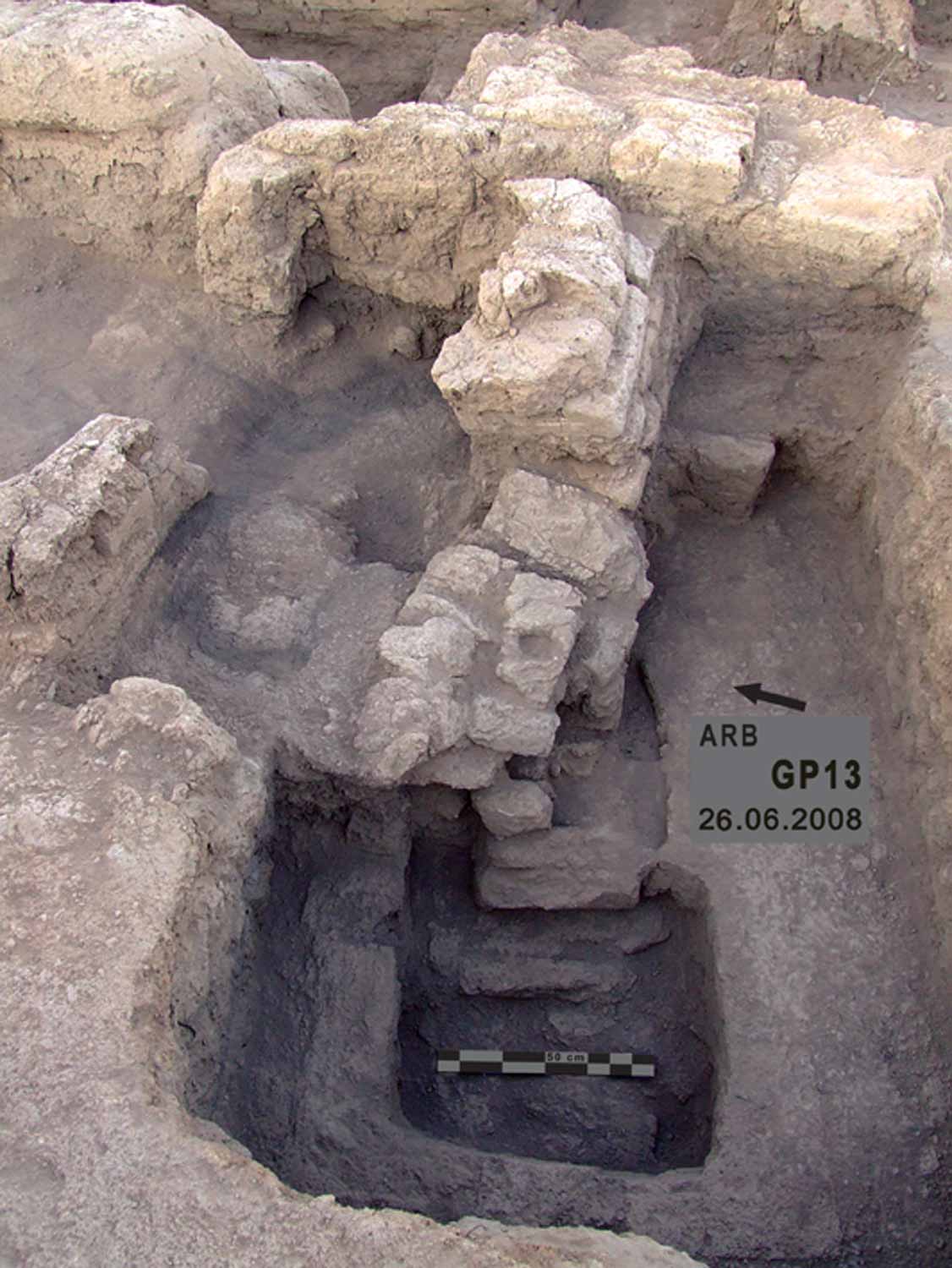
GP13 during exploration seen from North
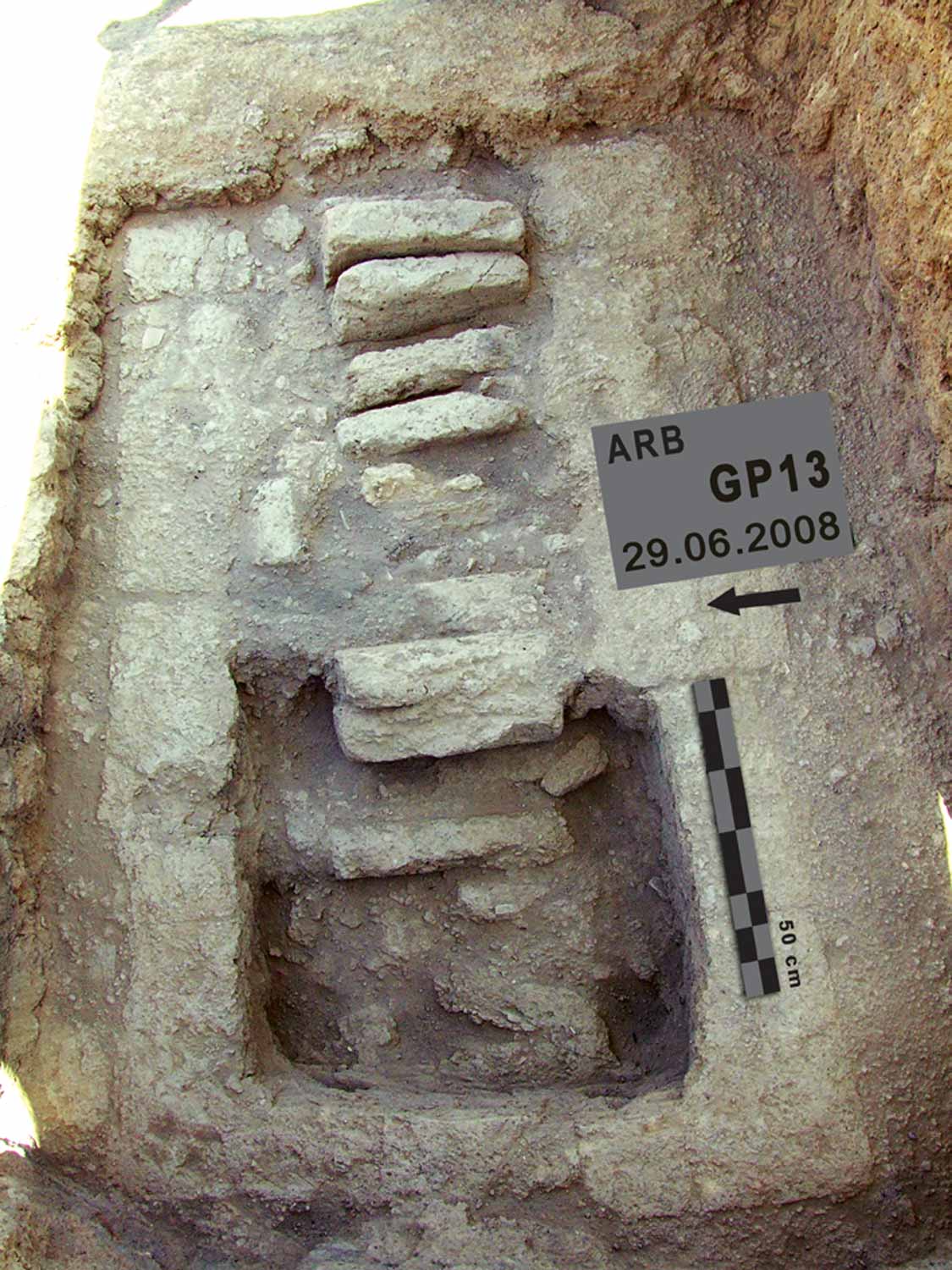
GP13 before exploration seen from West
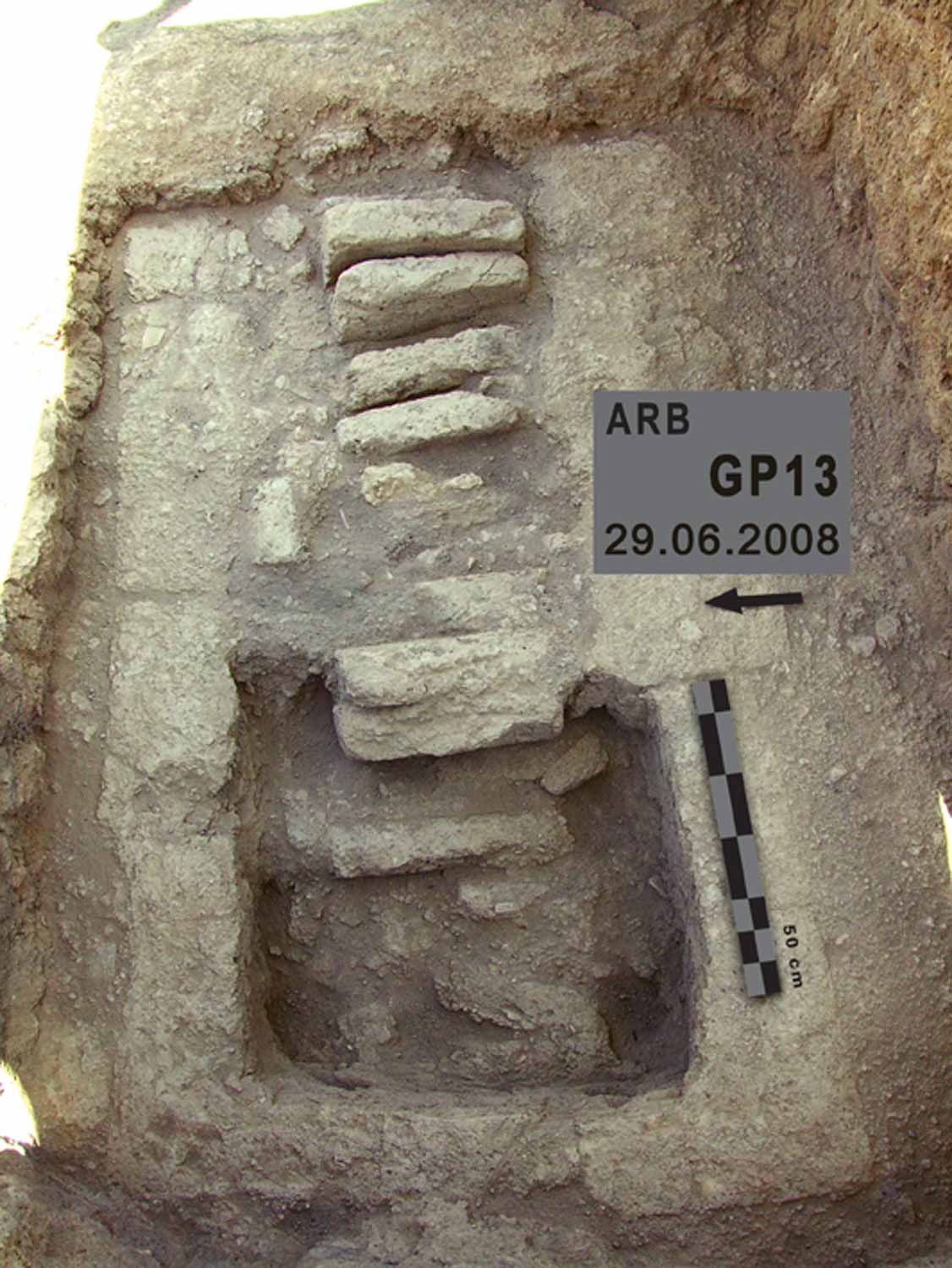
GP12 before exploration seen from West

Plan of GP13 before exploration

Plan of GP13 before exploration

Plan of GP13 before exploration (with levels)
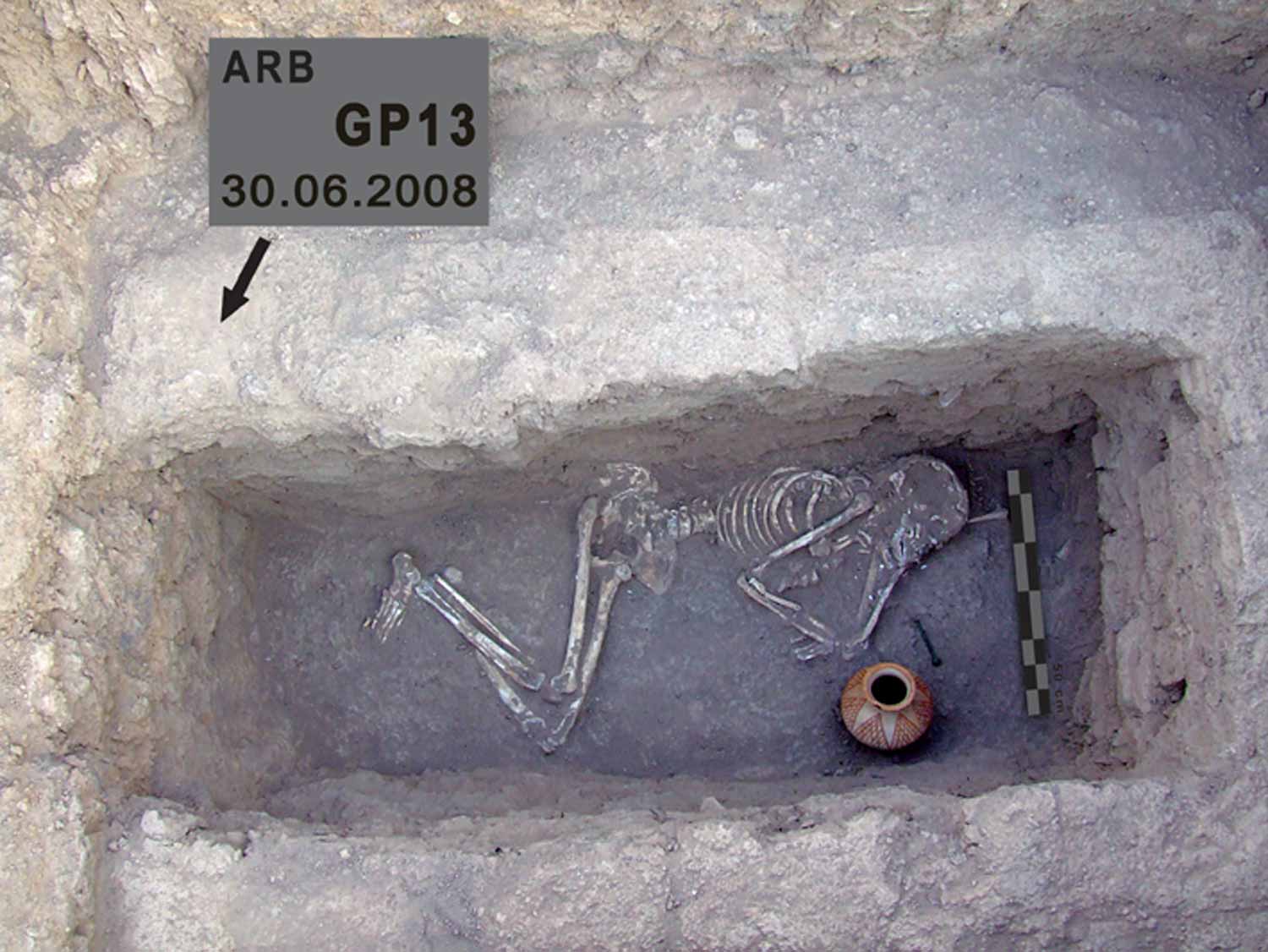
GP13 during exploration seen from North

Plan of GP13 during exploration

Plan of GP13 during exploration

Plan of GP13 during exploration (with levels)