
GP25
| GENERAL DESCRIPTION |
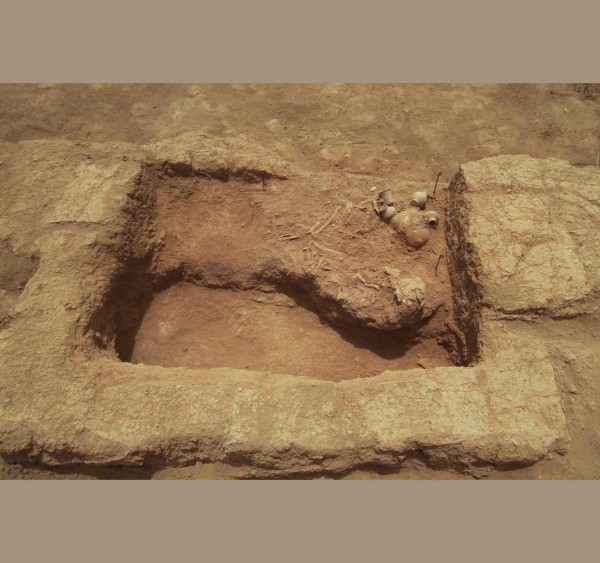
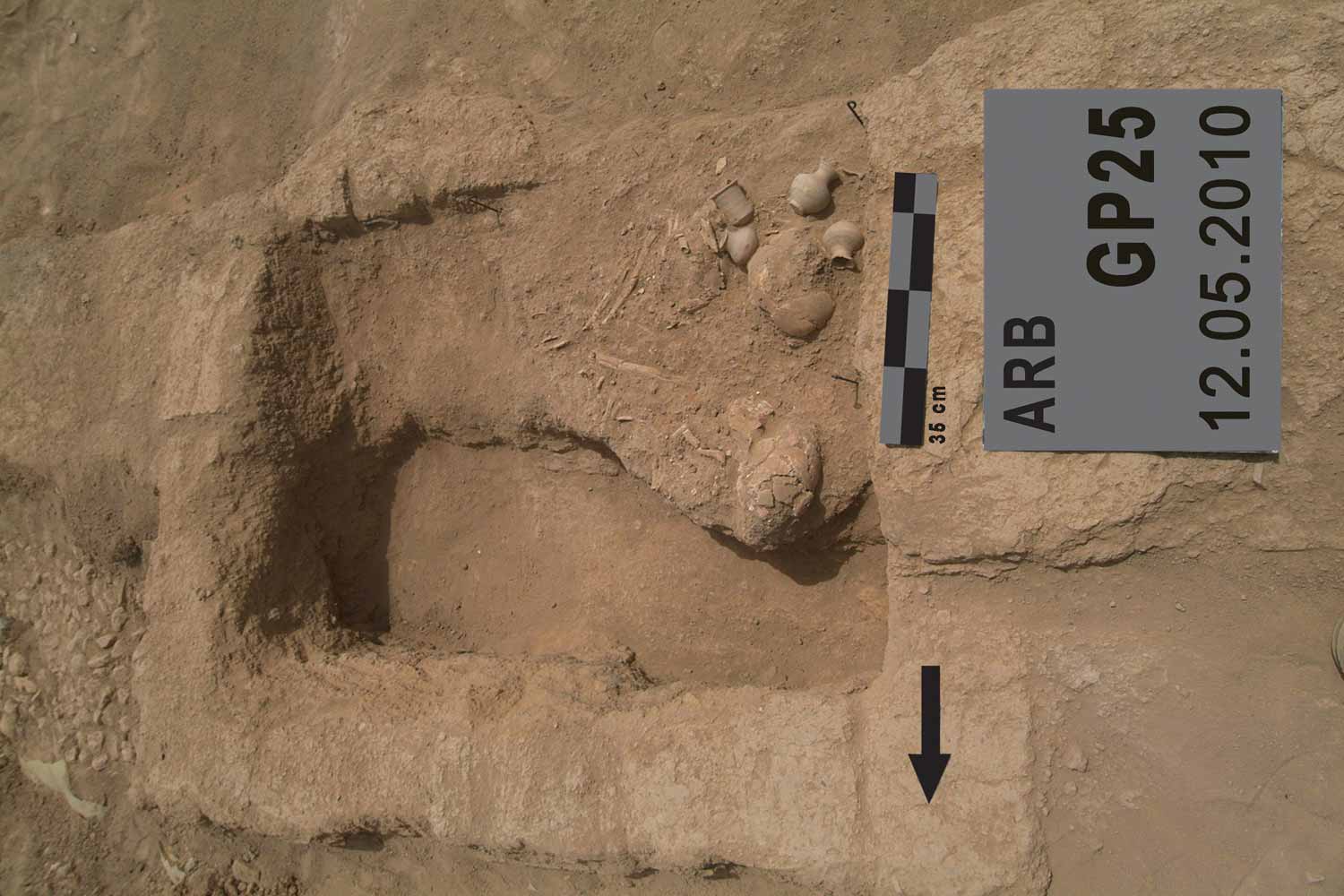
Type of burial. Chamber grave.
State of preservation. The walls of the chamber were relatively well preserved but no trace of the ceiling has survived. The location of the side entrance to the chamber is not clear. The grave has been fully excavated.
Burial descriptions. The grave was a simple rectangular enclosure with walls built of two layers of bricks. It was oriented on the E-W axis. Its outer dimensions were 1.42 x 0.75 m and the inner 1.10 x 0.47 m
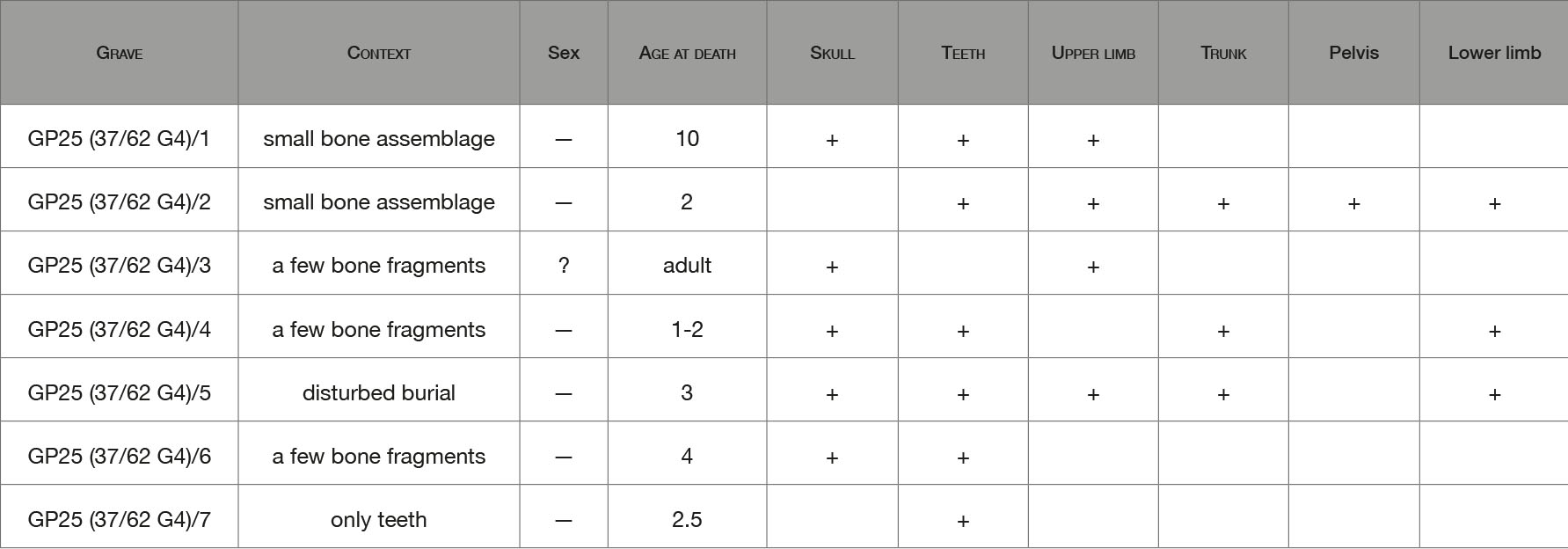
Human remains. It was a multiple burial. The remains belonged to seven people: one 10-year-old child, five children aged 2-4 years (in one case determined only on the basis of the teeth) and one adult (sex unknown). The remains, as well as the burial goods, were placed in the SW corner of the grave. The bones of the adult were badly preserved, crushed and fragile but in anatomical order. The deceased was lying on his/her right side, on the E-W axis with the head to the west. The body seemed to be lying in a position suggesting that this person was cuddling a child (one of two lying in front of him/her). Unfortunately, the remains of the children were very badly preserved, and it is hard to say if they were lying in anatomical order. Even if they did, it is impossible to determine if the children and the adult had been buried at the same time. In my opinion, the bones of the children and the burial goods were pushed back to make room for the adult
Animal remains. Absent.
Evidence of burial rituals. Absent.
Burial goods. Seven miniature vessels have been found in the SW corner of the grave. They are typical of burials of children. Eight beads made of agate, cornelian, quartz, clay and frit have been foundnear the skull of the adult. Perhaps they were elements of a necklace.
Description Joanna Mardas/archaeologist
| BIOARCHAEOLOGICAL ANALYSIS |
Human remains
Mixed strongly eroded elements from an adult individual and six children of different age-at-death. Some of them were also affected by root etching. Most individuals were represented only by teeth and/or a few bone fragments; many animal elements were also present. Anterior dentition of a 10-year-old child shows extensive evidence of linear enamel hypoplasia.
Dr. Arkadiusz Sołtysiak/IA UW/anthropologist
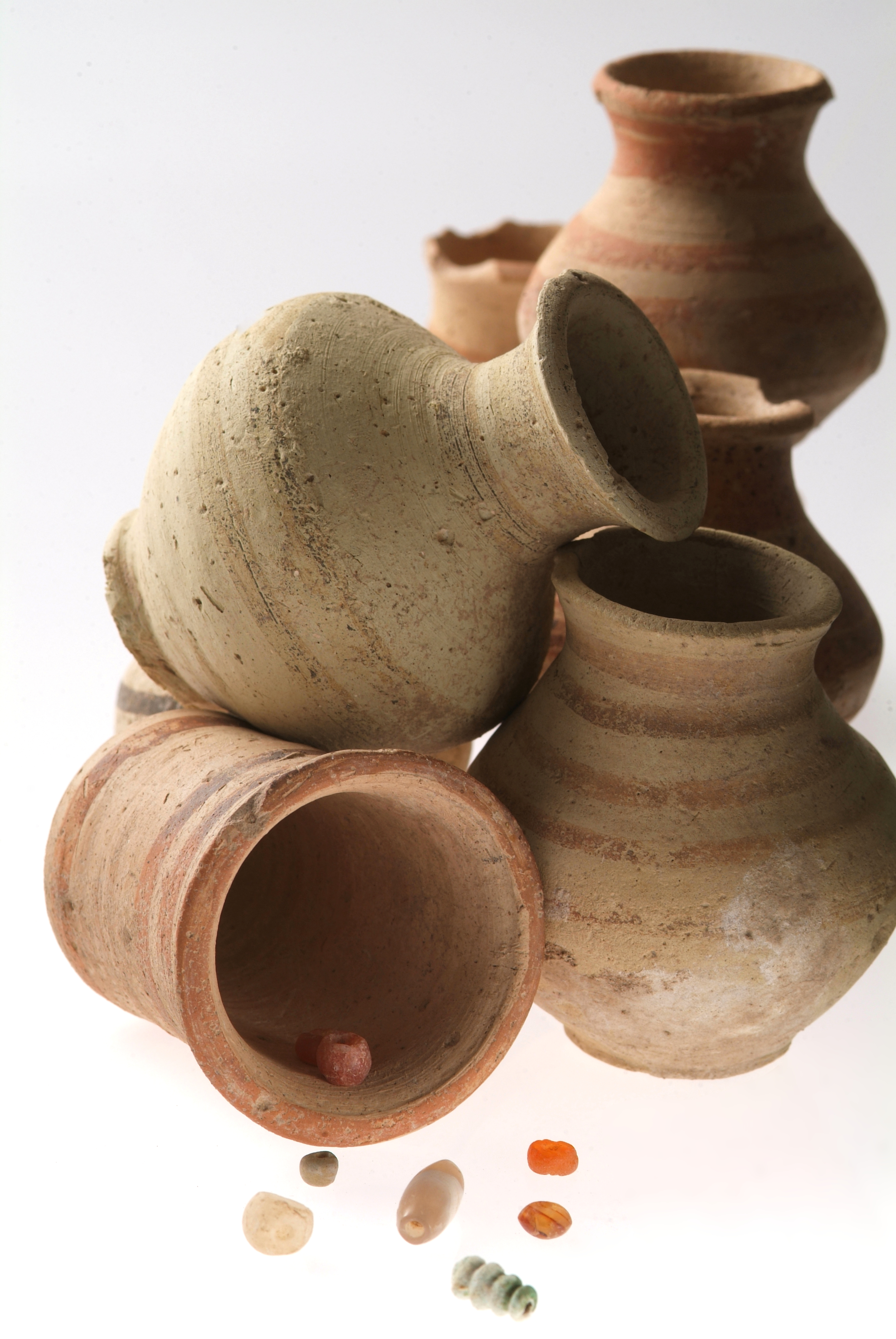
Milk juglets.
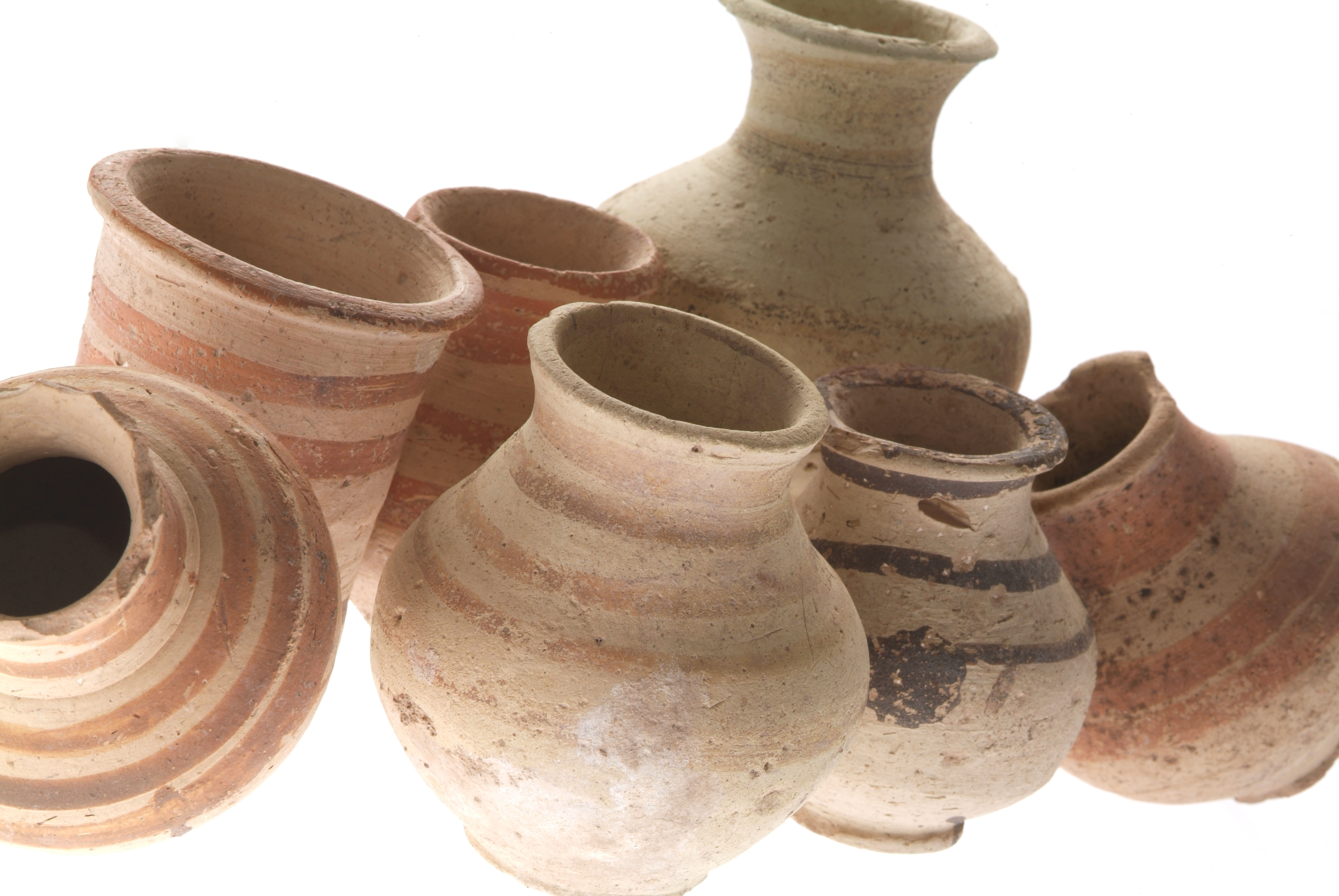
Milk juglets.
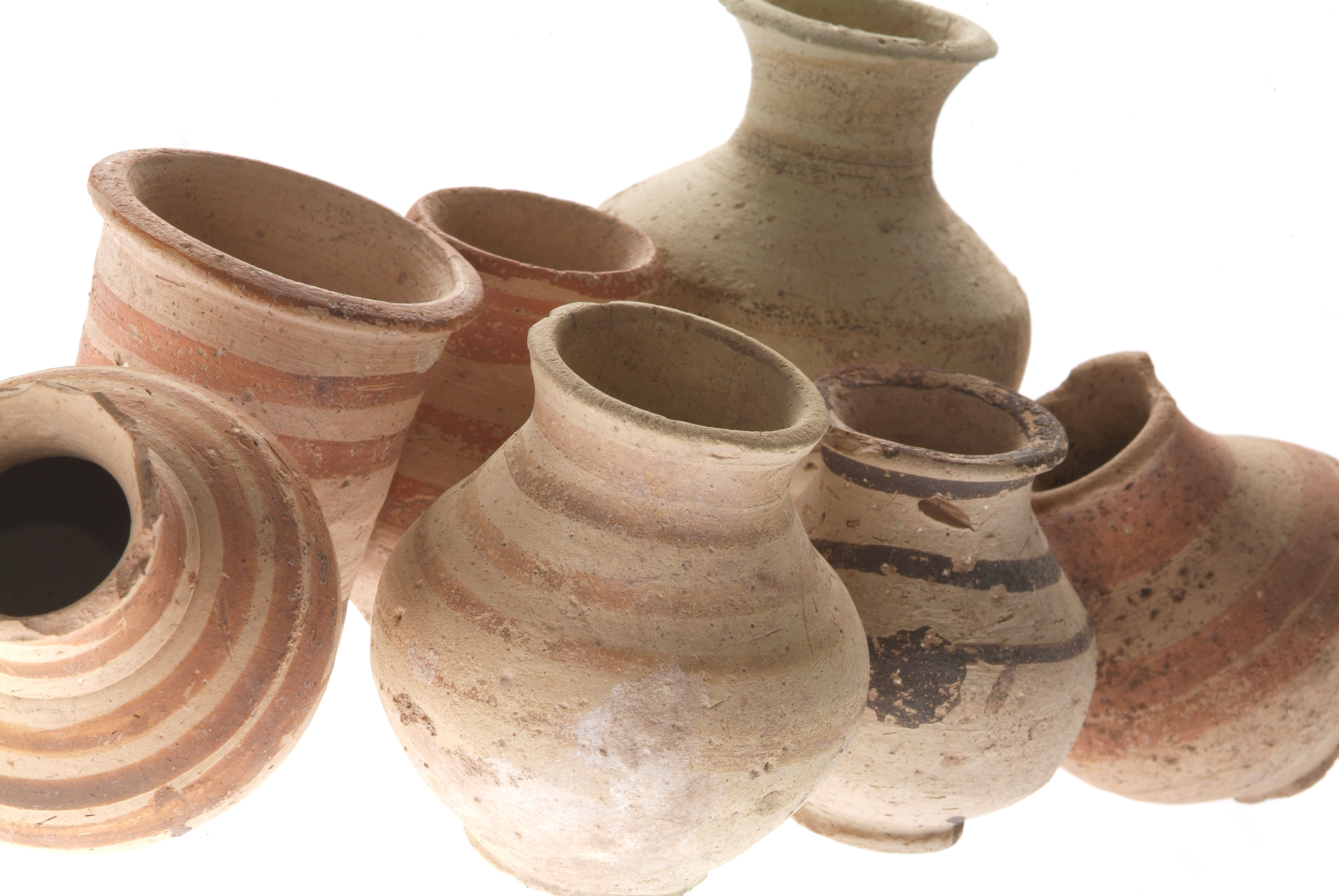
Milk juglets.
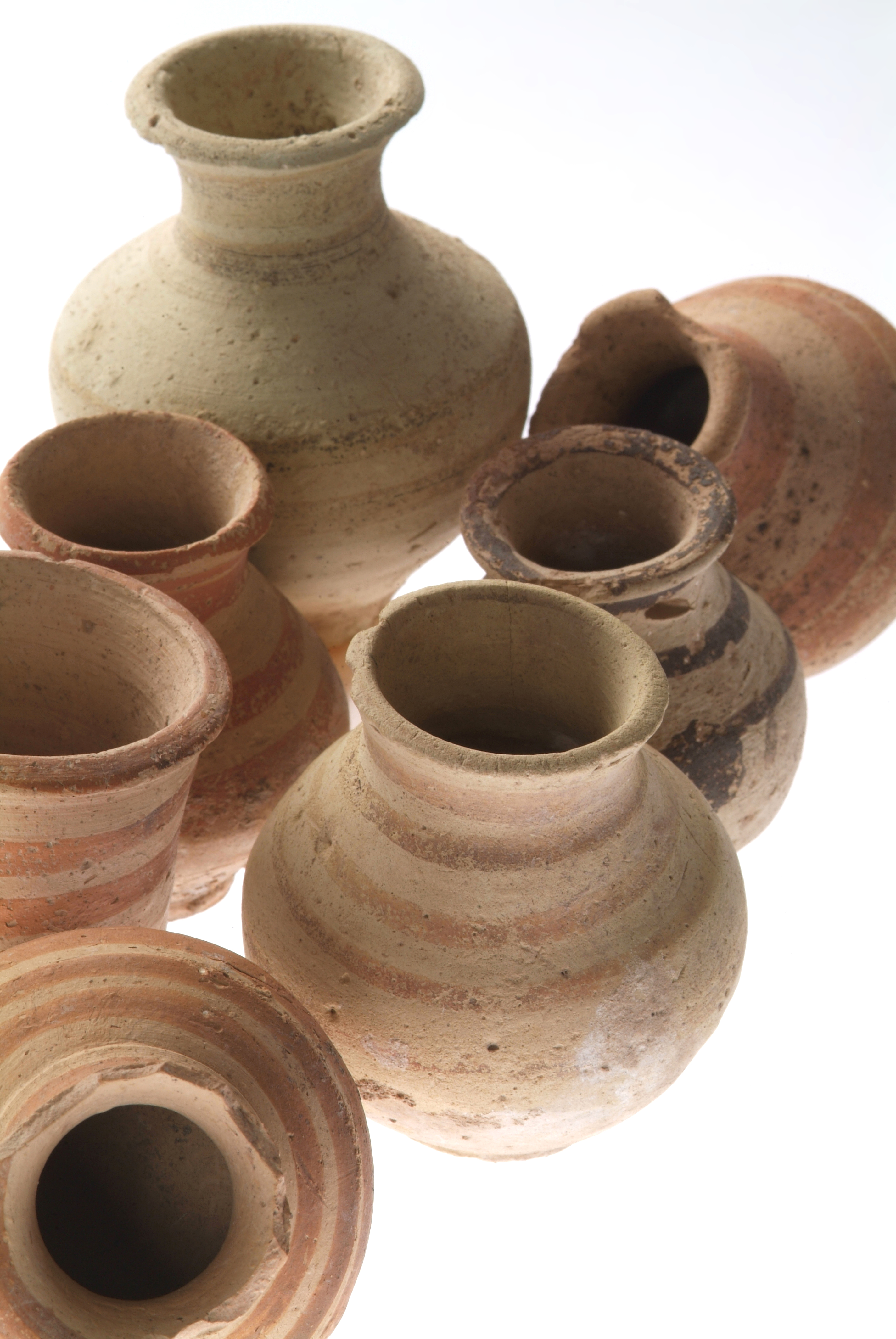
Milk juglets.
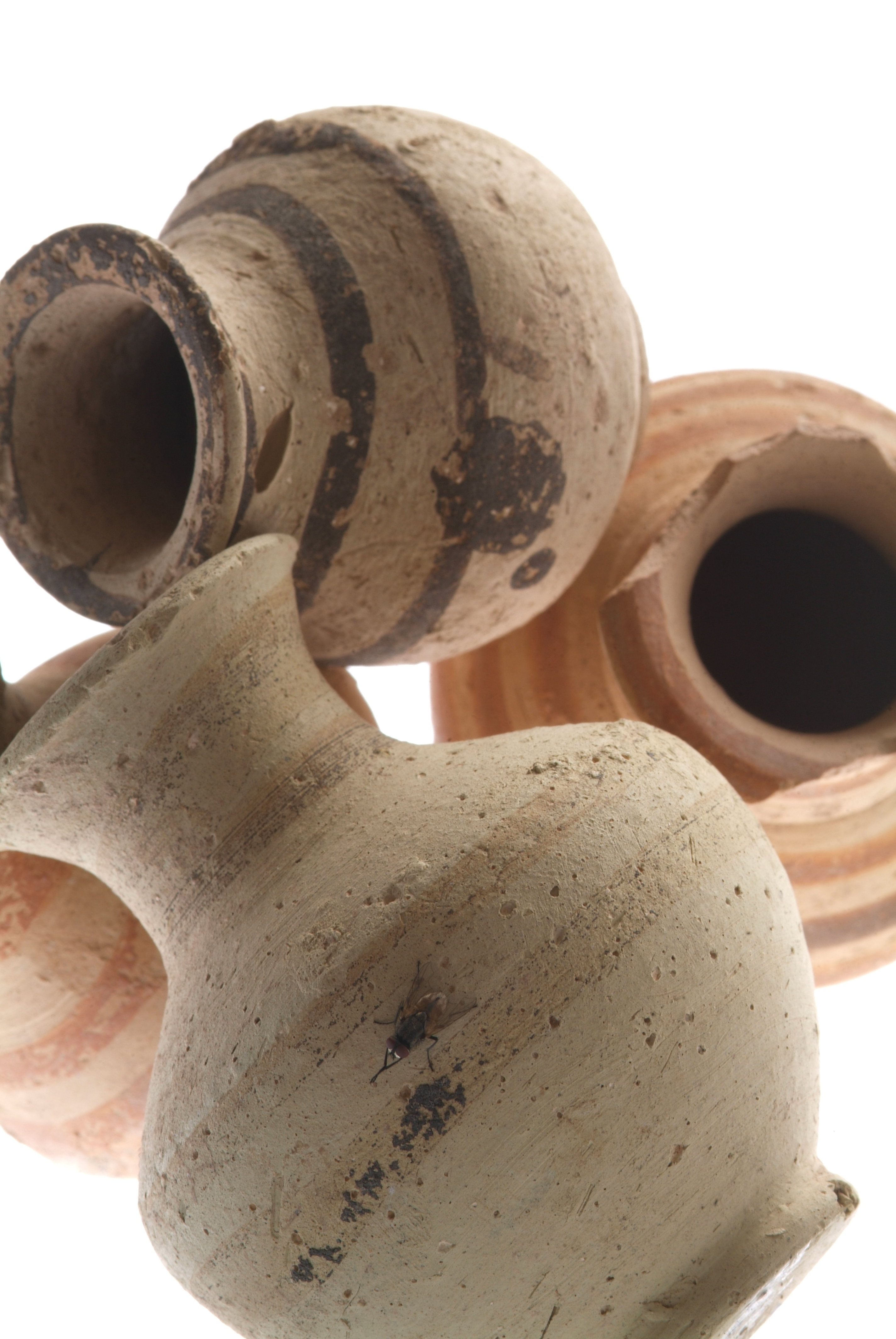
Milk juglets.
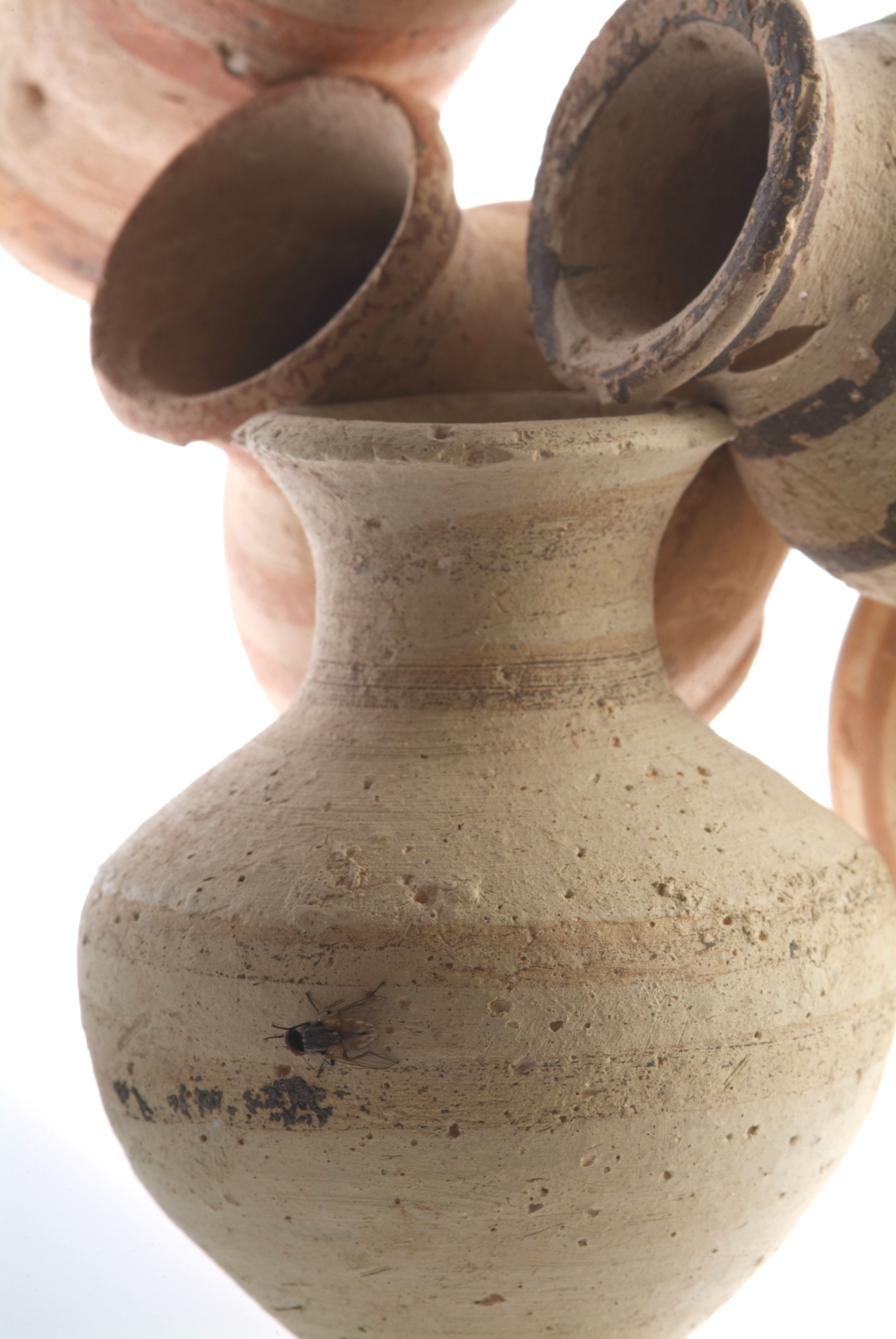
Milk juglets.
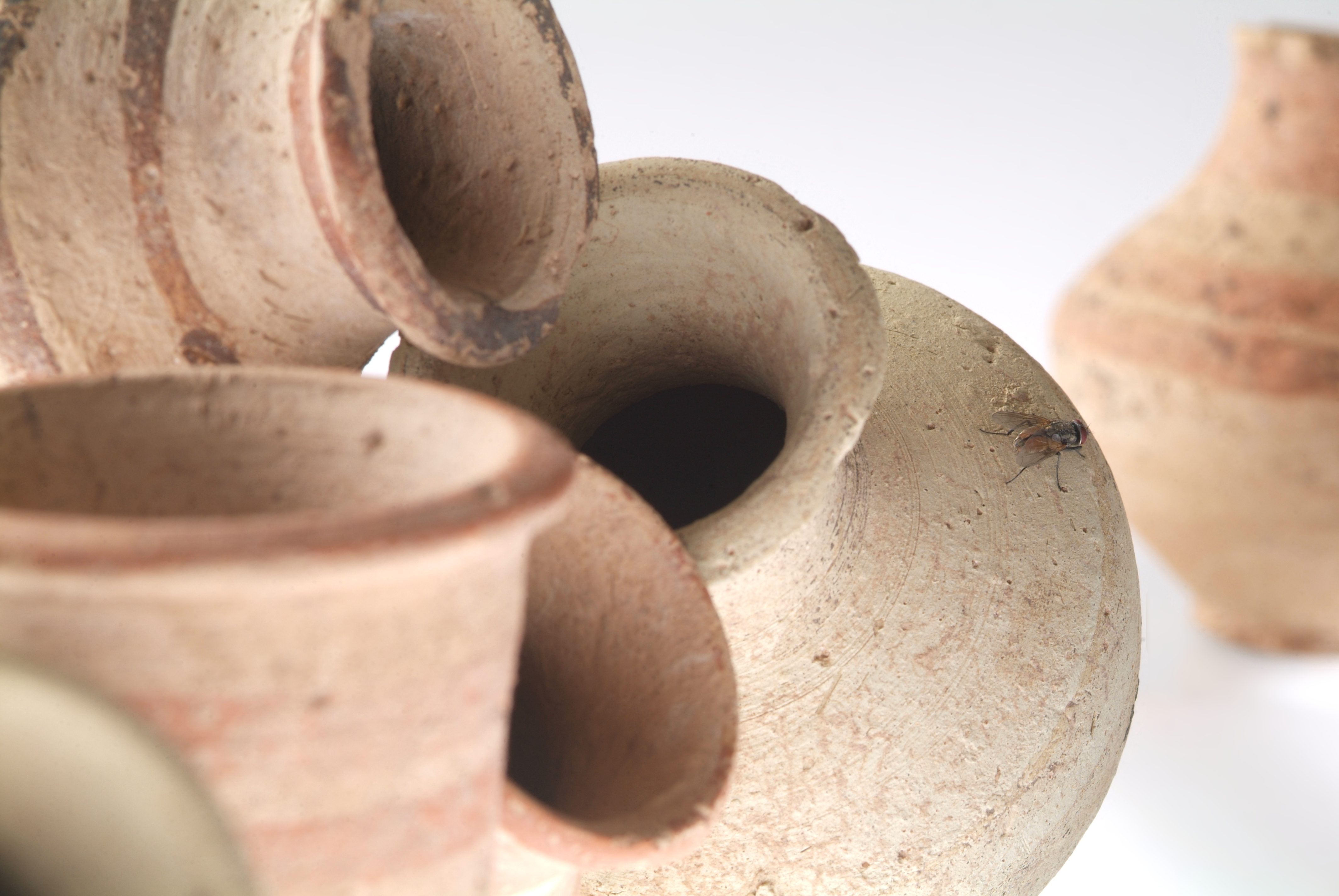
Milk juglets.

Plan of GP25 explored.

Plan of GP25 before exploration.

Plan of GP25 before exploration (with levels).

Plan of GP25 during exploration.

Plan of GP25 during exploration.

Plan of GP25 during exploration (with levels).
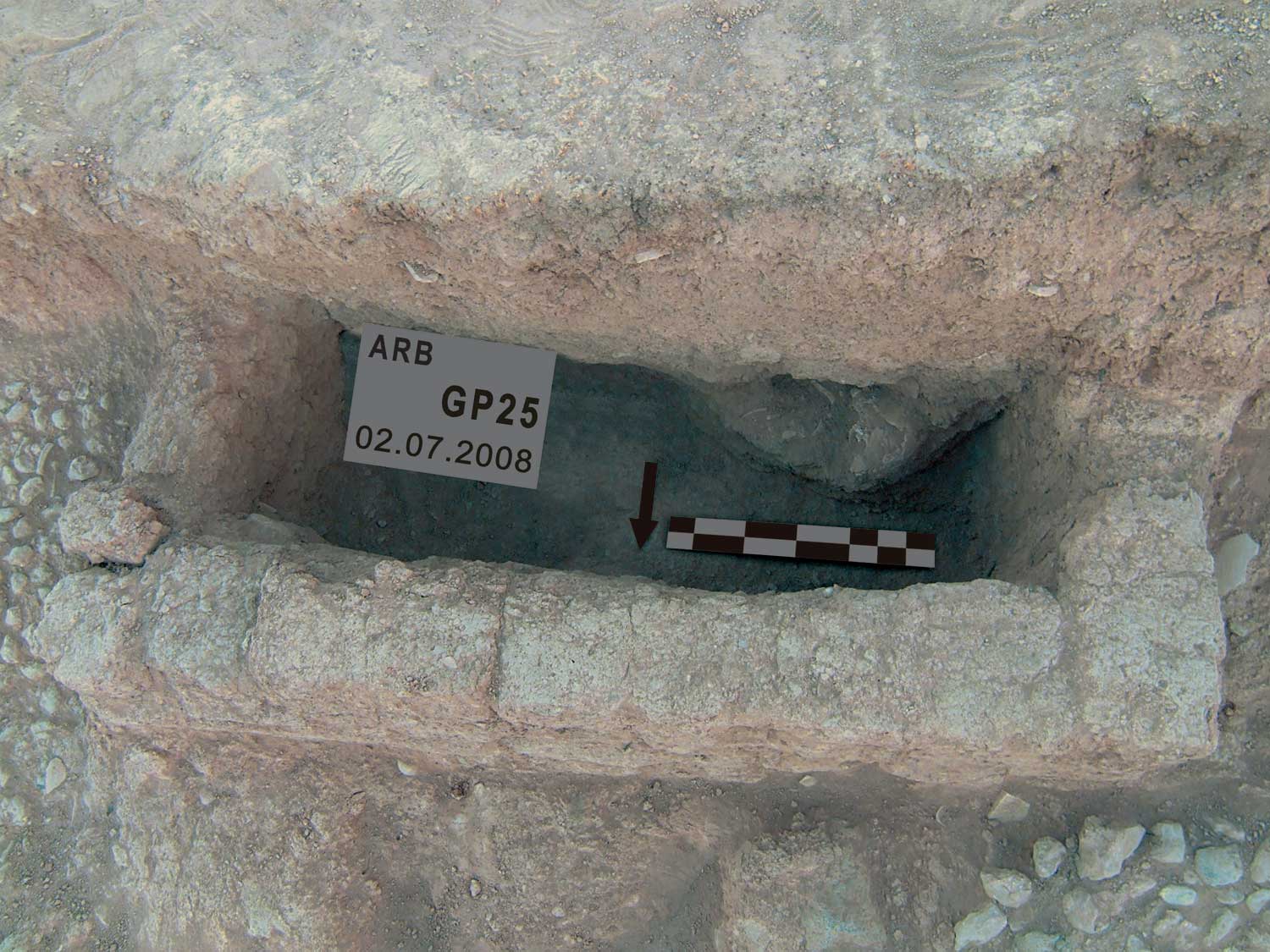
GP25 during exploration, seen from North.
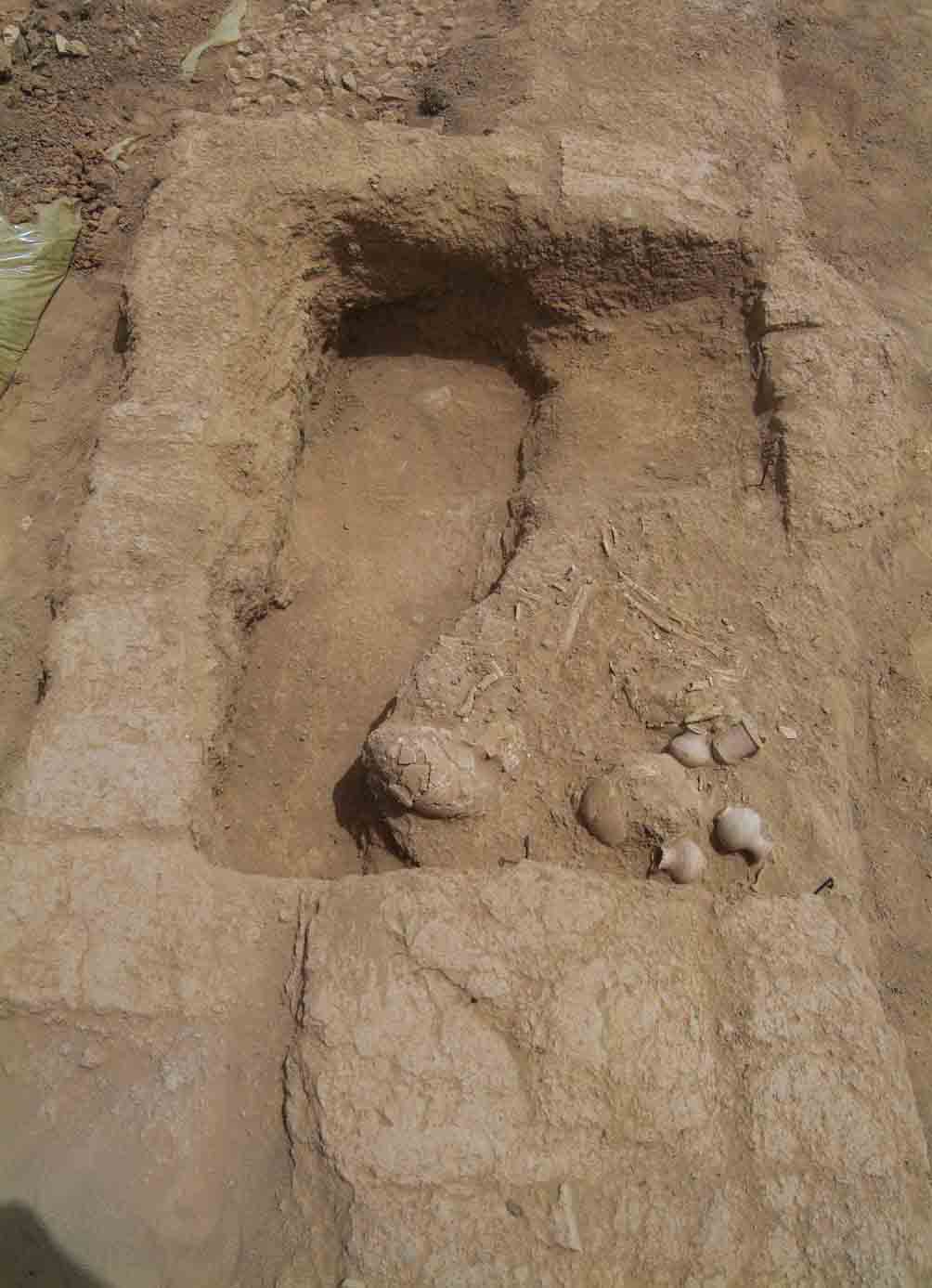
GP25 during exploration, seen from West.
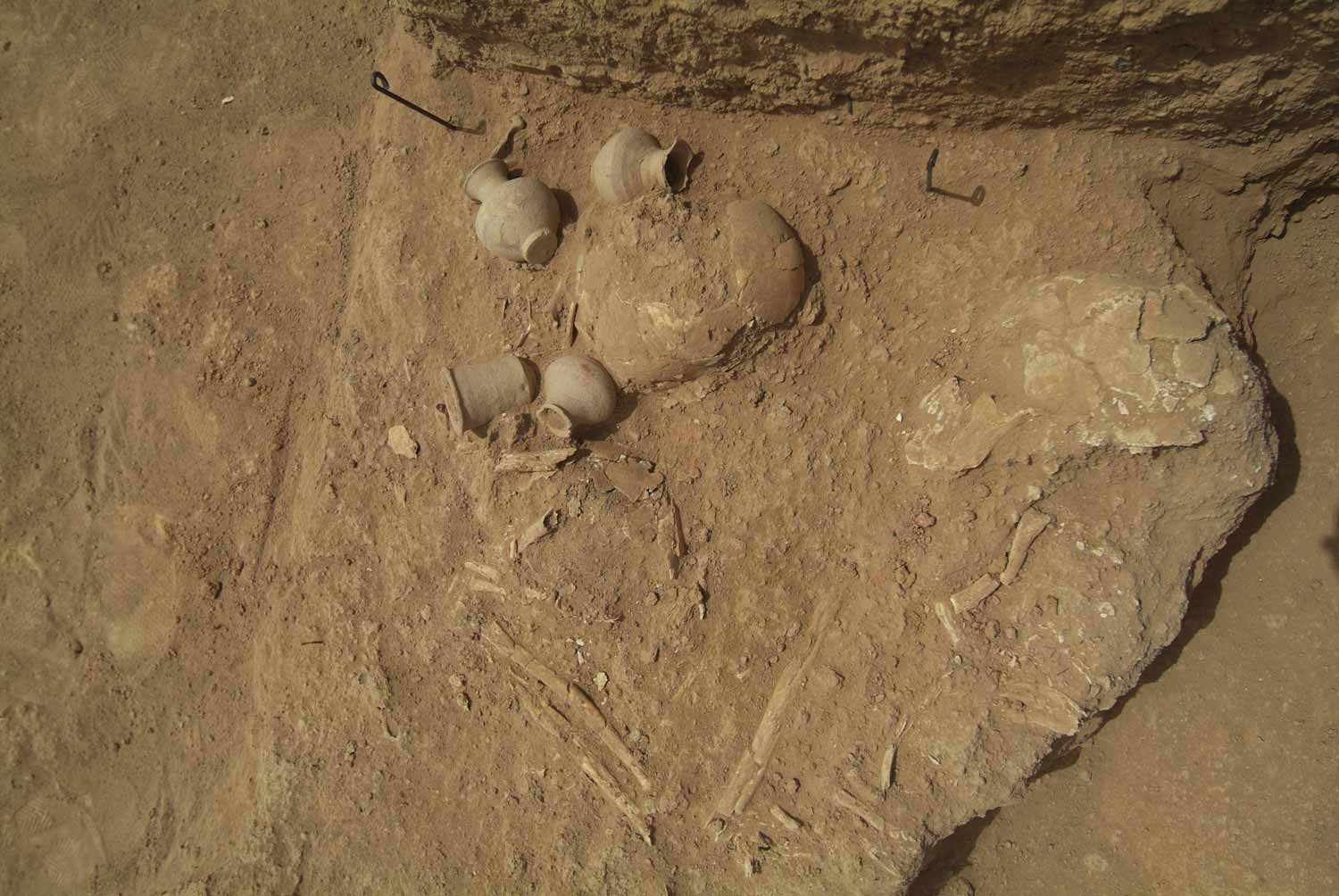
GP25 during exploration, seen from East.
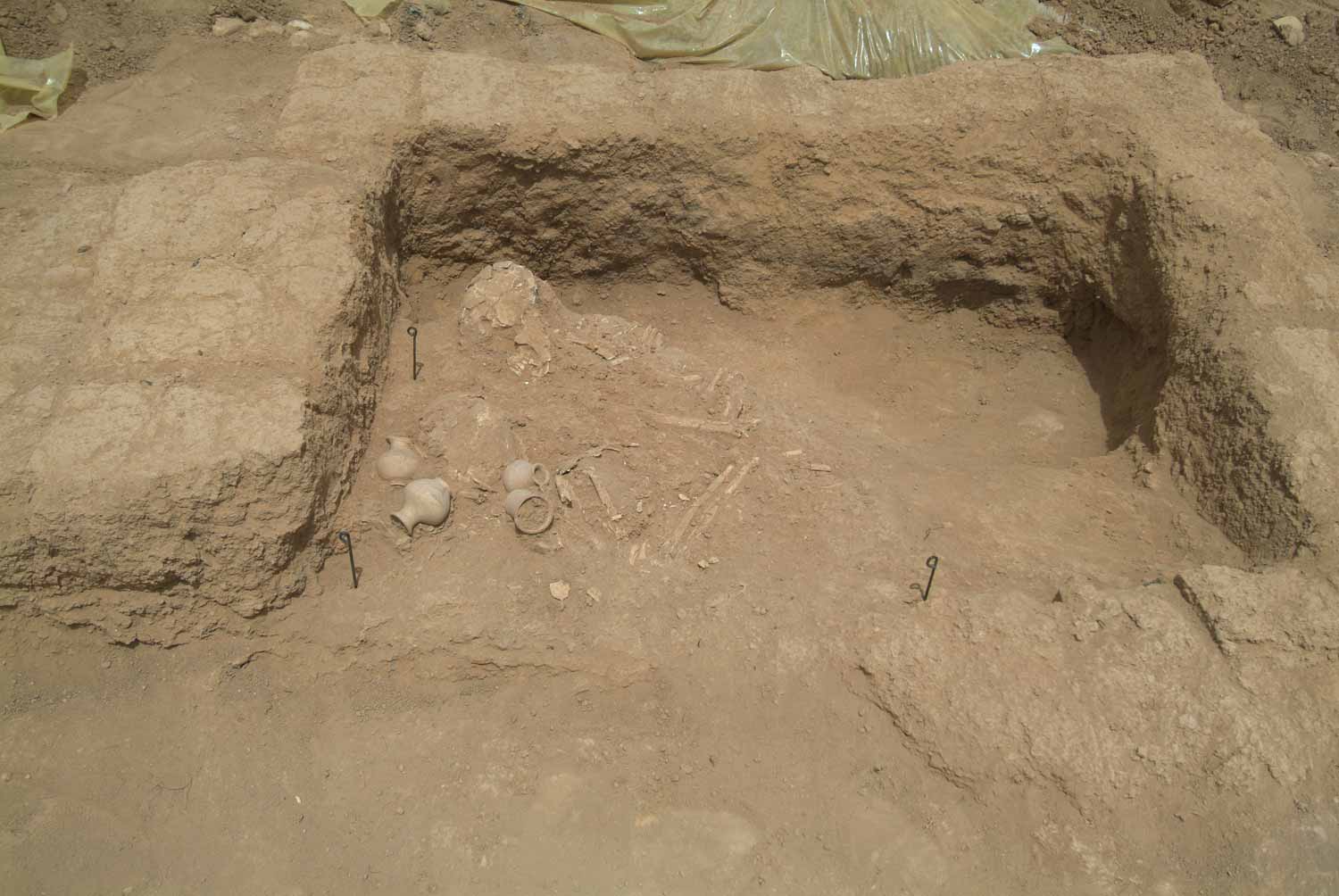
GP25 during exploration, seen from South.
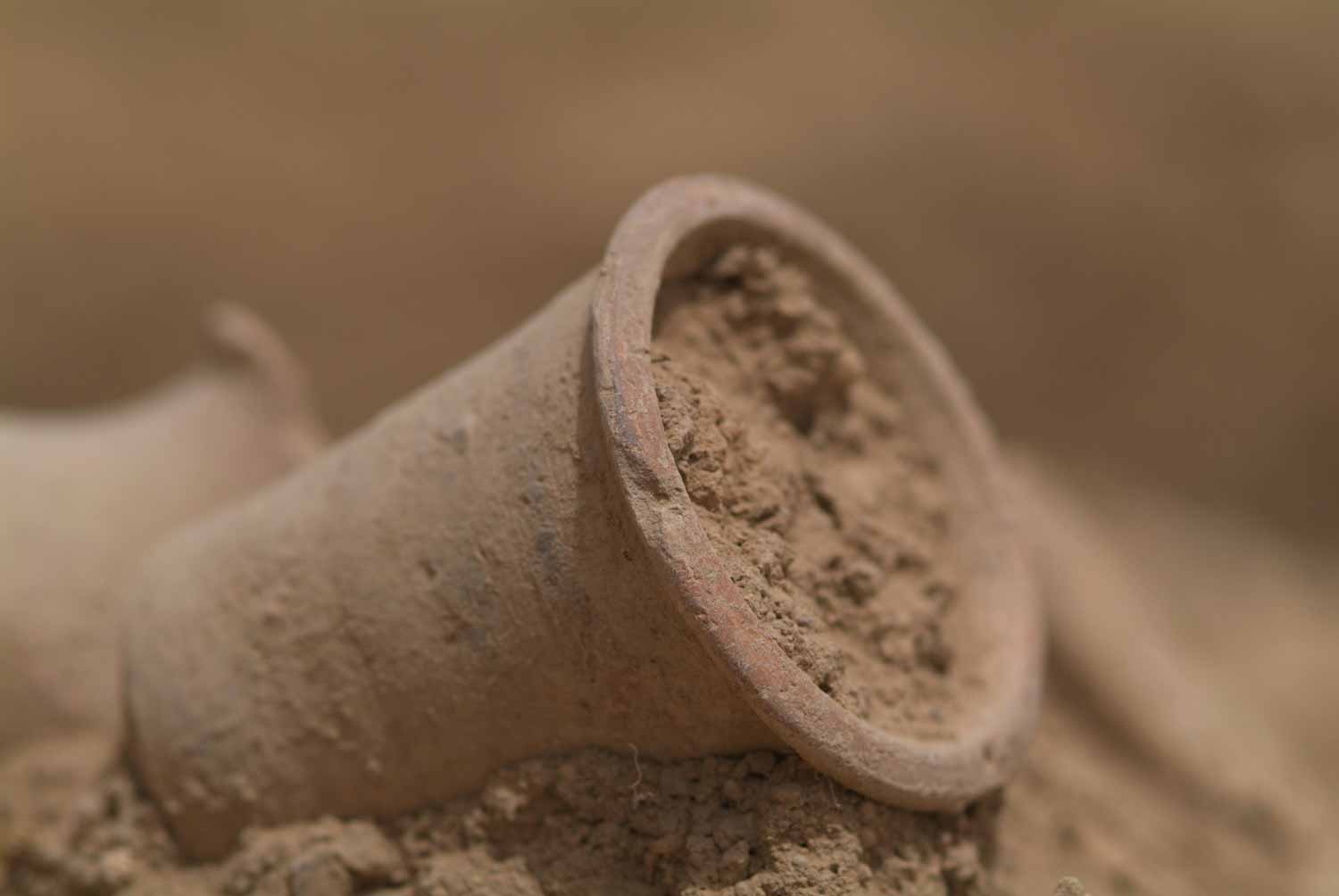
GP25 during exploration. Miniature vessels.
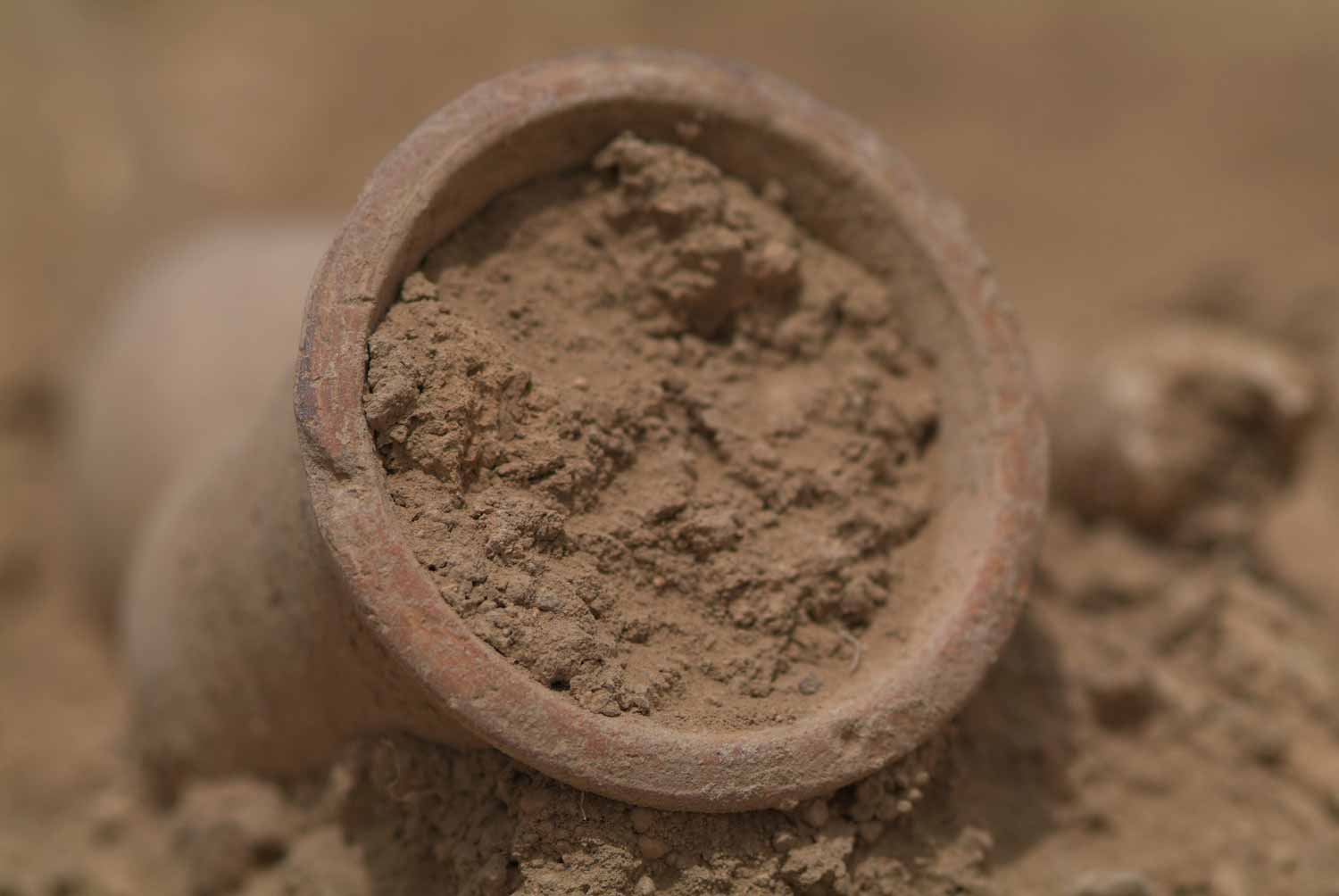
GP25 during exploration. Miniature vessels.
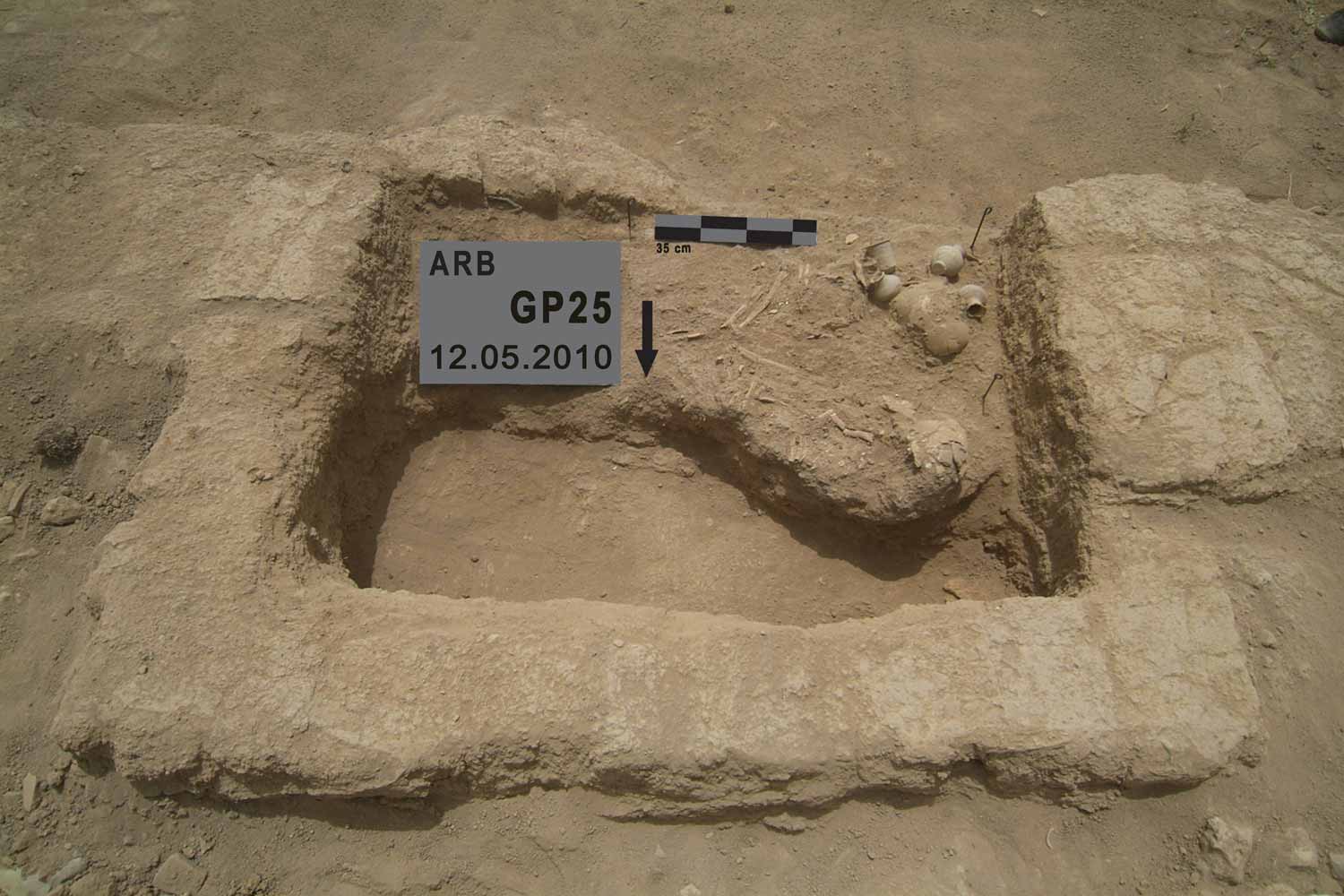
GP25 during exploration, seen from North.
GP25 during exploration, seen from West.
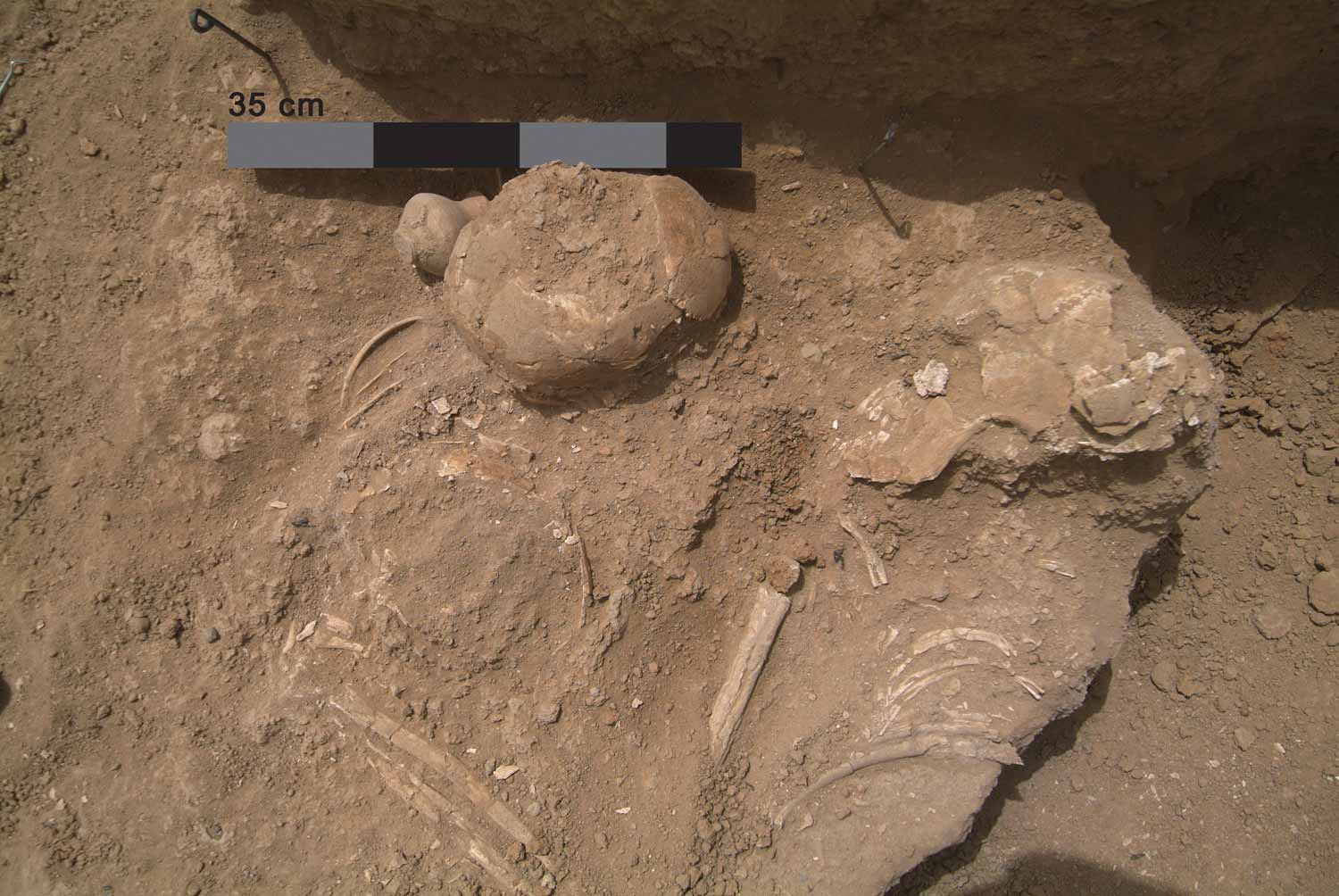
GP25 during exploration, seen from East.
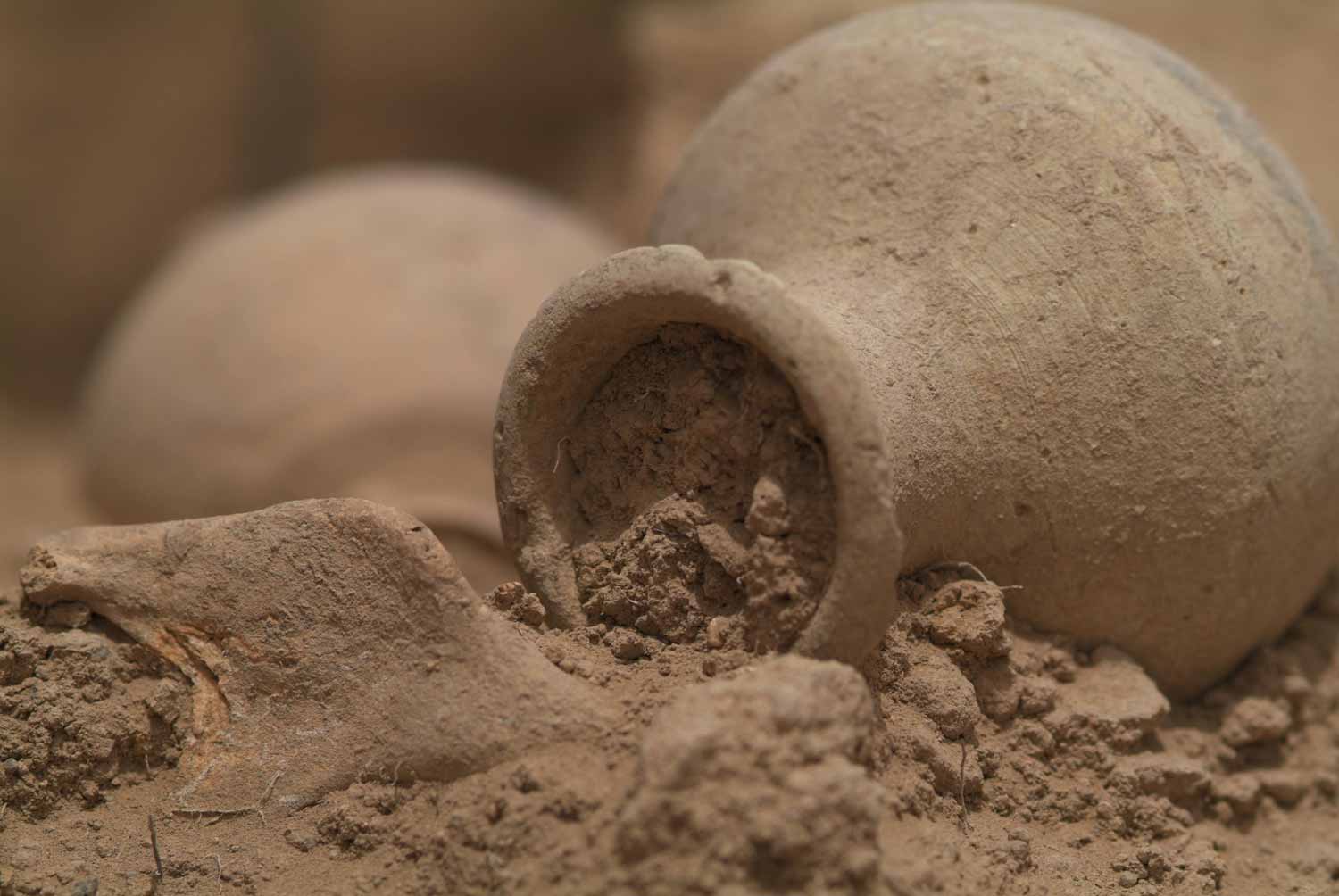
GP25 during exploration. Miniature vessels.
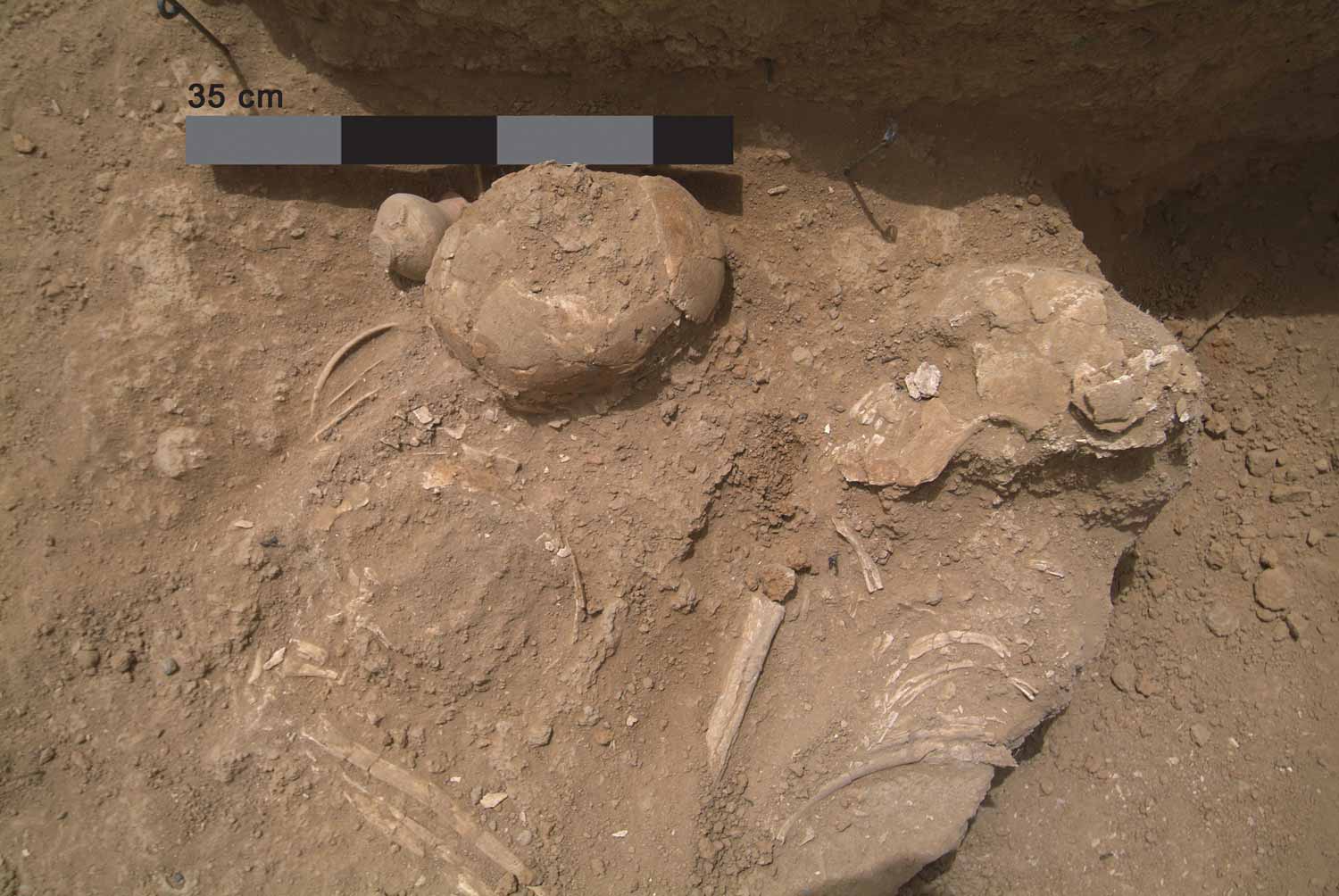
GP25 during exploration, seen from East.
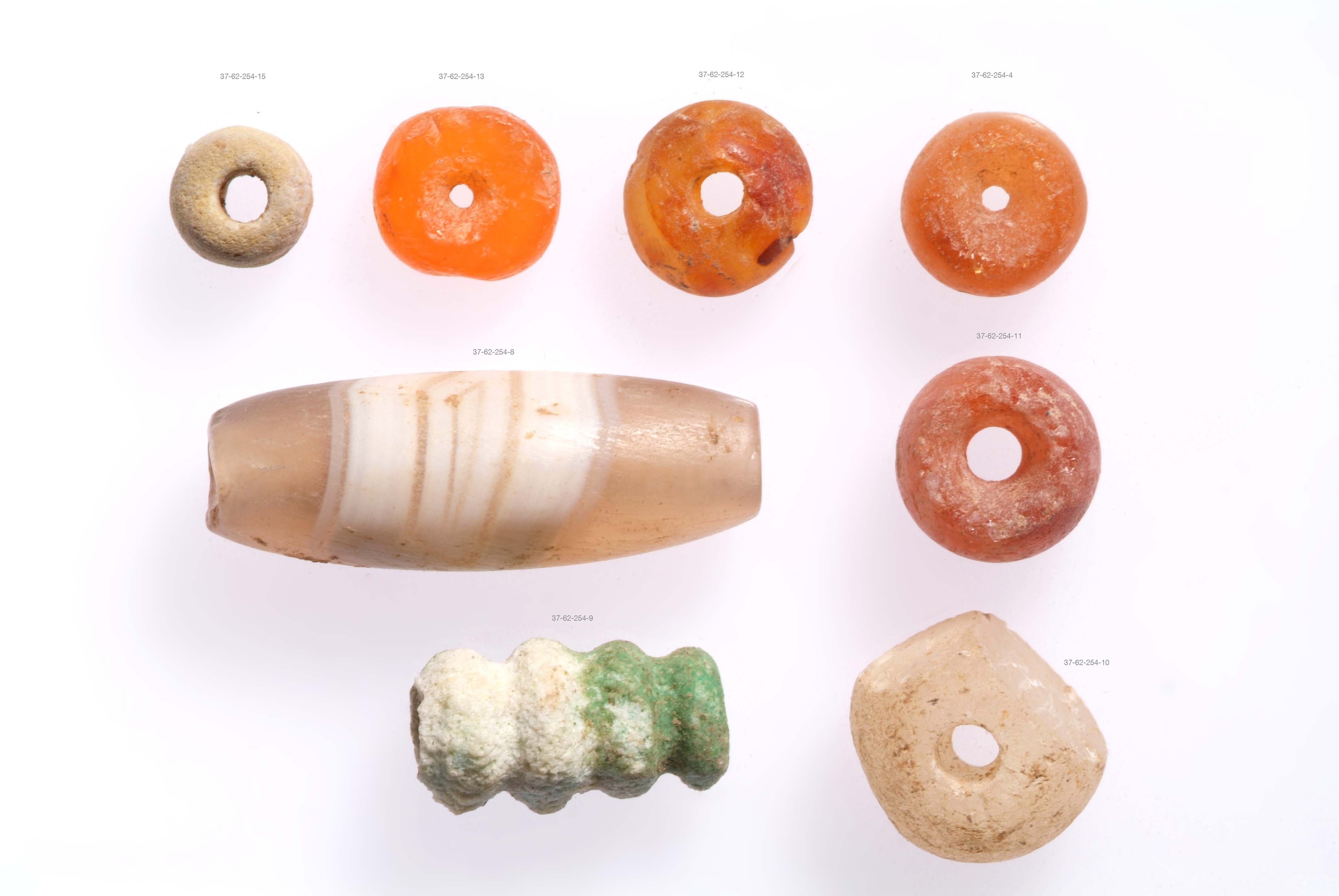
GP25 Beads.