
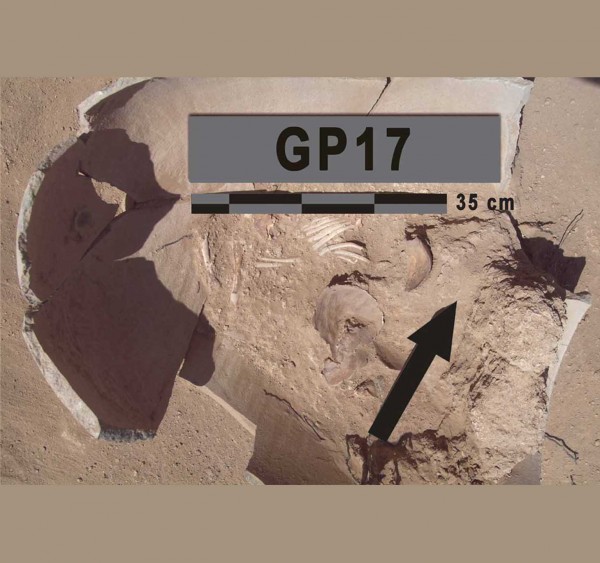
GP17
| GENERAL DESCRIPTION |
Type of burial. Pit grave.
State of preservation. The grave was intact, but its state of preservation was bad. The outline of the grave pit was invisible because the burial vessel was just below the surface of the tell. The grave has been fully excavated.
Burial descriptions. No traces of the grave construction have been found. The burial vessel occupied a space which measured about 0.7 x 0.6 m, so the grave pit could not have been smaller. The vessel, a big pot, lay on its side, on the NEE-SWW axis with the rim to the east. The rim was blocked by a brick (severely damaged) which had fallen inside. The pot is decorated with a plastic band/ledge with an imprint of a rope (?). It has a slightly rounded bottom with a hole in the centre. The vessel is badly preserved, broken and incomplete, and some parts of the belly are missing.
Human remains. The grave belonged to a 0.75-year-old child. Its bones were in anatomical order but badly preserved, cracked and fragile, and the skull was in pieces. The child lay on its left side, on the E-W axis with the head to the east (like the rim of the vessel).
Animal remains. Absent.
Evidence of burial rituals. Absent.
Burial goods. Absent.
Description Joanna Mardas/archaeologist/Inventory Xenia Kolińska/archaeologist
| BIOARCHAEOLOGICAL ANALYSIS |
Human remains
A very poorly-preserved but fairly complete skeleton of a 9-month-old infant, with evidence of weathering and root etching (HR_FIG.7). A single deciduous incisor of another individual was also present in this assemblage.
Dr. Arkadiusz Sołtysiak/IA UW/anthropologist
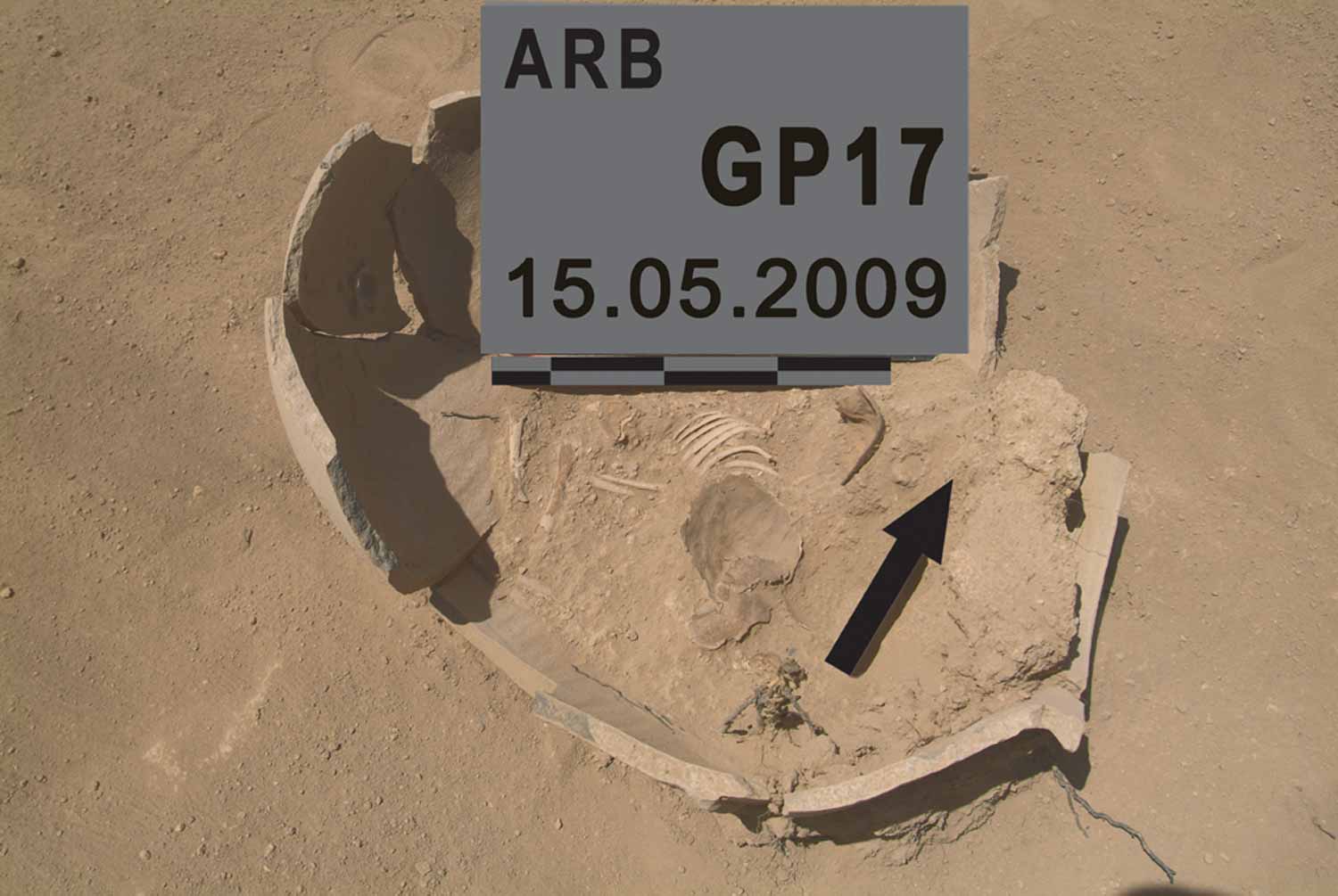
GP17 during exploration, seen from S-E
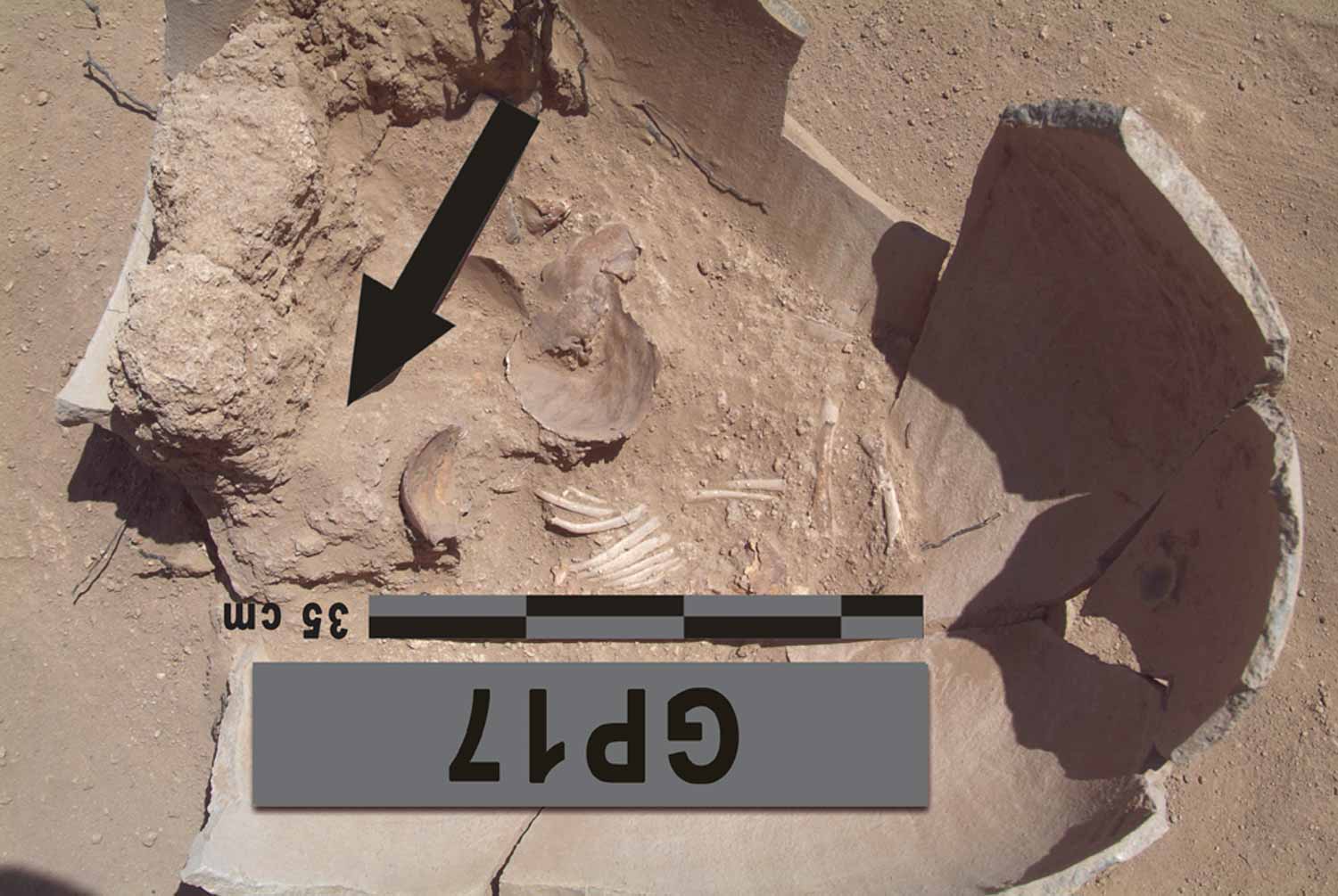
GP17 during exploration, seen from N-W