
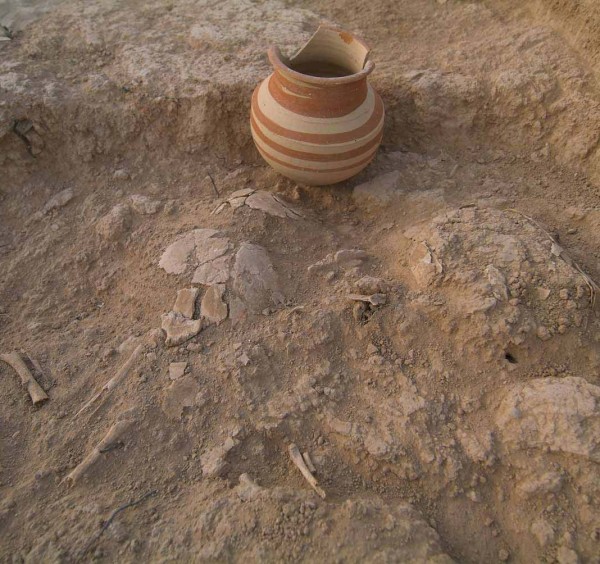
GP51
| GENERAL DESCRIPTION |
Type of burial. Pit grave.
State of preservation. The grave was intact and well preserved and has been fully excavated.
Burial descriptions. The grave pit was rectangular in shape with rounded corners. The pit was 1.0 m long and 0.4-0.45 m wide, oriented on the E-W axis.
Human remains. The grave belonged to two children: one was 3 years old, the other was an infant. The bones were badly preserved, crushed and fragile but in anatomical order. The children lay one upon the other, on the E-W axis with their heads to the east. The child placed higher was lying most probably on its left side (although it is difficult to determine this with certainty because of the very bad state of preservation of the bones), while the one placed lower was lying on its right side.
Animal remains. Absent.
Evidence of burial rituals. Absent.
Burial goods. One jar/pot was found near the children’s heads. The vessel is decorated with painted horizontal stripes. The child lying lower was also equipped with eight beads and a shell roundel.
Description Joanna Mardas/archaeologist/Inventory Xenia Kolińska/archaeologist
| BIOARCHAEOLOGICAL ANALYSIS |
Human remains
Two very incomplete and poorly preserved skeletons of subadult individuals (one neonate and one c. 3-year-old child). Originally, they may have been complete and articulated, but the degree of erosion is high in this case, and some elements were affected by root etching and insect tunneling. Moderate cribra orbitaliaand initial porotic hyperostosis over lambda can be seen on the cranium of the older individual.
Dr. Arkadiusz Sołtysiak/IA UW/anthropologist
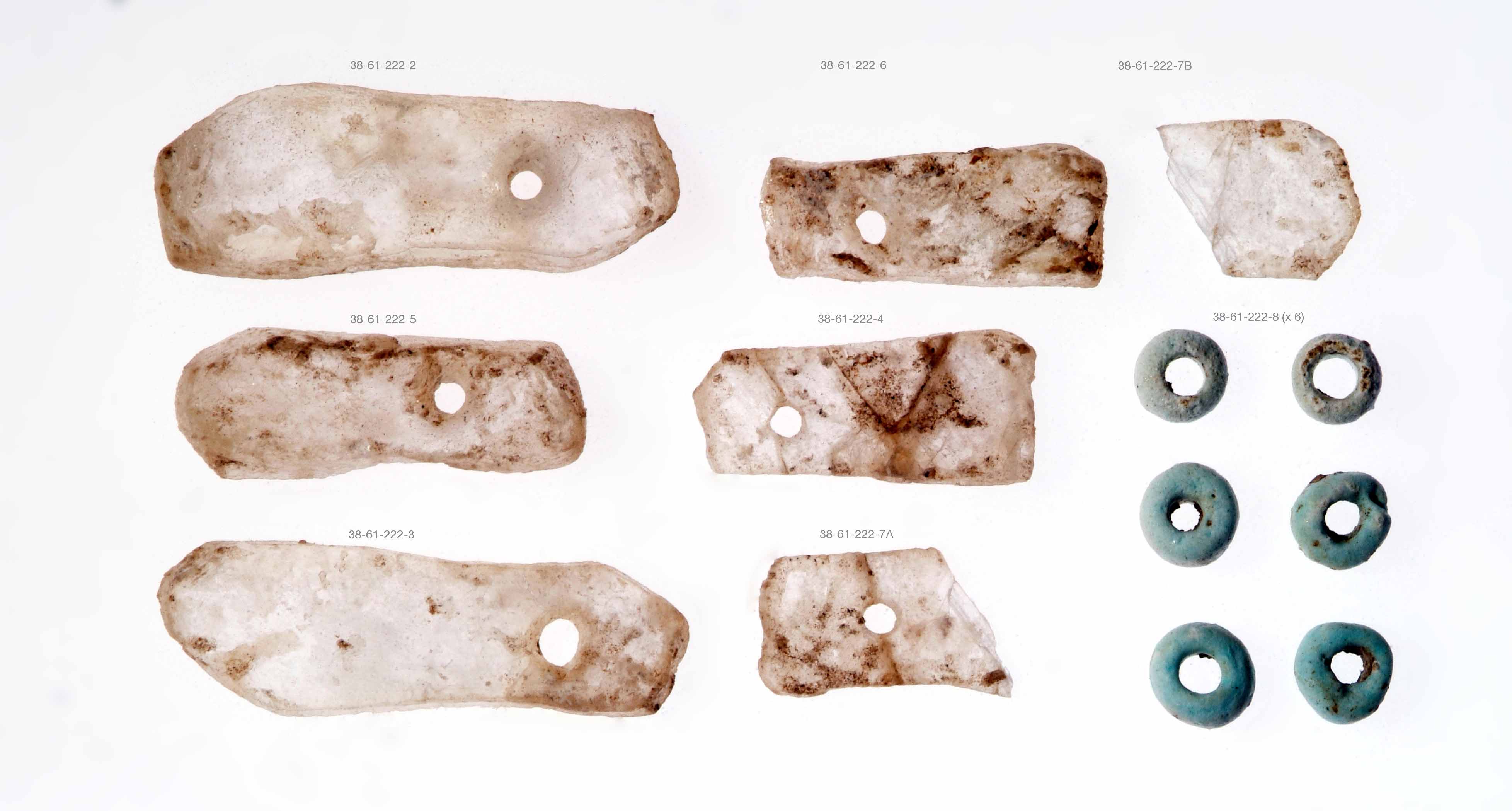
GP51. Beads.
 kopia.jpg)
Grave GP51 during exploration.
.jpg)
Grave GP51 during exploration.
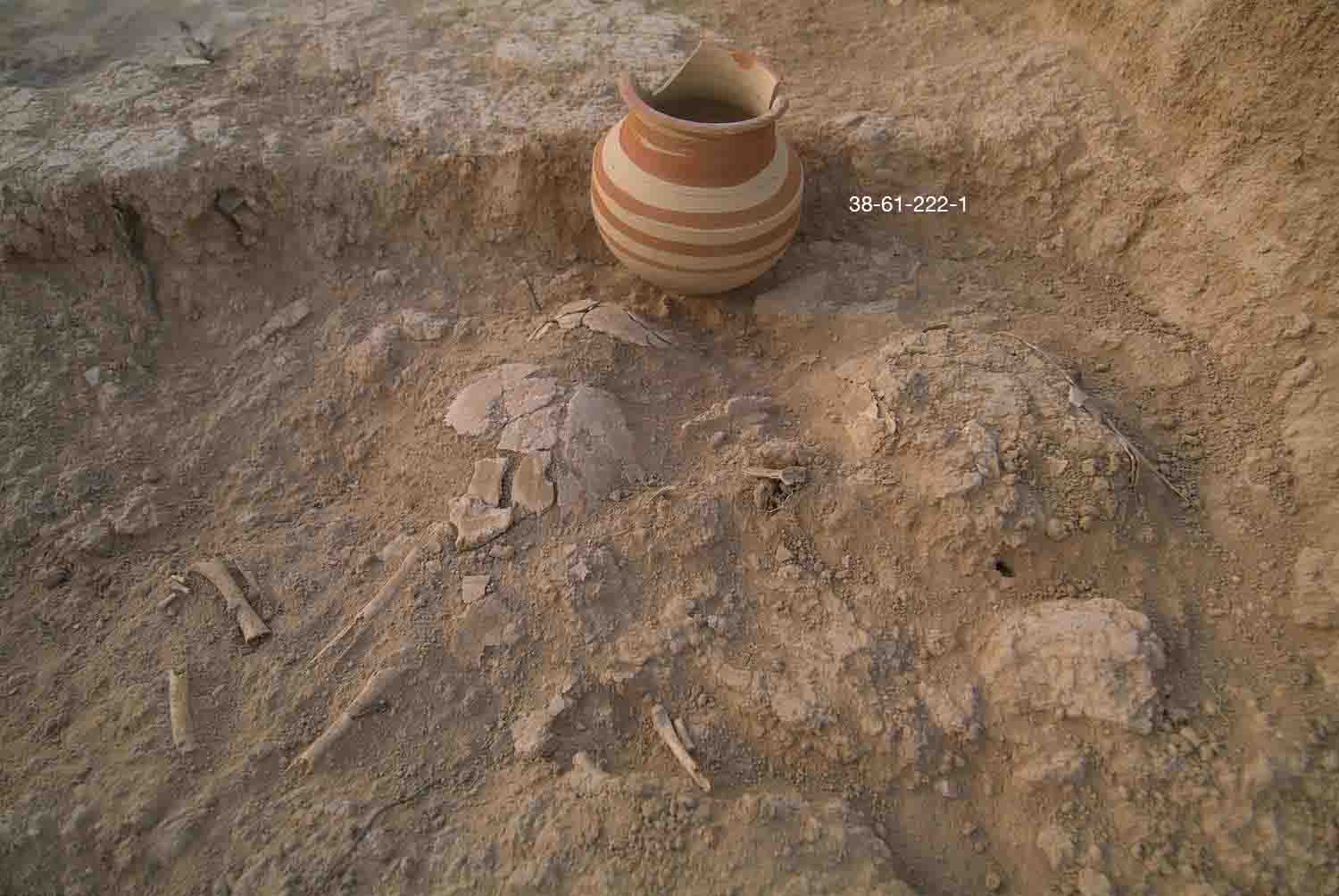
Grave GP51 during exploration.

Plan of GP51 before exploration.

Plan of GP51 before exploration.

Plan of GP51 before exploration.

Plan of GP51 during exploration.

Plan of GP51 before exploration (with levels).